Last updated November 18, 2026







Free written scope consultation - allowances, timeline, and change-order rules on paper before a single trade is scheduled
Construction Warning Signs: A Las Vegas Homeowner’s Reference Guide
Most warning-sign guides tell you to check a contractor’s license and read the fine print. That advice is fine, but it misses half the story. In Las Vegas, your home is under stress from the ground up: expansive clay soils that swell and shrink with the seasons, summer heat that pushes exterior surfaces past 150°F, and a monsoon season that dumps rain on soil baked hard as concrete. Those forces leave marks. Some marks are cosmetic. Some are the first chapter of a five-figure repair. This guide teaches you to tell the difference, and to spot the contractor behaviors that turn a small problem into a big one. You’ll learn what Las Vegas homes actually show you, and when to call someone.
Quick Answer
A construction warning sign in a Las Vegas home is any change that points to movement, water intrusion, or work done without a permit. The ones worth acting on share three traits: they’re wider than a credit card edge, they follow a pattern rather than a single line, or they appear where two building materials meet. Pair that structural reading with a contractor who provides a written price, verified crew IDs, and a written guarantee, and you’ve covered both halves of the risk.
Styles & brands we work with
- Kitchen remodeling
- Bathroom remodeling
- Home additions & ADU
- Roofing
- Windows & doors
- Driveway & pavers
- Fence
Table of Contents
- How to Read Stucco Cracks: Cosmetic vs. Structural
- Five Contractor Warning Signs Specific to the Las Vegas Market
- How to Tell If Prior Remodel Work Was Done Without Permits
- Warning Signs Inside a Construction Bid
- Thermal Expansion Damage vs. Water Damage
- What Las Vegas Soil Does to Foundations
- A Ten-Minute Walkthrough You Can Do Yourself
How to Read Stucco Cracks: Cosmetic vs. Structural
A hairline crack in stucco can mean nothing, or it can mean the stem wall below it has shifted. In Las Vegas’s expansive soil, there’s a specific visual difference homeowners can learn to read, and it comes down to three things: width, pattern, and location.
Width. Hairline cracks under 1/16 inch, roughly the thickness of a business card, are usually cosmetic. Stucco is a rigid skin over a frame that moves slightly. It cracks. When a crack reaches 1/8 inch, about the width of a nickel’s edge, that’s your cue to look closer. Anything you can slide a quarter into is a call-a-professional situation, not a caulk-and-paint situation.
Pattern. Random, spider-webbed cracking near a hose bib or a corner tends to be shrinkage or impact. A crack that runs diagonally from the corner of a window or door opening, at roughly 45 degrees, is a classic sign of settlement or movement. So is a crack that stair-steps through a block wall, following the mortar joints instead of cutting across them. Stair-step patterns in masonry are almost always structural movement, not surface stress.
Location. Cracks that appear on both the interior and exterior of the same wall, at the same height, are the ones to take seriously. That’s a wall telling you it moved as a unit. Cracks confined to one face of one wall are more often thermal or cosmetic.
Here’s the test we suggest: hold a straightedge or a level against the wall across the crack. If the two sides of the crack are in the same plane, it’s likely surface. If one side is proud of the other, even by a sixteenth of an inch, the wall has shifted and you should get an evaluation. In Summerlin and the older pockets of Henderson, we regularly see stucco cracking that traces back to soil movement rather than stucco failure itself. Fixing the stucco without understanding the movement underneath is a temporary patch. It will crack again by the next dry season.
Five Contractor Warning Signs Specific to the Las Vegas Market
Behavior red flags matter as much as structural ones, and Las Vegas has a few that show up here more than elsewhere. These are the five we’d want a family member to know before signing anything.
- Unlicensed subcontractors. Nevada requires licensure for most construction work, and a general contractor is responsible for the subs they bring on site. If a bidder can’t tell you who’s doing the work or whether those subs are licensed, that’s a gap. Ask for the license status of every trade touching your project: electrical, plumbing, drywall, tile.
- Cash-only change orders. A verbal “just give me a few hundred for materials” the morning work starts is the single most common complaint we hear about. A legitimate change order is written, priced, and signed before the work happens. If the money conversation only happens in person with cash, walk.
- No crew identification. You should know who is coming to your door before they arrive. At Mason Remodeling, every crew member is identity-verified and you receive their name and photo before the visit, plus a photo ID badge at the door, under what we call The Threshold Standard. If a company can’t tell you the names of the people who will be in your home, ask why.
- No written price before work starts. On every project we deliver a written price before a single tool is unpacked. A verbal estimate that grows into a final bill is the classic pattern. A written price is not a favor or an upgrade. It’s the baseline.
- Pressure to skip permits. Some bids will quietly suggest you don’t need a permit for “just a bathroom.” Permits protect you at resale and at inspection. A contractor steering you around the permit office is protecting their schedule, not your home.
These behaviors tend to cluster. A crew with no IDs sometimes also has no written price. Read them together, not one at a time.
How to Tell If Prior Remodel Work Was Done Without Permits
Unpermitted work done by a previous owner is one of the most common surprises we find in Las Vegas homes, especially in houses that changed hands during a hot market. The work can look fine on the surface and still hide a real problem. These are the clues.
- Tile over tile. If a bathroom floor or shower wall feels unusually high at the threshold, or a floor drain sits lower than the surrounding tile, someone may have laid new tile over old instead of removing it. That hides the condition of the substrate and often means no permit was pulled.
- Mismatched drywall texture. Las Vegas homes are overwhelmingly finished with a sprayed or hand-troweled texture. A patch with a different texture, or a wall that’s perfectly smooth where the rest of the room is textured, usually means a wall was opened, modified, or added after the home was built.
- Uneven ceiling lines. A dropped ceiling, a soffit that doesn’t line up with the one across the room, or a light fixture that’s no longer centered in its room are signs of a reconfiguration that may not have been inspected.
- Outlets and switches in odd places. A switch that controls nothing, or an outlet mounted at an angle, often points to a circuit that was extended without a permit.
- No permit history. You can often check a home’s permit record through the local building department. A kitchen remodel that shows no permits on file is worth asking about.
If you’re planning a remodel yourself, the fix starts with a proper assessment. Our bathroom remodeling in Las Vegas team pulls permits and passes inspections as standard, because unpermitted prior work has to be corrected before new work can be done right.
Warning Signs Inside a Construction Bid
The bid is where a project is won or lost, often before anyone picks up a hammer. Most homeowners read the total. The real information is in the scope language, and it’s the difference between a price that holds and a price that grows.
Watch for these openings that leave the cost-escalation door ajar:
- “Materials allowance” with no cap and no brand. A cabinet allowance of “$X, TBD” lets the number move. A specified brand and model number closes it. We specify brands like Cambria and Kohler by name so the price means something.
- “As needed” or “as required” language. “Replace subfloor as needed” is a blank check. A proper bid states the conditions under which replacement happens and the price if it does.
- No line-item breakdown. A single lump sum tells you nothing about what’s included. Ask for it itemized: demolition, framing, electrical, plumbing, finishes, cleanup.
- Exclusions buried at the end. “Permits not included,” “haul-away not included,” and “paint touch-up not included” are fine if they’re stated up front and priced. Not fine when they appear in fine print.
- No change-order process. A bid that doesn’t explain how a change gets priced and approved is a bid that will surprise you.
The bid that closes those doors states a fixed scope, names the products, prices the contingencies, and gives you a written price before work starts. That’s the standard we hold on every job, whether it’s a single bathroom or a general contractor project in Las Vegas that touches the whole house.
Thermal Expansion Damage vs. Water Damage
These two failure modes look alike at a glance and get confused constantly. Misreading one for the other leads to the wrong repair, which is expensive. Here’s how to tell them apart in a Las Vegas home.
Thermal expansion damage comes from the sun. Las Vegas exteriors swing from cool nights to surfaces hot enough to burn a hand. Roofing, stucco, and sealants all move with that cycle. Signs include:
- Caulking that has pulled away cleanly from a joint, leaving a smooth gap
- Roof shingles that have lifted or cupped at their edges, with no staining
- Cracks that open in summer and nearly close in winter
- Paint that has blistered in a pattern that follows the sun’s path across a wall
- Dry, crumbly sealant at window frames with no water staining around it
Water damage leaves different traces. Look for:
- Staining or a tide-line ring mark, brown or dark, on drywall or framing
- Soft or spongy drywall, especially near a window or at the base of a wall
- Mold or a musty smell that gets stronger after a monsoon
- Shingles that are missing or granule-bare in one concentrated area
- Efflorescence, a white powdery mineral deposit, on stucco or block below a leak point
The tell is staining. Thermal movement leaves clean edges and no discoloration. Water leaves a mark. If you’re not sure which you’re looking at, don’t guess and don’t let a bidder guess either. A repair aimed at the wrong cause will fail within a season. Our Mason Remodeling Co Las Vegas home team reads these signs as part of any assessment, because fixing the surface without finding the source is the most common repeat-repair mistake we see.
What Las Vegas Soil Does to Foundations
Las Vegas sits on clay soils that expand when wet and shrink when dry. That cycle is the engine behind a lot of the cracking homeowners see. In the wet season, the soil under a footing swells and pushes up. In the long dry stretch, it shrinks and the footing settles. A foundation that wasn’t designed for that movement, or a slab that has a drainage problem on one side, will telegraph the stress upward.
What to watch for:
- Doors that stick in summer and free up in winter, or the reverse
- Diagonal cracks radiating from the corners of door and window openings
- Sloping floors you notice when a marble rolls across the tile
- Gaps at the base of exterior walls where the stucco meets the ground
- Separation between a patio slab and the house wall, wider than a quarter inch
One or two of these on their own is common in Las Vegas and not a crisis. Several together, or any one that’s getting worse over months instead of staying stable, is worth a professional look. Stabilizing drainage first, keeping water away from the foundation, and grading the soil so it sheds away from the house, resolves more of these than any structural repair. That’s the order we recommend: manage the water, then evaluate the structure.
A Ten-Minute Walkthrough You Can Do Yourself
You don’t need tools beyond a flashlight and a level. Walk your home once a season, ideally after the first hot stretch and again after a rain.
- Start outside at one corner and walk the perimeter. Look at the stucco where it meets the ground. Note any crack wider than a business card. Photograph anything that looks wider than it did last time.
- Check every window and door opening from outside. Diagonal cracks at corners are the ones to flag.
- Run a level or straightedge across any crack you found. One side proud of the other means movement.
- Look up at the roofline. Any shingle lifted, cupped, or missing? Any caulk that’s dry and shrunk?
- Go inside and check the same walls. Cracks on both faces at the same height are the serious ones.
- Open and close every interior door. Note sticking doors and whether it changes with the season.
- Look at the base of walls in bathrooms and near the water heater. Staining, soft drywall, or a musty smell means water.
- Check under sinks and around the shower. Look for a tide-line ring and efflorescence.
Photograph what you find. A dated photo from six months ago is the single most useful thing you can bring to a contractor’s estimate, because it shows whether a crack is stable or moving.
Common Mistakes to Avoid
- Caulking over a moving crack. Sealant hides the symptom and makes it harder to read next season. Find out what’s moving first, then repair the surface.
- Treating thermal damage as a leak, or the reverse. A roofer hired to chase a leak that’s actually sun damage will bill you twice. Match the repair to the cause.
- Accepting a verbal estimate. A Las Vegas bid that lives only in a text message is a bid that can grow. Ask for a written price before work starts, every time.
- Letting a bidder skip the permit. Unpermitted work surfaces at inspection and at resale in Las Vegas, and the cost lands on you, not the contractor.
- Hiring a crew you can’t identify. When someone knocks, you should already have their name and photo. If you don’t, hold the door.
- Ignoring several small signs at once. One sticking door is nothing. A sticking door, a diagonal crack, and a patio slab pulling away are a pattern.
- Choosing the lowest bid with no written scope. The lowest number with the loosest scope is the one most likely to grow. Compare line items, not totals.
The other half of this guide is trust: who’s coming, and what’s guaranteed. Mason Remodeling has delivered general contracting, bathroom remodeling, and whole-home remodeling work since its founding in 2004, operating as part of the Threshold Group family of home-service companies. Our technicians have up to 22 years of experience, every crew member is background-checked and identity-verified, and every project carries a written price before work starts plus our 365-Day Done Right Promise, which reads plainly: if the work isn’t right within a year of completion, we make it right at no cost to you. A live person answers our phone around the clock, every day of the year.
See the difference
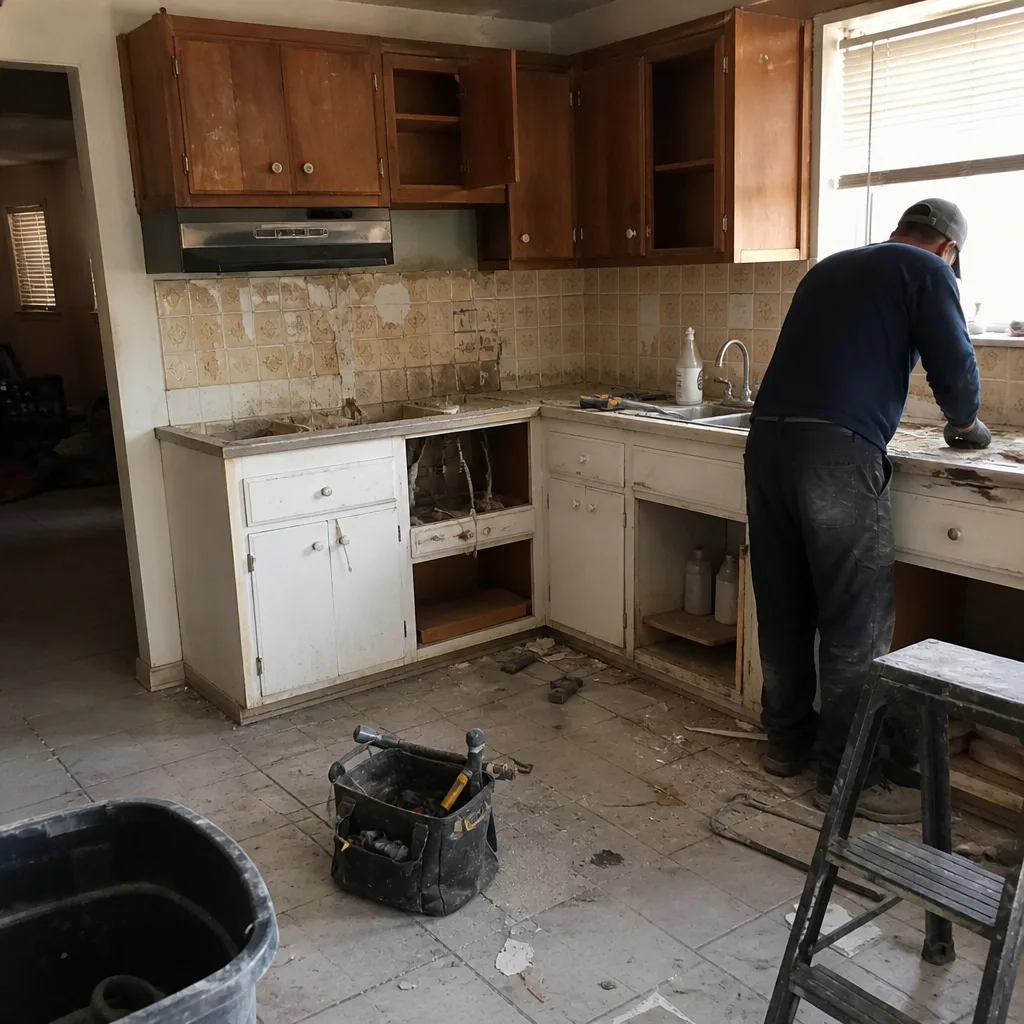 Before
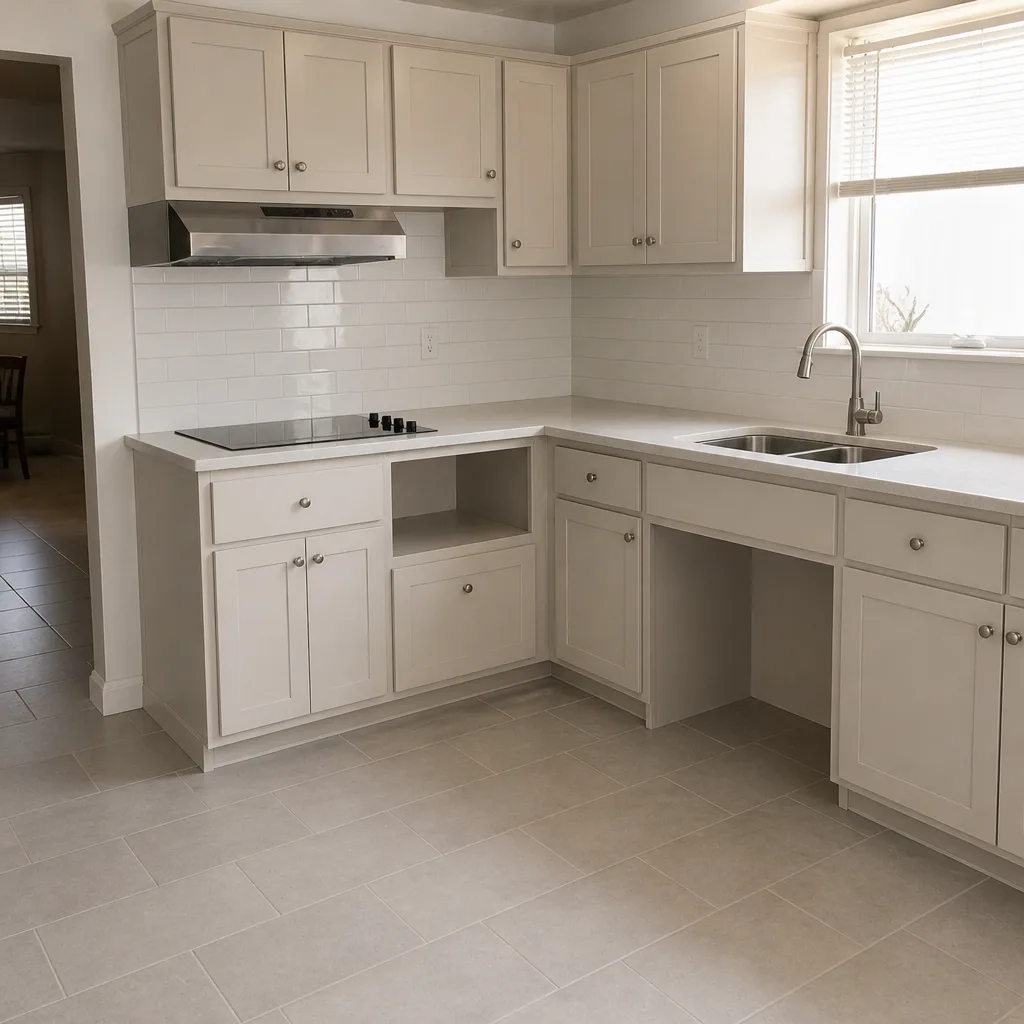 After
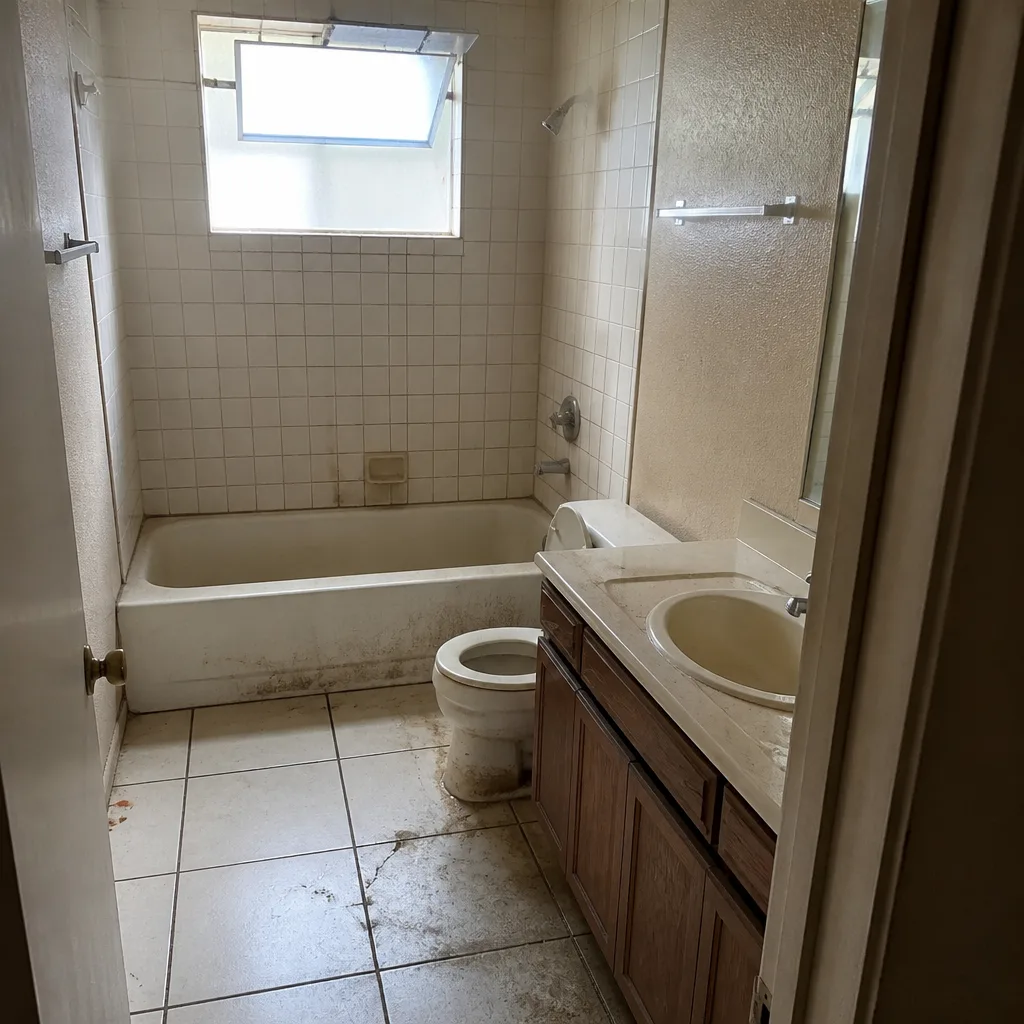 Before
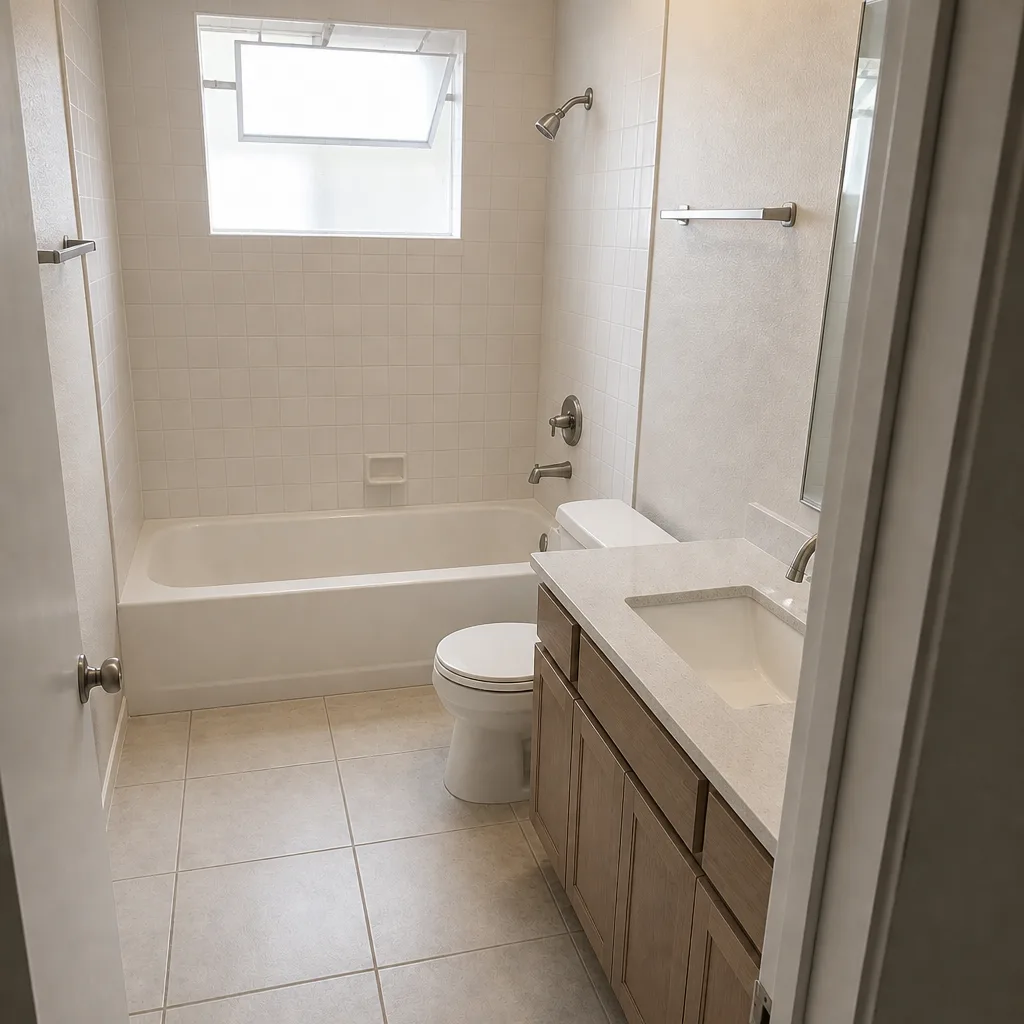 After
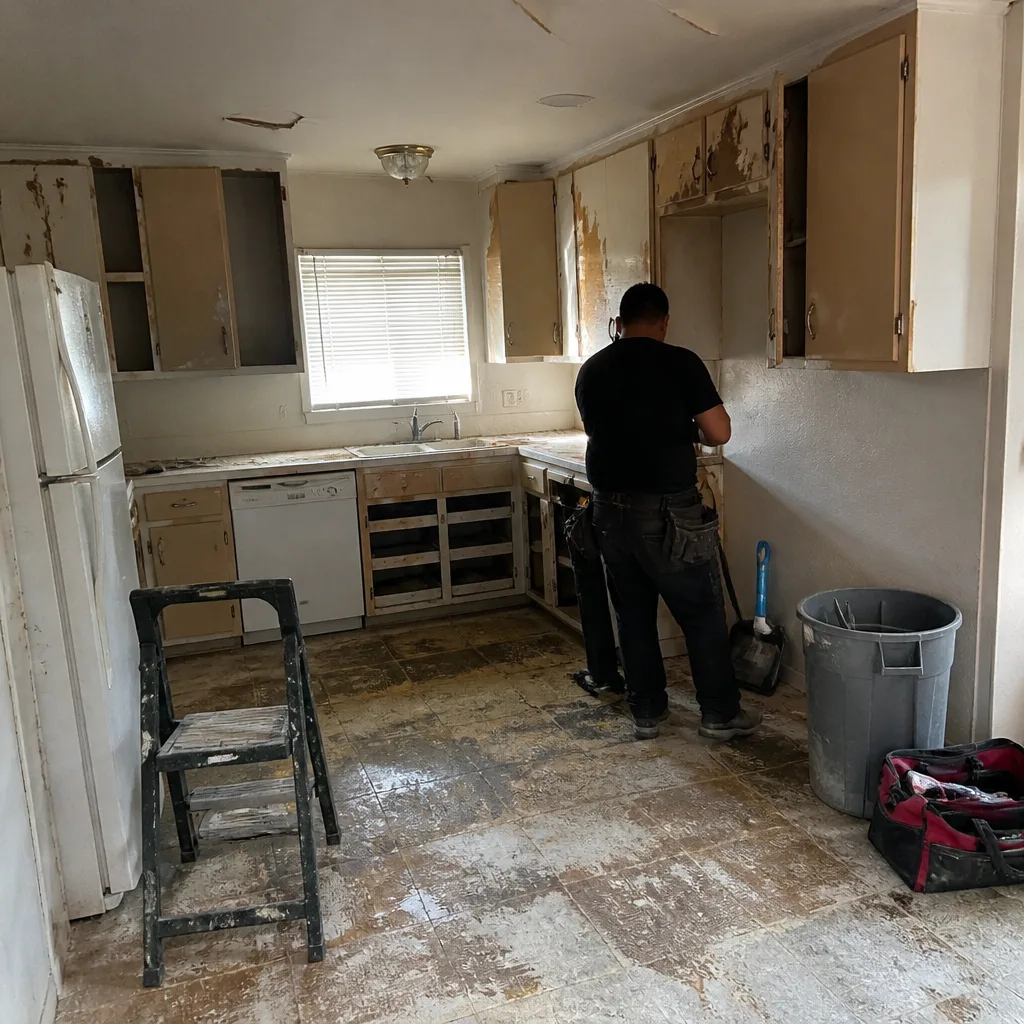 Before
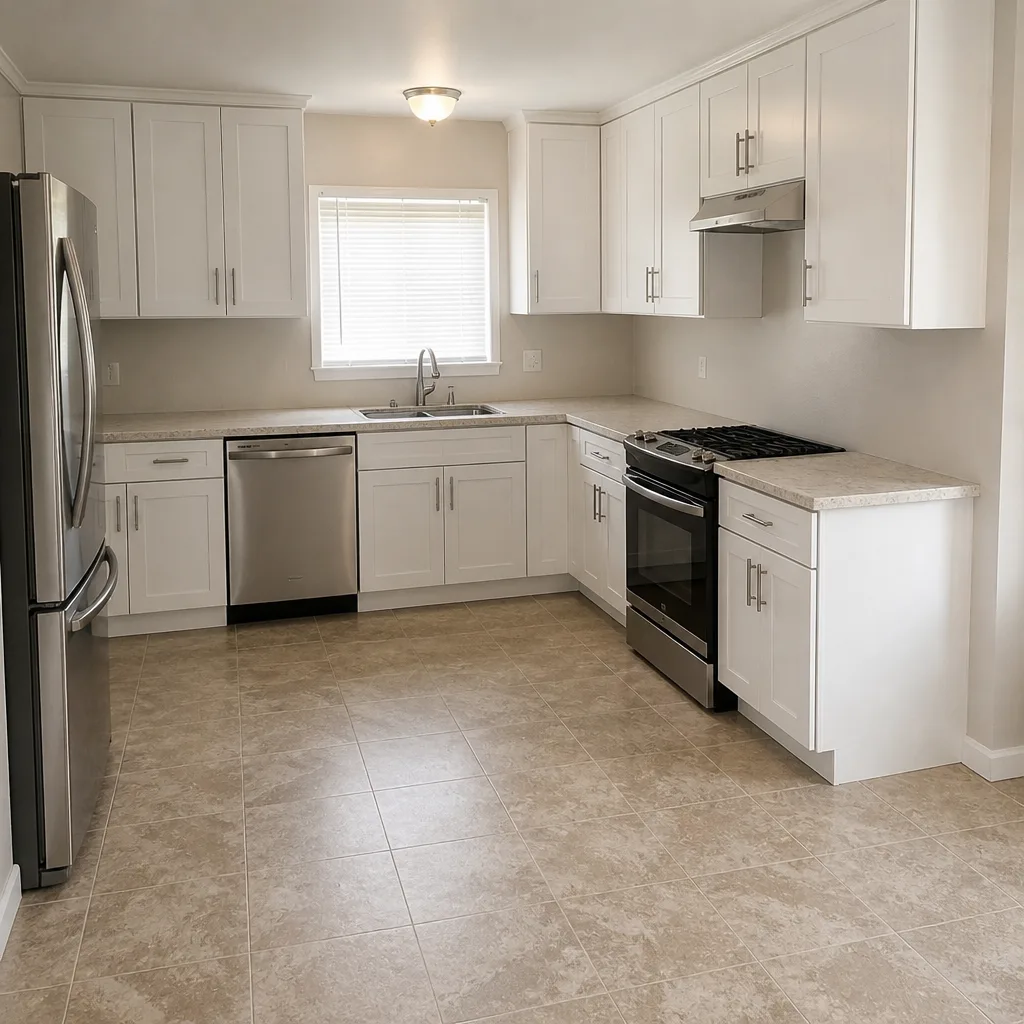 After
When to Call a Professional
Call a professional when a crack’s two sides won’t sit flush, when a crack is wider than a nickel, when the same crack shows on both the inside and outside of a wall, or when several of the signs in this guide show up together. Also call when water is involved: soft drywall, a tide-line stain, or a musty smell that gets stronger after a rain. And call when a bid’s scope leaves the cost open-ended, because that’s the moment the conversation is cheapest. A ten-minute walkthrough by someone who reads these patterns saves the most expensive repair, which is the one you do twice. Mason Remodeling Co Las Vegas offers free estimates in Las Vegas. Call (844) 797-1112 to schedule yours.
Frequently Asked Questions

The first thing to check is whether the two sides of the crack are flush. If one side sits proud of the other when you lay a straightedge across it, the wall has moved and it’s worth a professional evaluation. Width matters too. A crack wider than a nickel, or one that stair-steps through a block wall, is the pattern to take seriously. Call (844) 797-1112 for a free estimate if you’re unsure.
Look for tile laid over tile, a floor or threshold that feels unusually high, mismatched drywall texture, or ceiling lines that don’t line up. Any of these can mean a wall or bathroom was modified after the home was built. The most reliable check is the permit history at the local building department. If you’re planning to remodel, call (844) 797-1112 for an assessment and a free estimate.
Staining is the giveaway. Thermal movement from sun and heat leaves clean edges, cupped shingles, and cracks that open in summer and close in winter, with no discoloration. Water damage leaves a tide-line ring mark or a dark stain on drywall, often with soft material or a musty smell. If you can’t tell the two apart, don’t repair until someone who can has looked at it. Call (844) 797-1112 for a free estimate.
Check the scope language first. A proper bid names the products and models, caps the allowances, prices the contingencies, and lists exclusions up front rather than in fine print. Every project we deliver includes a written price before work starts, and we won’t ask you to sign a verbal estimate. Call (844) 797-1112 to get a written price on yours.
Ask for the names and photos of the people who will be in your home before the visit, and check for a photo ID badge at the door. That’s The Threshold Standard at Mason Remodeling, and every crew member is background-checked and identity-verified. If a company can’t tell you who’s coming, that’s a reason to keep looking. Call (844) 797-1112 for a free estimate.
A properly scoped bid holds because the products, allowances, and contingencies are priced before the first tool comes out. When we deliver a written price before work starts, that price is the price, and any change is written and signed before the work happens, never a cash request the morning of. Call (844) 797-1112 for a free estimate and a written price on your project.
The Bottom Line
Your Las Vegas home is telling you things all year, in stucco cracks, sticking doors, cupped shingles, and patches that don’t match. Learn to read width, pattern, and location, and you’ll know which signs are cosmetic and which are the opening act of a bigger repair. Learn to read the bid, and you’ll know whether a contractor closes the cost doors or leaves them open. Pair those skills with a crew you can identify by name and photo, a written price before work starts, and a written guarantee that reads plainly, and you’ve covered both halves of the risk. That’s what we do on every project.
Written by the team at Mason Remodeling Co Las Vegas.