Last updated November 18, 2026


Free written scope consultation - allowances, timeline, and change-order rules on paper before a single trade is scheduled
DIY vs Professional Bathroom Remodeling: What’s Safe to Do Yourself
Demo is almost always safe to do yourself. Waterproofing almost never is. Yet most online guides sort bathroom tasks by skill level – as if the only question is whether you can swing a hammer – when the question that actually matters is what happens if the work fails six months from now. A crooked paint line is a crooked paint line. A shower pan that leaks into a slab foundation is a five-figure repair hiding behind a $200 weekend project. In this guide, we draw a clear, non-judgmental line between the work that’s genuinely DIY-safe and the work where a mistake creates damage that costs ten times the savings to fix. We’ll look at it through a Las Vegas lens, because slab foundations and desert heat change the math.
Quick Answer
In a bathroom remodel, demo, painting, swapping a vanity on existing plumbing, and hanging mirrors and accessories are genuinely DIY-safe for a homeowner with average skill and the right tools. Electrical work (GFCI, panel changes), any plumbing that moves or adds drain lines, and anything that requires a permit in Nevada are not – that work belongs with a licensed professional, both for safety and to protect your resale and insurance. If a task’s failure would cause water damage, fire risk, or a failed inspection, treat it as professional work regardless of how confident you feel.
Styles & brands we work with
- Kitchen remodeling
- Bathroom remodeling
- Home additions & ADU
- Roofing
- Windows & doors
- Driveway & pavers
- Fence
Table of Contents
- The Consequence Multiplier: How to Judge Any Bathroom Task
- The Three Categories That Always Need a Licensed Professional in Nevada
- Tasks That Are Genuinely DIY-Safe
- Why Waterproofing Mistakes Hit Las Vegas Slab Homes Hard
- What Nevada Licensing Law Means for Your Resale and Insurance
- Where the Money Actually Goes: A Las Vegas Cost Reality Check
- The Hybrid Approach: Doing Part, Hiring Part
- Common Mistakes to Avoid
- When to Call a Professional
The Consequence Multiplier: How to Judge Any Bathroom Task
Most DIY decisions get made by asking “can I do this?” That’s the wrong test. The right test is “what happens if this fails, and how much does that failure cost to undo?” A task you can technically complete but that will fail in a way you cannot see until it has already caused damage is not a DIY task – it’s a deferred professional job with a penalty attached. We call this the consequence multiplier: labor savings divided by the cost of a failure that surfaces later.
Water damage is the multiplier that matters most in a bathroom, because it fails invisibly. A shower that leaks a cup of water a day through a failed waterproofing membrane will look fine from the tile side and still rot a subfloor or stain a ceiling below within a season. A GFCI outlet wired wrong won’t trip until the day it needs to, and then it may not. Those are not hypotheticals we’re warning about to sound dramatic – they’re the exact failure patterns our technicians have seen in Las Vegas homes, often years after a homeowner’s attempt.
Score any task on a simple three-point scale before you start:
- Does failure stay visible and cheap? (Paint, trim, a new towel bar.) Do it yourself.
- Does failure become visible early but cost real money to fix? (Vanity installation on existing plumbing, tile layout.) Do it yourself if you’re careful; hire out if time pressure is real.
- Does failure stay hidden until it has caused structural or safety damage? (Waterproofing, drain lines, electrical, anything permitted.) Hire a licensed professional.
The self-honest version of this framework is what separates a well-executed part-DIY bathroom remodel in Las Vegas from the ones that come back to bite at resale. Our team at Mason Remodeling approaches bathroom projects with this same logic: we’ll do the demo ourselves if asked, and we won’t cut corners on waterproofing under any circumstances, because that’s the one place where saving $400 in labor reliably costs $4,000 in repair.
The Three Categories That Always Need a Licensed Professional in Nevada
Regardless of your skill level, three categories of bathroom work sit firmly on the professional side of the line. This isn’t a preference – it’s Nevada code and common-sense risk management talking at the same time.
1. Electrical work – GFCI and panel changes. Every bathroom receptacle in Nevada requires GFCI protection, and any new or relocated circuit requires a permit and inspection. Bathrooms are one of the highest-moisture rooms in the home, which is exactly why the electrical code treats them strictly. If your bathroom addition means adding a circuit, moving a light over a tub, or changing anything at the panel, that work belongs to a licensed electrician. A homeowner doing it themselves may pass a casual inspection of the work and still leave a dangerous fault that only shows up years later.
2. Plumbing that moves or adds drain lines. Swapping a faucet or replacing a toilet on existing connections is fine for a capable homeowner. What is not fine is relocating a drain, adding a shower when there wasn’t one, or reconfiguring the layout in a way that touches the drain-waste-vent system. Drain work on a Las Vegas slab foundation is especially unforgiving: the pipes run under concrete, so a slope error or a bad joint can’t be fixed with a patch – it means breaking concrete to reach the failure.
3. Anything that requires a permit. In Las Vegas and unincorporated Clark County, the permit list is longer than most homeowners realize. Roughly: moving or adding plumbing, changing or adding electrical, structural changes, replacing a water heater, and any change that alters the footprint or configuration of a shower or tub area. If you’re unsure, the answer is “call the building department,” not “start the demo and hope.” If you’re planning a bigger picture upgrade, our Bathroom Remodeling in Las Vegas team works through the permit process as a matter of course, and it’s a conversation worth having before you swing a sledgehammer.
Tasks That Are Genuinely DIY-Safe
Here’s the good news: most of what makes a bathroom feel remodeled is within reach of a homeowner with average skill, a Saturday, and a willingness to measure twice. These are the tasks where failure stays visible, cheap, and fixable.
- Demo. Pulling out an old vanity, mirror, toilet, or tile is a legitimate DIY job with a few ground rules: shut off the water and power first, bag debris as you go, and don’t remove load-bearing walls or anything structural without a professional opinion. In Las Vegas homes with slab foundations, avoid hammering into the slab without knowing where the pipes run.
- Painting. Walls, ceilings, and trim. The one caveat – let new drywall and any patched areas cure fully before painting. Desert air feels dry, but fresh joint compound still needs its time.
- Swapping a vanity on existing plumbing. As long as you’re not moving the supply or drain and you can still reach the shut-off valves, a vanity swap is a well-trodden homeowner project. Expect two people for a heavier cabinet.
- Mirror and accessory installation. Towel bars, shelving, mirrors, hooks. Anchors and a level are your whole toolkit.
- Replacing lighting fixtures on existing circuits. Yes, with the breaker off and the wiring matched. If the wires in the box look unfamiliar, stop and call an electrician.
- Trim, caulk, and grout touch-ups. Recaulking around a tub or shower is easy and one of the highest-return maintenance tasks you can do.
For a broader sense of how these small projects stack into a full renovation, our guide to Kitchen Remodeling in Las Vegas applies the same consequence framework to a room with similar risks – worth a read if you’re planning a matched kitchen-and-bath upgrade.
Why Waterproofing Mistakes Hit Las Vegas Slab Homes Hard
If there is a single task in a bathroom remodel where DIY confidence and DIY competence diverge most sharply, it’s waterproofing. It’s invisible when done right, invisible when done wrong, and the wrongness only announces itself after months of quiet damage.
Las Vegas homes sit disproportionately on slab-on-grade foundations. There is no crawl space under the bathroom for water to drain into and disappear. When a shower pan membrane fails, the water has nowhere to go but sideways through the mortar bed and eventually into the slab itself or into the wall cavity behind the tile. The repair path looks like this: remove tile, remove backer board, remove mortar bed, address rotted framing, potentially open concrete to reach the leaking joint. That’s the “ten times the labor savings” figure we mentioned at the top, and it isn’t an exaggeration – call it $3,000 to $8,000 for a proper shower replacement after a failed waterproofing attempt, versus $400 to $900 in labor to have it done right the first time.
Mold is the quieter partner to that scenario. In a desert climate, homeowners often assume mold isn’t a Las Vegas problem. But mold needs moisture and organic material, and a slow shower leak behind tile provides both. We’ve seen mold colonize the backside of greenboard within a single season of a leak that never showed through the grout line.
Two things that make the professional path decisive:
- A tested waterproofing system. The professional standard is a bonded membrane (liquid-applied or sheet) installed to manufacturer specification, with the curb, corners, and drain flange properly detailed. Getting any of those details wrong is the most common cause of failure.
- A flood test. Before tile goes down, the pan is filled and left to sit. A leak shows up in the flood test or not at all. Skipping it is the single biggest mistake we see in homeowner waterproofing attempts.
This is also where the trade’s real materials matter. A Schluter strip – the metal trim that seals the edge where tile meets flooring – isn’t cosmetic, it’s part of keeping water where it belongs. Specification-grade systems from manufacturers who stand behind their installation methods are the difference between a shower that lasts a decade and one that starts leaking in eighteen months.
What Nevada Licensing Law Means for Your Resale and Insurance
Here’s a fact most DIY guides skip: how you do the work affects what happens when you sell the home, not just when you live in it.
Nevada allows a homeowner to pull a permit and do work on their own primary residence – as an owner-builder, and only under specific conditions. That is a real right, and it’s why a confident homeowner can legally renovate their own bathroom. What’s not allowed is hiring unlicensed labor to do the work and calling it “owner-builder.” If an inspector finds out an unlicensed contractor did the work, the consequences land on you – failed inspections, required tear-out, or a permit that can’t be closed.
The resale side is the sharp end. A buyer’s inspector will flag a bathroom remodel that has no permit history, and a lender can refuse to finance the purchase until it’s corrected. Even a beautifully done unpermitted shower becomes a negotiating chip at best and a deal-breaker at worst. Homeowner’s insurance follows the same logic: if a fire or water loss traces back to unpermitted or improperly installed work, the claim can be denied or reduced.
Two practical rules follow:
- If you’re doing it yourself as owner-builder, pull the permit and pass the inspection. Keep the paperwork. It’s worth its weight in gold at resale, in Las Vegas as anywhere else.
- If you’re hiring, verify the license. Nevada requires a state contractor’s license for remodel work over a $1,000 threshold, and the license number should be on the contract and match the state database. Our General Contractor in Las Vegas practice is built around this: written price, permits pulled, inspections passed, and every crew member identity-verified through The Threshold Standard – name and photo delivered before the visit, and a photo ID badge at the door.
Where the Money Actually Goes: A Las Vegas Cost Reality Check
Before you decide what to DIY, it helps to see how the remodel budget breaks down. The numbers below are rough 2026 Las Vegas ranges for a mid-grade full bathroom remodel of about 40 to 60 square feet. They’re here so you can self-qualify before you call anyone.
- Labor – demo only: $300 to $700
- Tile and backer installation: $1,200 to $2,800 in labor
- Waterproofing (shower and tub surrounds): $400 to $900 in labor alone
- Plumbing rough-in (if moving lines): $800 to $2,500, permit included
- Electrical (new circuit, GFCI, lighting): $500 to $1,400, permit included
- Fixture and finish installation (vanity, toilet, faucets): $600 to $1,800
- Full mid-grade remodel, professionally managed: $14,000 to $28,000 all-in
Where does DIY actually save money? Demo, painting, and finish installation. Those three tasks together can shave $1,500 to $3,500 off the labor line for a homeowner willing to do the work. Waterproofing, plumbing, and electrical together are where the wrong savings turn into damage.
The good news for a Las Vegas homeowner is that a written price is standard on professionally managed projects, not a special favor. Every project we take on gets a written price before any work starts – line-item, no change orders unless you approve them in writing. That makes it possible to compare the DIY number to the true professional number and make an honest call.
The Hybrid Approach: Doing Part, Hiring Part
You don’t need to pick a side. The most sensible remodel for most Las Vegas homeowners is a hybrid: homeowner does the safe work, professional handles the high-consequence work, and both agree on the handoff in writing. Here’s how to run it as a homeowner.
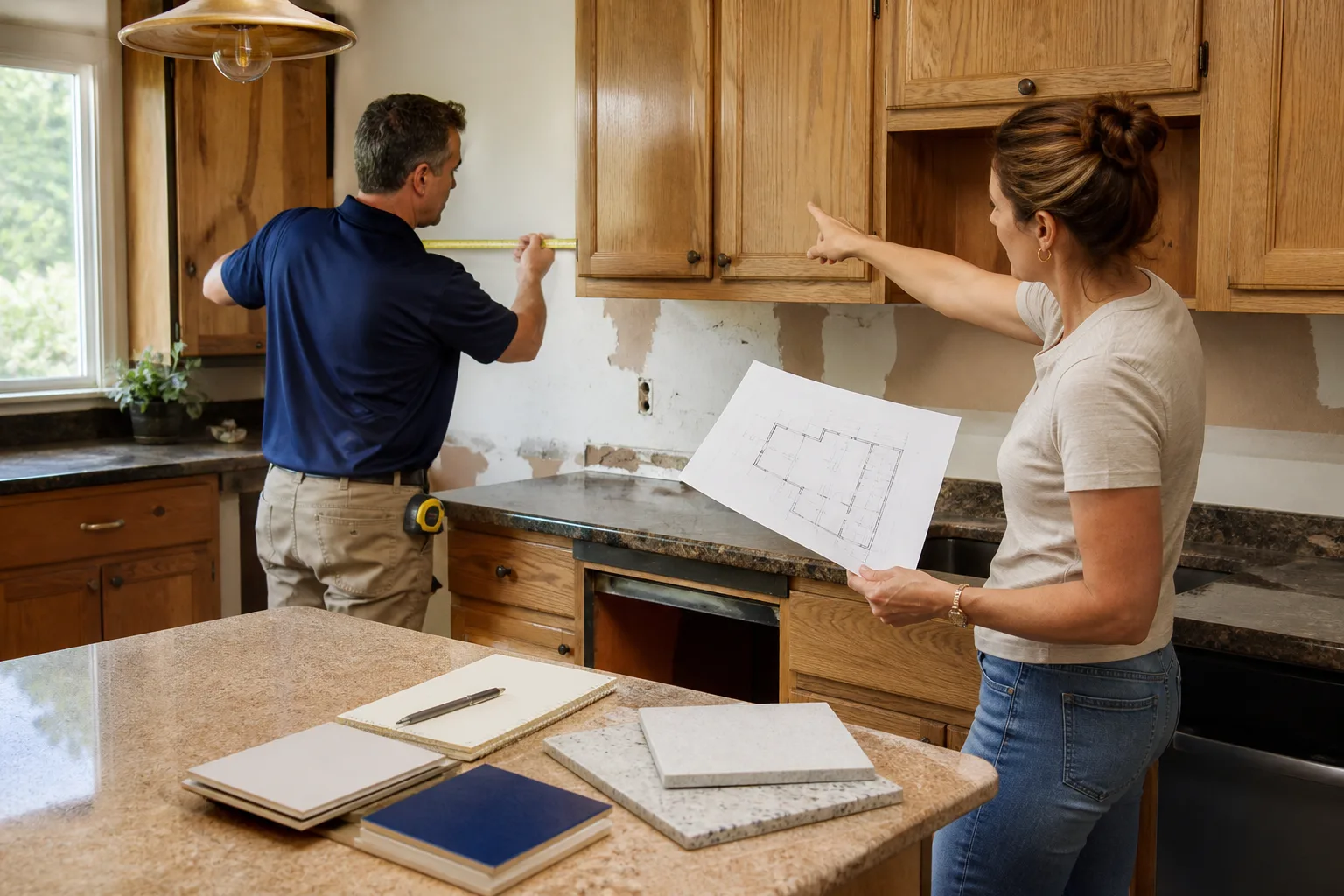
- Map every task on paper. List everything, then mark each as DIY, hire, or “not sure.” The notsures go to a professional for a walkthrough.
- Sequence the work. Demo first. Then rough-in plumbing and electrical (professional). Then waterproofing (professional). Then tile, finishes, and paint (you, if you like).
- Set a firm handoff date. A tile installer can’t start until waterproofing is flood-tested and passed. If you do tile yourself, put it in writing when the pro will finish their portion.
- Get the written price before any work. One number, line items, and a clear scope. Not a verbal estimate that grows on the final bill.
- Keep the permit paperwork in one folder. Inspection records, product warranties, and the contractor’s written guarantee. That folder is worth money at resale.
We see hybrid projects turn out extremely well when the homeowner knows their own limits. If you want to see how larger coordinated projects run, our Mason Remodeling Co Las Vegas home has the full picture of how we organize remodels, and how the 365-Day Done Right Promise works – if work we did isn’t right within a year of completion, we make it right at no cost. It’s a written guarantee, with terms stated plainly on the contract.
Common Mistakes to Avoid
- Skipping the flood test. Waterproofing isn’t finished until the pan has held water for 24 hours and shown no loss. Without it, you’re installing tile over a mystery.
- Ignoring the permit because “it’s a small change.” A small change that involves moving a drain or adding a circuit is a permitted change – and an unpermitted one is what a buyer’s inspector finds later. Pull the permit or hire someone who will.
- Assuming the desert means mold isn’t a risk. It’s the moisture, not the humidity, that grows mold in Las Vegas – a slow leak behind tile provides all the humidity a colony needs.
- Hiring unlicensed labor to save money. In Nevada, the homeowner carrying the unpermitted work faces the consequences when the inspection fails. Verify the license and put the number on the contract.
- Ripping into a slab without knowing where the pipes run. Las Vegas slab foundations hide both the drain lines and any post-tension cables. Know where they are before the chisel comes out.
- Choosing the biggest vanity that fits, with no clearance planning. Las Vegas bathrooms in many older builds are compact. Measure door swing, knee room, and towel bar placement before you buy the cabinet.
- Treating the written price as negotiable after the fact. Verbal estimates that grow on the final bill are the single biggest source of remodel disputes. Get it in writing, before any work starts, and refuse anything else.
When to Call a Professional
Call a professional when the work involves any of the three consequence categories: electrical, plumbing that moves or adds drain lines, or anything requiring a permit. Call when the waterproofing is concerned, even if you plan to tile yourself. Call when the project requires structural changes, when the shower or tub is being reconfigured, or when you’re uncertain about the permit situation and need someone who handles it routinely. And call when you’re already stretched thin on time and the project is on a deadline – an amateur shower pan that needs to be redone twice is more expensive than a professional install done once.
Mason Remodeling Co Las Vegas offers free estimates in Las Vegas – call (844) 797-1112. Estimates come with a written price and a clear scope, so you can decide with real numbers instead of guesses, and the terms of our written guarantee are spelled out on the contract, not buried.
See the difference
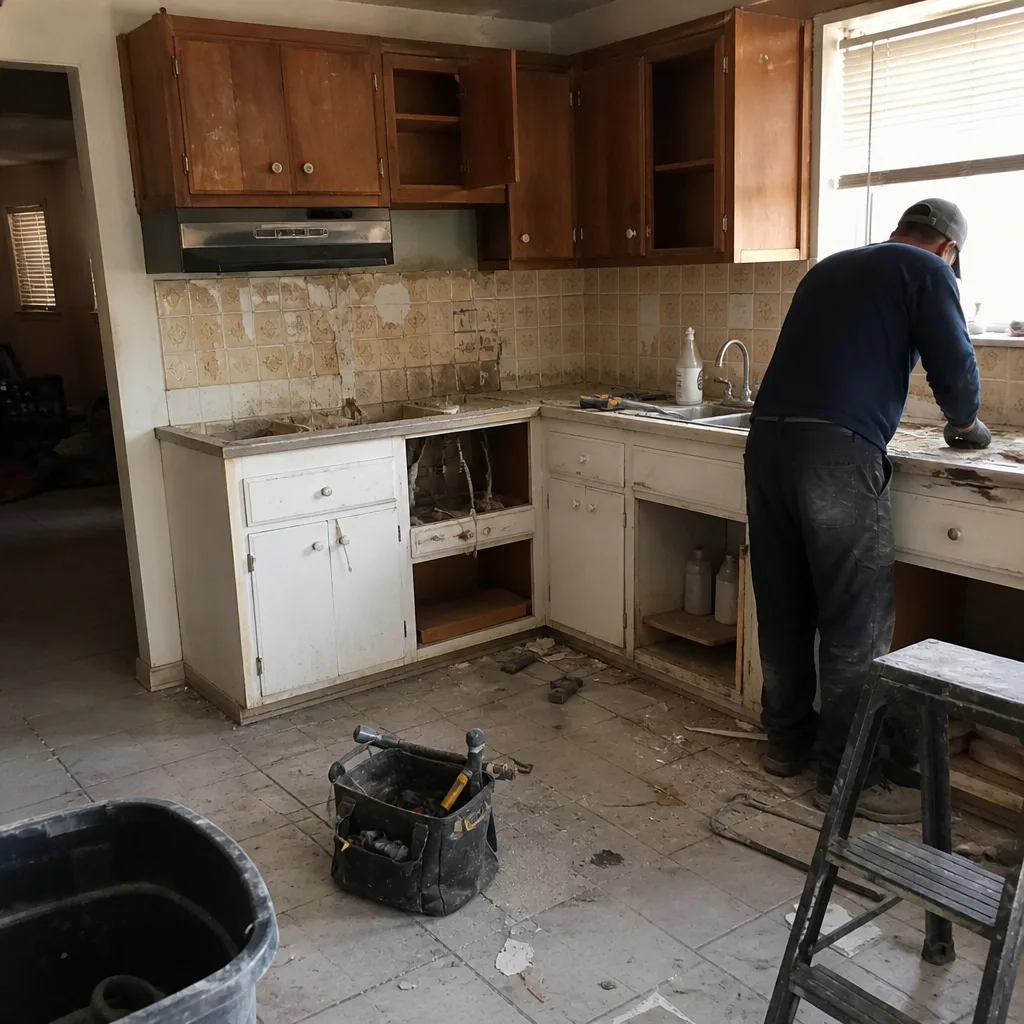 Before
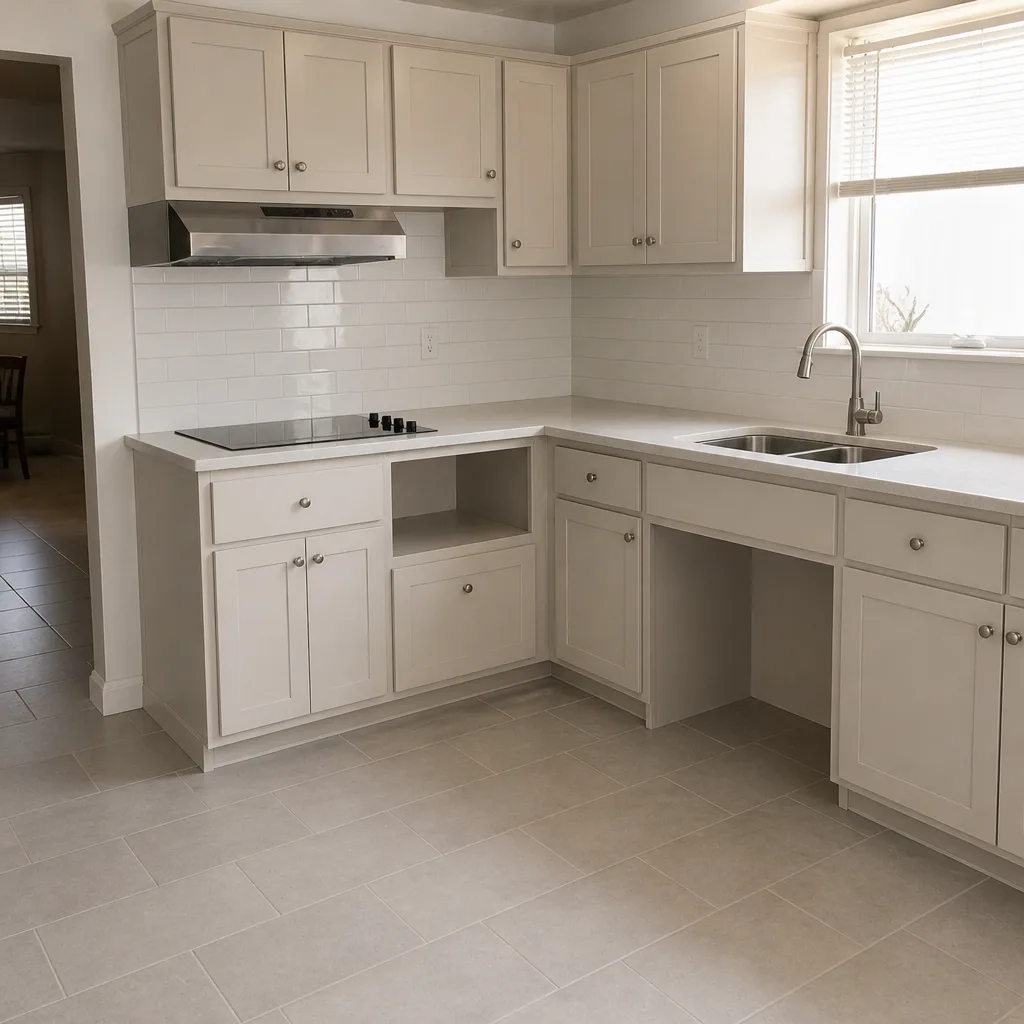 After
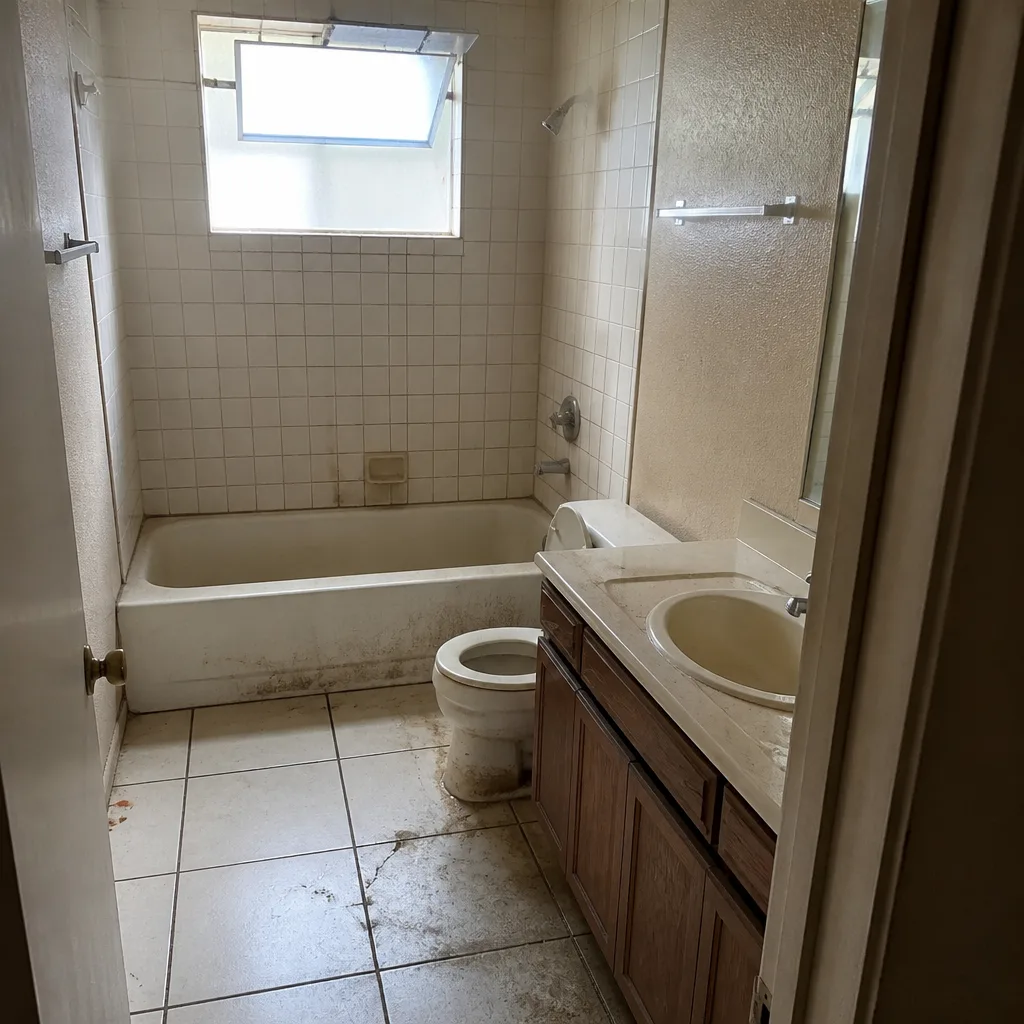 Before
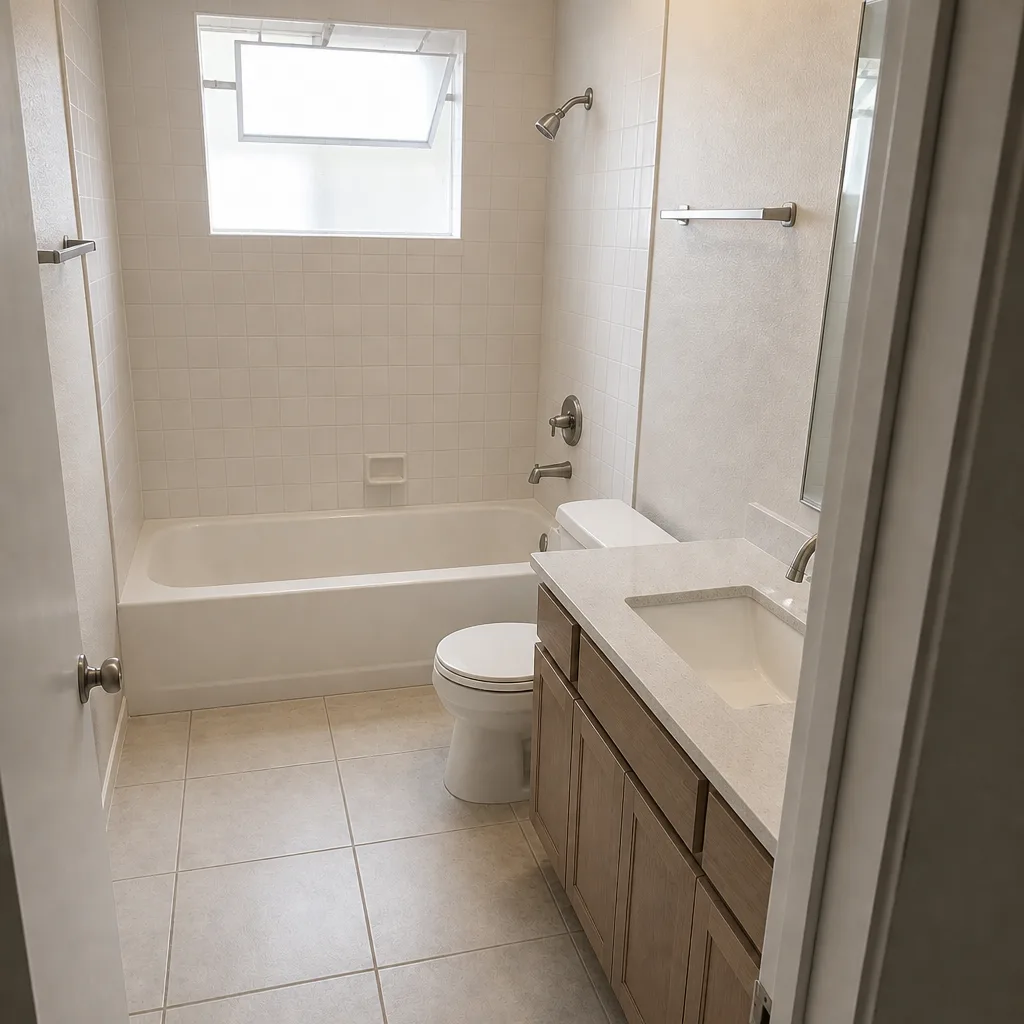 After
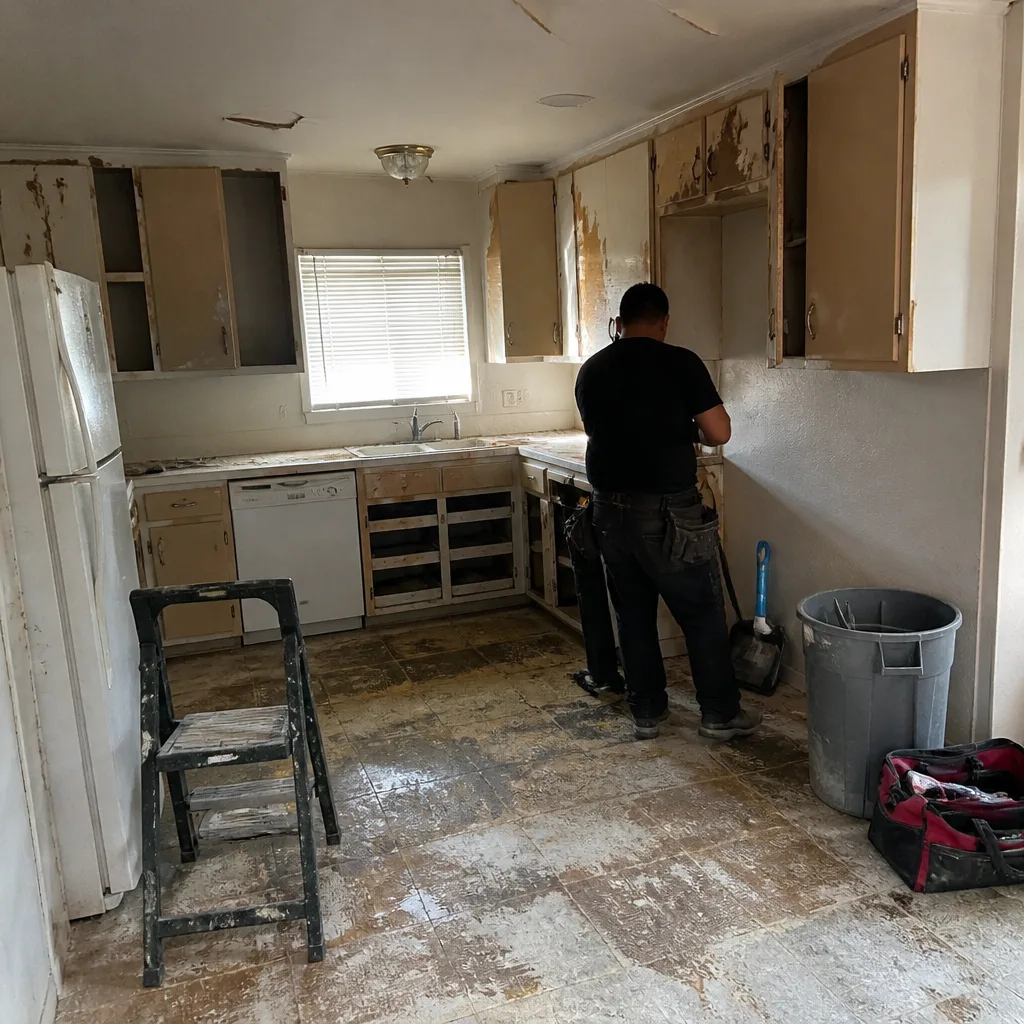 Before
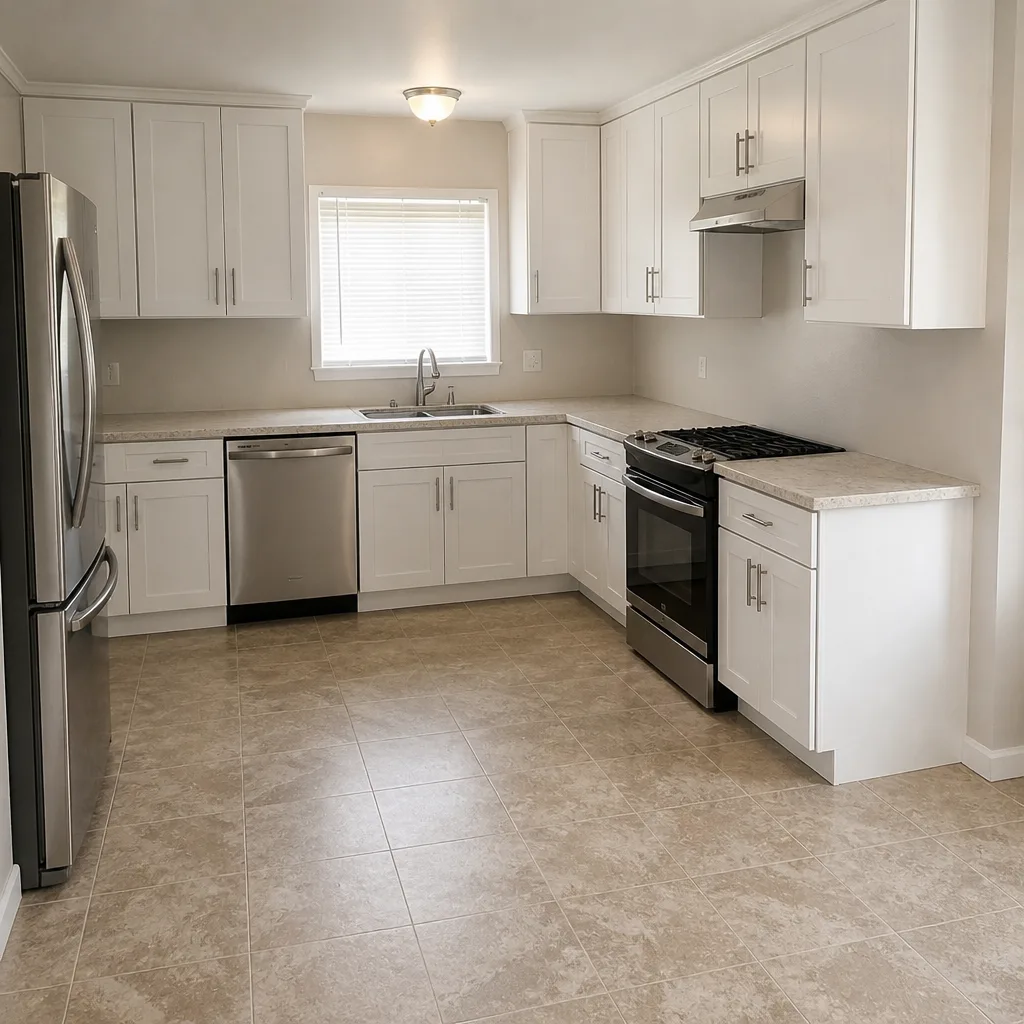 After
Frequently Asked Questions
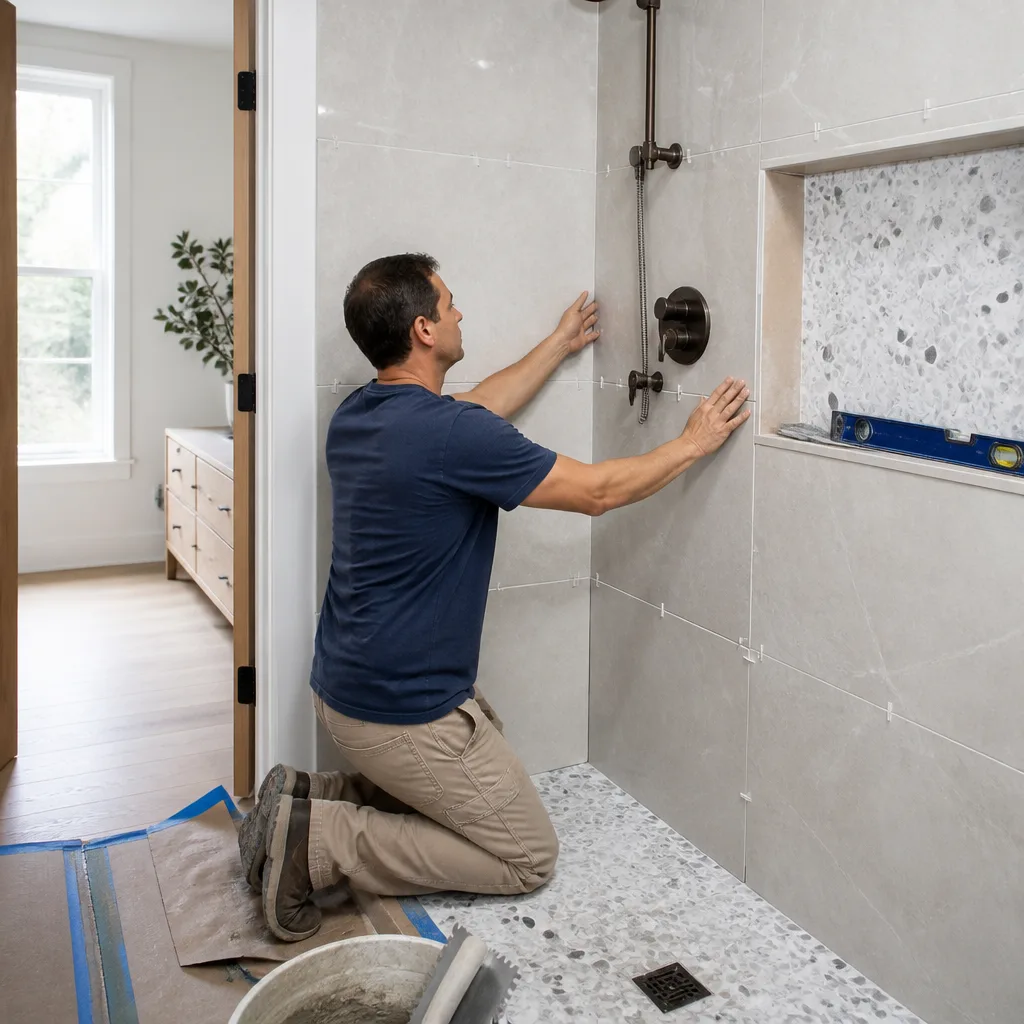
Only for cosmetic work – paint, tile replacement over existing waterproofed surfaces, fixture swaps on existing plumbing and electrical circuits. Any work that moves or adds plumbing, adds or relocates an electrical circuit, changes the shower or tub configuration, or touches structure requires a permit in Las Vegas and unincorporated Clark County. A homeowner can pull the permit as owner-builder under Nevada rules, but the work still gets inspected. Call (844) 797-1112 if you want to know whether your specific plan needs a permit – estimates are free.
Yes, for any remodel work above a $1,000 threshold, Nevada requires a state-licensed contractor. Small repairs and cosmetic work under that threshold are different, but a full bathroom remodel nearly always crosses it. Hiring unlicensed labor exposes you to failed inspections, required tear-out, and problems at resale or insurance claim time. Asking for the license number and seeing it on the contract is standard, not an insult.
A homeowner who does demo, painting, and finish installation can realistically save $1,500 to $3,500 off a mid-grade full bathroom remodel in Las Vegas. Savings rise sharply if tile work is also done by the homeowner, but the difference between those numbers and the cost of fixing a failed waterproofing job makes it a bad trade to take on the shower pan. Call (844) 797-1112 for a line-item estimate you can compare against your own savings math.
Skipping the flood test and cutting corners on the shower pan’s inside corners and curb. The flood test is the one step that catches a leak before tile hides it forever. In Las Vegas, that mistake tends to surface as staining on the ceiling below or a soft spot at the base of the wall – often months after the remodel is “done.” A licensed professional flood-tests every pan; it’s not optional and it doesn’t add meaningful cost.
A mid-grade full bathroom remodel of roughly 40 to 60 square feet typically takes 3 to 6 weeks from demo to final walkthrough when the project is professionally managed with permits and inspections. A hybrid project with homeowner-performed portions can stretch longer, especially if the scheduling handoffs aren’t planned carefully. The realistic timeline depends on the scope, the permit timing, and how smoothly the trades sequence. Call (844) 797-1112 for a real project schedule based on your scope.
Yes, if the DIY work was unpermitted or improperly installed. At resale, a buyer’s inspector will flag a bathroom remodel with no permit history, and a lender may refuse financing until it’s corrected. On the insurance side, a fire or water loss traced back to unpermitted work can lead to a denied or reduced claim. Keeping permit paperwork and inspection records is one of the simplest things a homeowner can do to protect the investment – even when the DIY part was done well.
The Bottom Line
The right question about bathroom DIY isn’t whether you can do it – it’s what happens if it fails. Demo, paint, vanities on existing plumbing, and accessories are safe, visible, and cheap to fix. Electrical, drain-line plumbing, and anything requiring a permit are not, and neither is waterproofing, especially in a Las Vegas slab home where a slow leak has nowhere to go but into the slab. Save the money on the safe work, spend it on the consequential work, and keep the permit paperwork in one folder for the day you sell.
Ready to Plan Your Bathroom Remodel?
Mason Remodeling Co Las Vegas estimates are free, and every one includes a written price before any work begins – a line-item scope, permits pulled and inspections passed, all work covered by the 365-Day Done Right Promise, and every crew member identity-verified through The Threshold Standard with name and photo delivered before the visit. Call (844) 797-1112 to schedule your free estimate and get real numbers for your bathroom remodel in Las Vegas.
Written by the team at Mason Remodeling Co Las Vegas.