Last updated November 18, 2026




Free written scope consultation - allowances, timeline, and change-order rules on paper before a single trade is scheduled
DIY vs Professional General Contractor: What’s Safe to Do Yourself
In Clark County, an unpermitted electrical or structural change doesn’t just fail inspection. It can void your homeowner’s insurance and become a mandatory disclosure item that kills a future home sale. That’s the part most DIY guides skip. The real question isn’t whether you’re handy enough to swing a hammer or run a paint roller. It’s whether you’re allowed to do the work legally in Nevada, and whether saving a few hundred dollars now is worth a stalled sale, a denied claim, or a rework bill down the line. This guide draws a hard line between genuine DIY territory and the projects that create legal and financial liability the moment a permit is required. We’ll cover Nevada licensing rules, the Clark County permit triggers most homeowners miss, how to price DIY honestly, and where a Las Vegas homeowner saves real money by doing it themselves.
Quick Answer
You can legally self-perform cosmetic work, painting, demolition prep, landscaping staging, and most non-structural repairs in Las Vegas without a licensed contractor. Structural changes, electrical panel work, gas lines, and anything that pulls a Clark County permit require a licensed professional, and doing that work unpermitted can void your insurance and complicate a future sale. The safest dividing line: if the project touches structure, the panel, gas, or the building envelope, hire a licensed contractor.
Styles & brands we work with
- Kitchen remodeling
- Bathroom remodeling
- Home additions & ADU
- Roofing
- Windows & doors
- Driveway & pavers
- Fence
Table of Contents
- What Can You Legally DIY in Las Vegas Under Nevada Law?
- The Clark County Permit Triggers Most Homeowners Don’t Know About
- Where DIY Genuinely Saves Money (and Where It Doesn’t)
- How to Calculate the Real Cost of DIY vs a Professional Bid
- Why DIY Work That Passes Your Own Inspection Still Fails
- A Step-by-Step Checklist for Splitting Any Project
- What Unpermitted Work Costs You at Resale
What Can You Legally DIY in Las Vegas Under Nevada Law?
Nevada gives homeowners a fairly wide lane to work on their own home, but that lane narrows sharply at licensed trades. The Nevada State Contractors Board licenses contractors by trade, and the state requires a licensed contractor for work over a dollar threshold that varies by trade. Electrical, plumbing, and mechanical (HVAC) work all fall under separate licensing rules. Gas work is tightly regulated and, in our experience, the one category Las Vegas homeowners should never touch, even for a small repair.
Here’s the practical breakdown of what you can legally self-perform in Las Vegas and what needs a licensed pro:
- Safe to DIY: Interior and exterior painting, drywall patching under a few square feet, cosmetic trim, cabinet hardware, tile backsplash on a small area, caulking and weatherstripping, swapping light fixtures on an existing circuit (no new wiring), and landscaping staging.
- Genuine DIY territory with caution: Demolition of non-structural elements, removing old carpet, tearing out outdated vanities, pulling baseboards before a remodel. These save money and carry low risk if you confirm nothing is load-bearing or wet-supplied.
- Licensed professional only: Removing or modifying a load-bearing wall, electrical panel work, adding circuits or outlets in new locations, gas line work of any kind, plumbing rough-in, HVAC installation, roof replacement, and anything that pulls a permit in Clark County.
The line matters because the state can issue citations for unlicensed contracting, and more importantly, your homeowner’s insurer can deny a claim tied to unpermitted structural or electrical work. If you’re planning a remodel in Las Vegas and want to know which pieces you can legitimately take on, our General Contractor in Las Vegas page walks through the split we see most often.
The Clark County Permit Triggers Most Homeowners Don’t Know About
Clark County’s Department of Building and Fire Prevention requires a permit for most work that changes a structure, alters the electrical system, or affects a building’s life safety elements. The triggers most homeowners miss have nothing to do with the size of the job on paper. They hide in the details.
These are the permit triggers we see homeowners miss most often in Las Vegas:
- Removing any wall, even a “half wall.” A permit is required unless a licensed structural professional has confirmed the wall isn’t load-bearing. Many Las Vegas homes built in the 1990s and 2000s have interior walls that look decorative but carry roof load.
- Electrical panel upgrades or replacements. Swapping a panel, adding a subpanel, or upgrading service always requires a permit and inspection.
- Adding or relocating plumbing fixtures. Moving a sink or adding a bathroom requires a permit because it changes the drain and supply rough-in.
- Patio covers, enclosed patios, and room additions. Even a light structure with a roofline tied to the house is a permitted scope in Clark County.
- Window changes that affect egress or the envelope. Replacing a window in-kind often doesn’t need a permit, but changing size or location usually does.
- Water heater replacement with a change in fuel or location. A like-for-like swap is often exempt, but relocating a tank or switching from electric to gas is not.
If you’re unsure whether a scope triggers a permit, call the county before you demo. It’s free. The surprise comes later, when a buyer’s inspector finds unpermitted work and the sale stalls.
Where DIY Genuinely Saves Money (and Where It Doesn’t)
DIY saves real money in a handful of narrow categories. It almost never saves money on anything structural, and it rarely saves money on the finishes homeowners most want to “try themselves” first. In our experience with Las Vegas remodels, the projects below are the ones where a homeowner’s labor genuinely returns the investment.
Where DIY pays off in Las Vegas:
- Painting. Interior painting runs $2 to $4 per square foot when hired out. Doing it yourself removes the largest labor line in a cosmetic refresh. The catch is surface prep, which is most of the job.
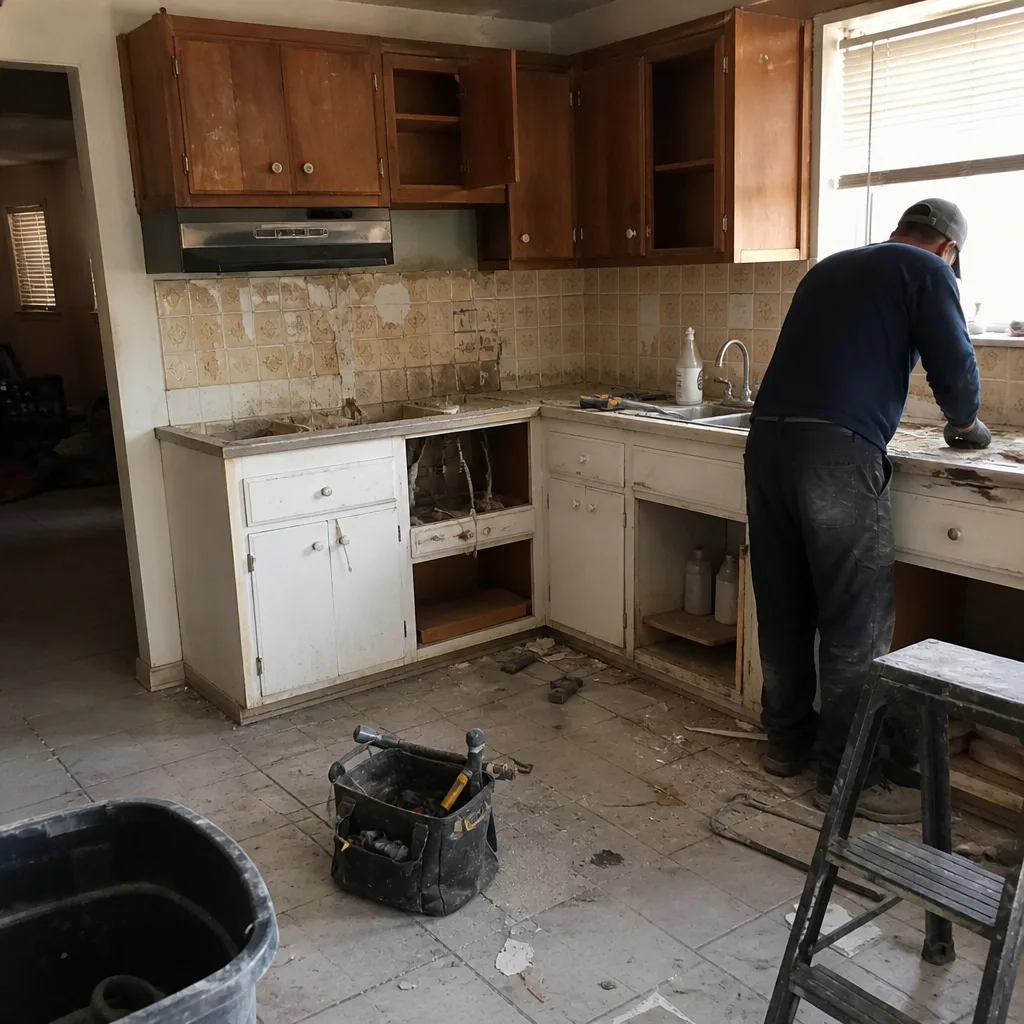
- Demolition prep. Pulling carpet, removing old tile, tearing out a cabinet run, and clearing a room before a remodel can shave $500 to $1,500 off a contractor’s scope. Confirm nothing is structural or wet first.
- Landscaping staging. Clearing rock, moving gravel, and prepping for hardscape isn’t licensed work, and in a desert climate it’s forgiving of imperfect technique.
- Small patch-and-repair. Drywall patches under a few square feet, caulk lines, and touch-up paint.
Where DIY rarely pays off:
- Tile work in wet areas. Shower and bath tile requires waterproofing membranes and correct slope. Getting it wrong means tearing it out within two years. If you’re serious about a bath refresh, our Bathroom Remodeling in Las Vegas team can quote the waterproofing scope separately so you know exactly what’s at risk.
- Cabinet installation. The error margin is a few millimeters, and the tools are expensive to rent. Most homeowners who try it spend more on rework than the pro bid.
- Electrical rough-in. Anything beyond a like-for-like fixture swap.
How to Calculate the Real Cost of DIY vs a Professional Bid
Most homeowners compare the wrong numbers. They compare a contractor’s bid to the price of materials at the nearest big-box store and conclude DIY saves thousands. The honest comparison adds tool rental, material waste, your time, and the price of correcting mistakes. In our experience, once you add those four lines, DIY saves real money on about half the projects homeowners think they’ll save on.
Here’s how to price it honestly:
- Materials plus 15% waste. Standard allowance for offcuts, breakage, and miscalculated coverage. Pros price this in; most DIY budgets forget it.
- Tool rental. Add up the actual rental rates for what you need. A tile saw, an oscillating multi-tool, and a wet-dry vac add up fast.
- Your time at market rate. Value your weekends at what you’d earn if you worked them. For a full kitchen tile job, that number is often $800 to $2,000 in labor value alone.
- The cost of getting it wrong. Realistically, budget 10% to 25% of the project cost for fixes, even if you’re careful. If a shower pan has to come out, that line can jump to the entire scope.
- Compare to the professional bid with permits included. A licensed general contractor in Las Vegas will price permits into the bid. Confirm this in writing, so you’re comparing like for like.
When you run those five numbers, DIY wins on painting, prep, and small repairs. It usually loses on tile, cabinetry, and anything electrical. For a real comparison on a kitchen, our Kitchen Remodeling in Las Vegas page lists typical bid ranges so you can self-qualify before you call.
Why DIY Work That Passes Your Own Inspection Still Fails
Homeowners often do the work carefully, confirm it looks right, and assume a licensed inspector will sign off. In Clark County, a licensed inspector looks for things a homeowner check can’t catch without training: torque values, fastener spacing, grounding and bonding, fire-blocking, and the precise geometry of a shower pan slope. The work can look perfect and still fail on the details.
A failed inspection triggers re-work, and re-work is the most expensive line in any project. Wall finished and painted? It comes back out to reach the wiring behind it. Tile set over a shower pan installed with the wrong slope? It comes out of the pan and back to framing. A failed electrical inspection on a do-it-yourself panel upgrade can mean a full re-do of the panel, which is a licensed-only scope anyway, so a failed DIY attempt on electrical panel work means you pay twice: once for your attempt, once for the professional to correct it.
In our experience, the most common owner-performed failures we see in Las Vegas are:
- Electrical boxes not properly bonded to an equipment-grounding conductor.
- Shower pan slopes that are two or three degrees off, which causes pooling water inside the waterproofing layer.
- Structural removals where a permit was pulled but the engineer’s stamp wasn’t applied, leaving the permit unable to close.
- Fire-blocking missing above new soffits or between floor joists.
Rework on any of these can run 40% to 100% of the original scope cost. That’s how the money you saved by not hiring a pro disappears.
A Step-by-Step Checklist for Splitting Any Project
The projects that go best are the ones split cleanly between what a homeowner can do and what a licensed pro should. Use this checklist to divide any Las Vegas remodel scope.
- Write the full scope on paper. Every task, every fixture, every finish. Include what the room will look like finished.
- Mark each task as licensed-only, permit-required, or safe DIY. Structure, panel, gas, plumbing rough-in, and roof go to licensed-only. Wall removal and window change are permit-required. Painting, prep, cosmetic tile, and landscaping stage are DIY.
- Call the county for anything ambiguous. A quick call to Clark County’s permit line settles a question a web search won’t. Ask specifically what triggers the permit for your scope.
- Get a fixed bid on the licensed scope only. Ask the contractor to list what they’ll do and what remains yours, in writing, before any work begins.
- Schedule the split in the right order. DIY demolition first, then the licensed crew’s rough-in, then your cosmetic work, then licensed final inspections, then your final coats of paint.
- Keep every permit, inspection, and invoice. When you sell, a stack of documents showing permitted work in Clark County can be the difference between a clean close and a buyer’s contingency.
What Unpermitted Work Costs You at Resale
Nevada requires a Seller’s Real Property Disclosure Statement. Unpermitted work that changes the structural, electrical, plumbing, or mechanical systems of the home must be disclosed. That disclosure doesn’t kill a sale automatically. It hangs over the negotiation, because a buyer’s inspector will note it, and the buyer’s lender may require it be brought up to code before closing. In practice, that means the seller pays for the correction, or knocks the correction amount off the price.
In our experience across Las Vegas, the price of bringing unpermitted work to code is typically 1.5 to 2.5 times what the same work would have cost to do permitted the first time. An unpermitted structural removal can be five figures to correct once a structural engineer writes the fix. And that’s before considering the insurance angle: many Las Vegas homeowner policies exclude claims connected to unpermitted structural or electrical modifications, which means the loss lands on you.
If you’re planning a sale in the next few years and the previous owner left you unpermitted work, getting it legalized is often the best money you’ll spend before listing. A general contractor can run the permits retroactively and coordinate the inspections.
Common Mistakes to Avoid
- Assuming “it’s cosmetic” means “no permit.” In Clark County, removing a “half wall” in a 1990s Summerlin home often is structural. Get the structural confirmation before you take hammer to drywall.
- Doing your own electrical panel work. This is not a DIY category in Nevada. Panel work requires a licensed electrician and an inspection. Attempting it can void your insurance and create a fire risk.
- Forgetting gas entirely. Gas work of any kind, even reconnecting a range, is a licensed-only scope. If you smell gas, leave the home and call the gas company first.
- Skipping the permit to save a few hundred dollars. The permit fee is usually the smallest line in the job. Skipping it is the expensive choice, especially at resale.
- Under-budgeting the mistake line. Every DIY project worth doing has a correction budget. If you haven’t put 10% to 25% aside, you’re not pricing honestly.
- Buying materials before the licensed scope is set. We regularly see homeowners buy tile before the shower rough-in is finalized, then discover the slope fix requires re-framing and different tile trim.
- Doing the final paint before the licensed final inspection. If re-inspection requires opening a wall, you’ll repaint twice. Sequence the split correctly.
See the difference
 Before
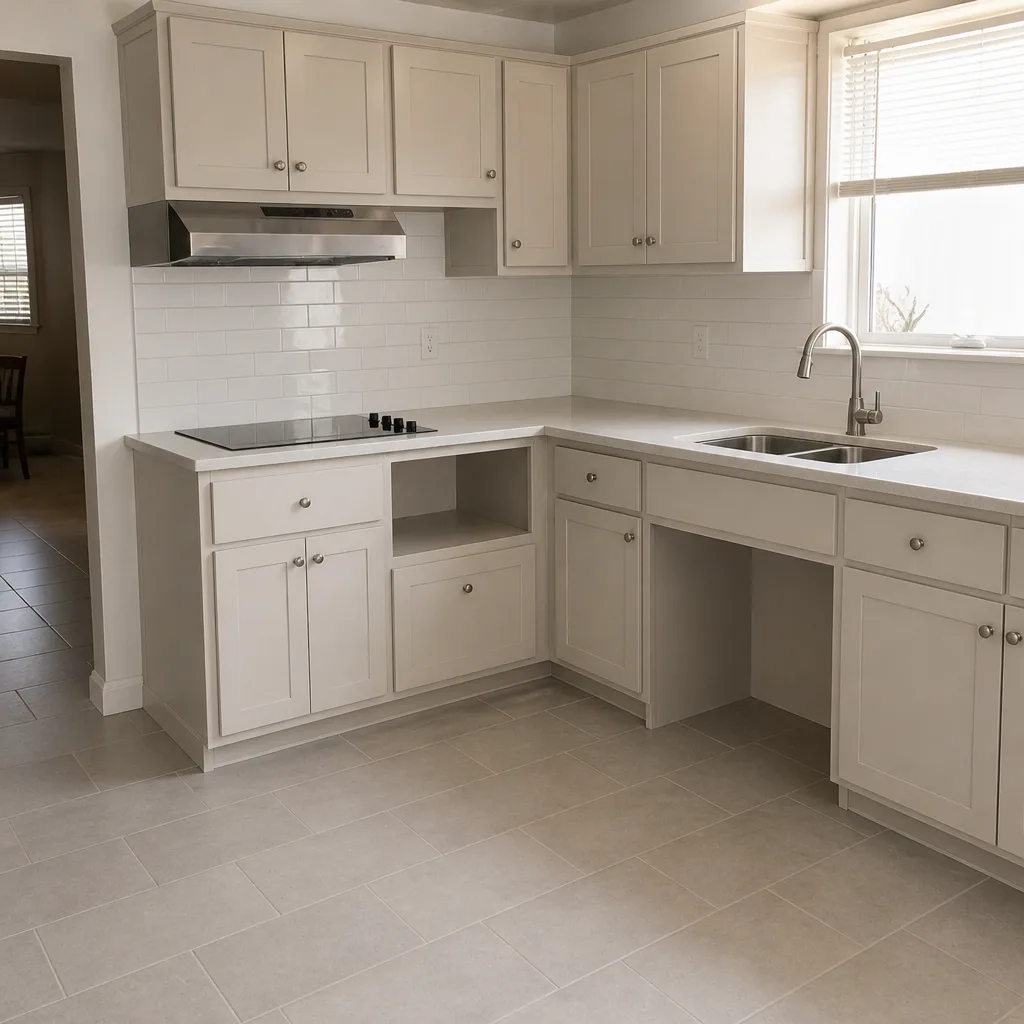 After
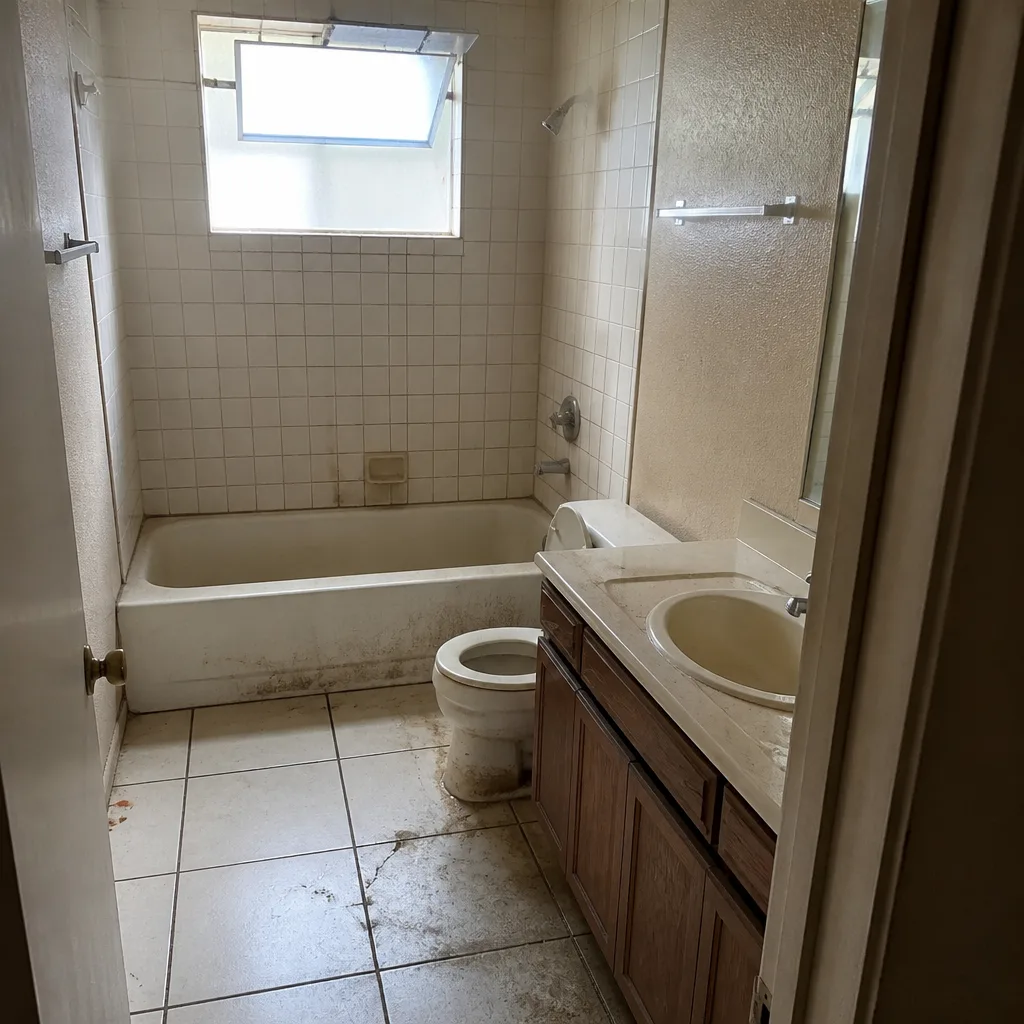 Before
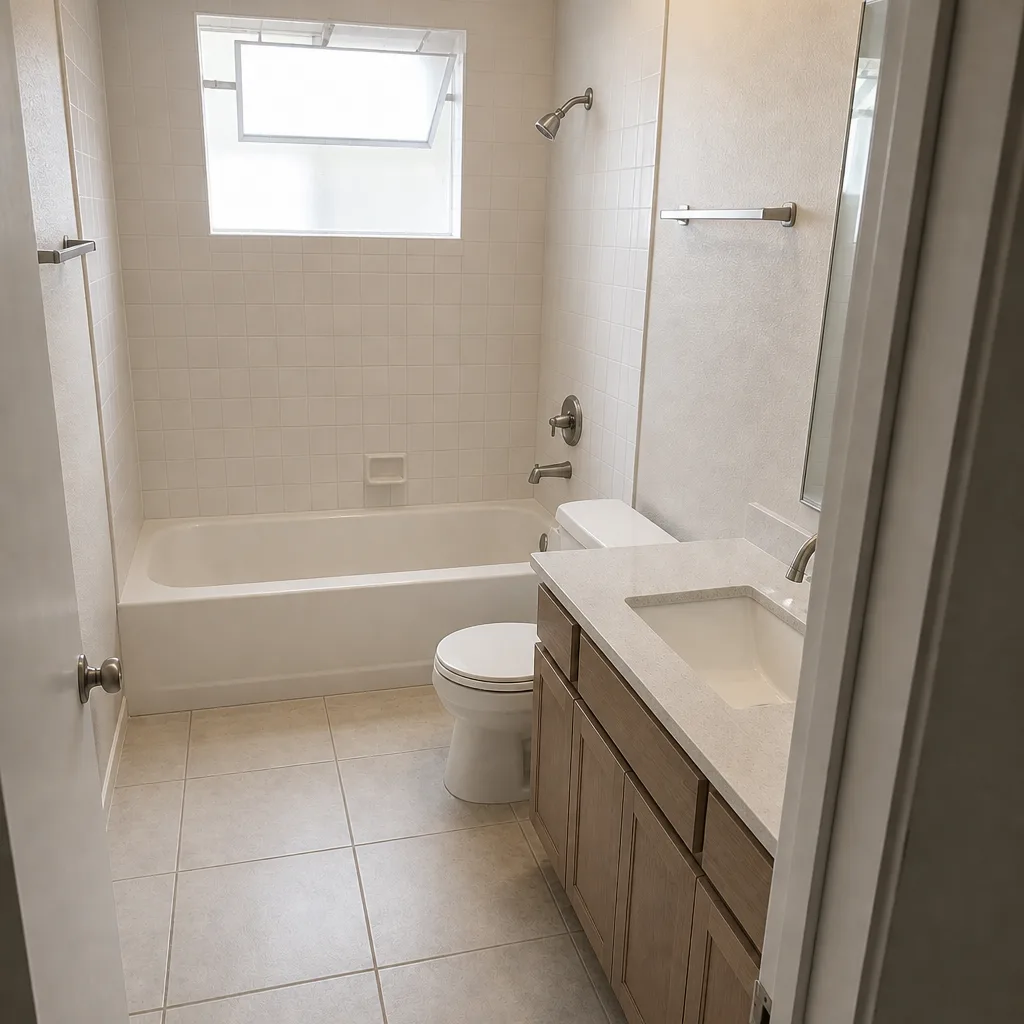 After
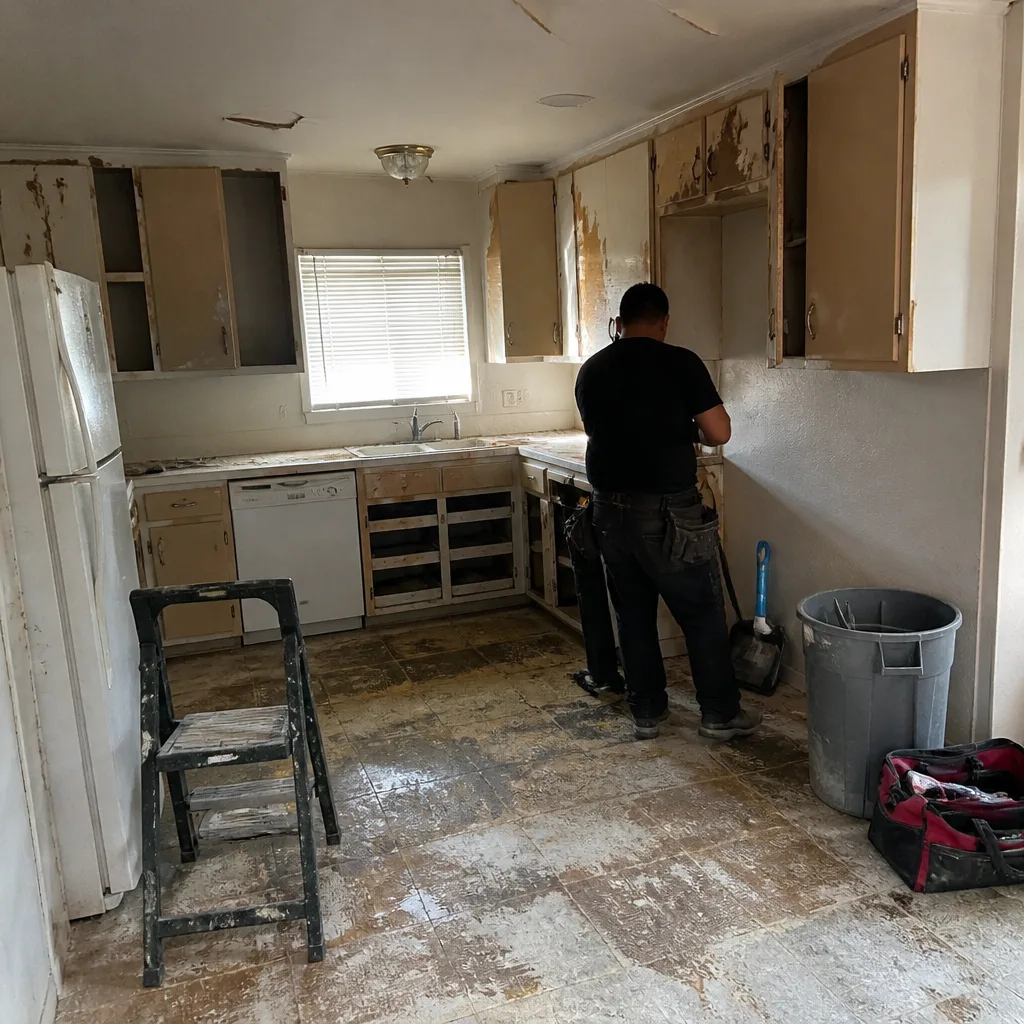 Before
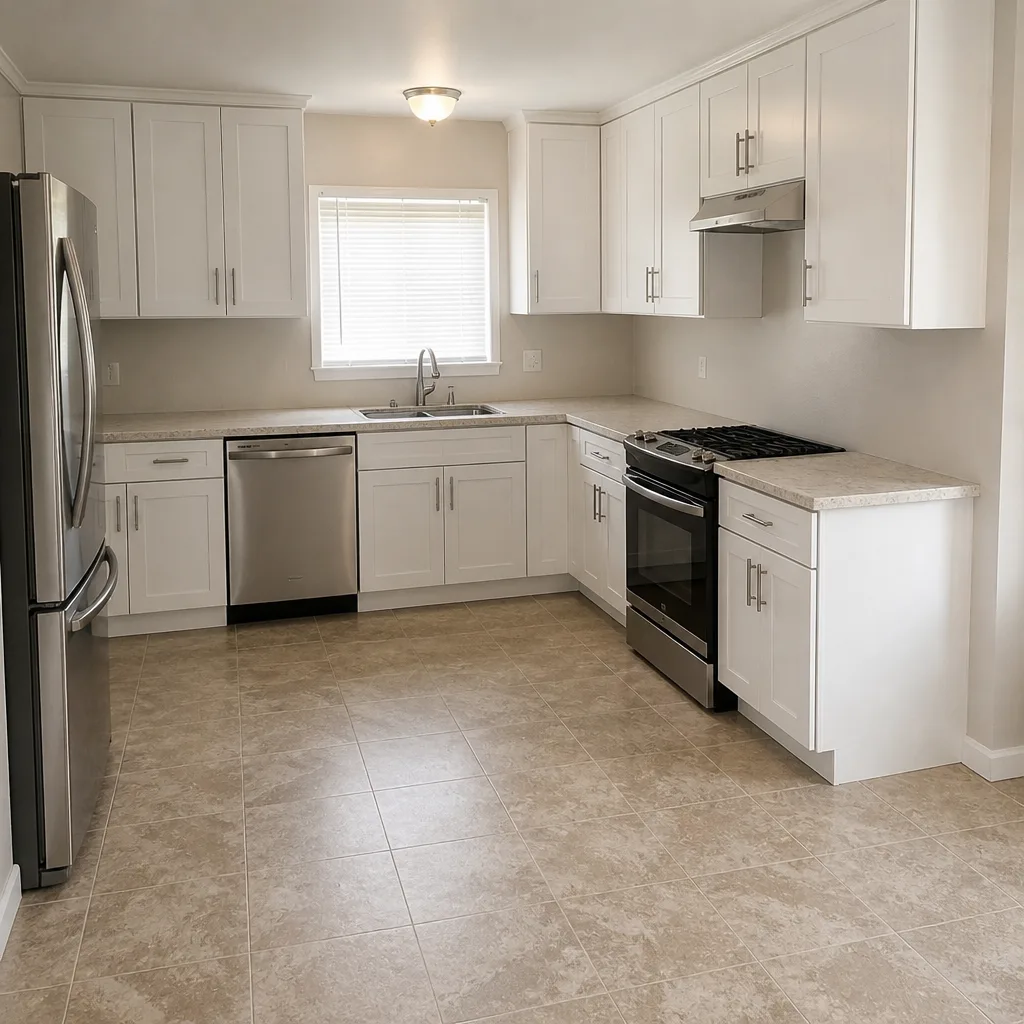 After
When to Call a Professional
Call a licensed professional the moment your scope touches structure, the electrical panel, gas, plumbing rough-in, or the roof. Call if a permit is required in Clark County and you’re not prepared to coordinate the inspection yourself. Call if the work needs to be covered by a written guarantee, which is most work you can’t afford to redo. And call if you’re planning a sale within a few years and want the permit history clean. Mason Remodeling Co Las Vegas offers free estimates in Las Vegas, and every project gets a written price before any work begins, along with our 365-Day Done Right Promise. Call (844) 797-1112 to schedule your free estimate.
Frequently Asked Questions

You can legally DIY painting, cosmetic repairs, demolition prep, landscaping staging, and small patching in Las Vegas without a licensed contractor. Any work that touches structure, the electrical panel, gas, plumbing rough-in, or the roof needs a licensed professional and, in most cases, a Clark County permit. Call (844) 797-1112 for a free estimate on the licensed portion of your scope.
Yes, in almost every case. Clark County requires a permit to remove a wall unless a licensed structural professional has confirmed in writing that the wall is non-load-bearing. Many Las Vegas homes built in the 1990s and 2000s have interior walls that look decorative but carry roof load. Pulling one without the confirmation can void your insurance and stall a sale.
In our experience, bringing unpermitted work to code typically runs 1.5 to 2.5 times what the same work would cost to do permitted the first time. Structural corrections are often the most expensive. A general contractor can quote the correction as a fixed price so you know the number before work starts. Call (844) 797-1112 for a free estimate.
No. Electrical panel upgrades and replacements require a licensed electrician and a Clark County inspection. Attempting the work yourself can void your homeowner’s insurance and creates a serious fire risk. If the panel is warm to the touch, tripping breakers frequently, or showing scorch marks, call a licensed electrician and leave the panel alone.
Not always. A licensed inspector checks details a homeowner check can’t verify without training: torque values, grounding and bonding, fire-blocking, and shower pan slope. Rework after a failed inspection can run 40% to 100% of the original scope cost. If your project touches a licensed trade, hire a pro and keep the inspection record.
Simple residential permits in Clark County often issue in a couple of weeks. Structural changes and additions take longer because they require plan review. A licensed contractor typically runs the permit timeline for you as part of the project schedule, so the price you’re quoted includes permit preparation and inspection coordination. Call (844) 797-1112 for a free estimate and a realistic timeline for your project.
The Bottom Line
The DIY question in Las Vegas isn’t about your skill. It’s about licensing, permits, and liability. Painting, demolition prep, and landscaping staging are genuine DIY territory and save real money. Structure, electrical panels, gas, plumbing rough-in, and roofing are licensed-only, and skipping the permit on any of them can void your insurance and cost you at resale. Budget honestly, sequence the split correctly, and keep every permit and inspection record. If you’re ready to price the licensed portion, Mason Remodeling Co Las Vegas delivers a written price before any work starts and backs it with our 365-Day Done Right Promise. Start at our Mason Remodeling Co Las Vegas home page, or call (844) 797-1112 for a free estimate.
Ready to price your project? Call Mason Remodeling Co Las Vegas at (844) 797-1112 to schedule your free estimate. Every project gets a written price before any work begins, and every completed job is covered by our 365-Day Done Right Promise. Our technicians have up to 22 years of experience, every crew member is background-checked and identity-verified under The Threshold Standard, and a live person answers every call, 24 hours a day.
Written by the team at Mason Remodeling Co Las Vegas.