Last updated November 18, 2026





Free written scope consultation - allowances, timeline, and change-order rules on paper before a single trade is scheduled
Bathroom Remodeling Troubleshooting: Common Problems and How to Fix Them
A shower that leaks into the subfloor costs $200 to waterproof correctly during construction and $4,000 – $8,000 to repair after the tile is set. The entire difference comes down to one inspection most contractors skip: a flood test on the pan liner before a single tile goes down. Bathroom remodel problems rarely announce themselves. They hide behind cement board, inside wall cavities, and under slab until the wrong moment, and by then the cheap fix has become the expensive one. This guide walks through the failure points stage by stage, from demo-day discoveries to grout that cracks six months after punch list, so you can catch trouble while it is still small. We’ll cover what to look for in a Las Vegas bathroom and what to ask your contractor before work begins.
Quick Answer
Most bathroom remodel problems fall into four buckets: hidden damage found during demo (mold, failed drains, out-of-plumb walls), waterproofing failures that show up months later, tile and grout symptoms that point to installation errors underneath, and code gaps like missing GFCI protection. The fix for nearly all of them is the same: inspect and test at the right stage, insist on a flood test before tile, and document everything in writing. Catching these problems before tile is set typically saves 60 – 80% versus repairing them after the fact.
Styles & brands we work with
- Kitchen remodeling
- Bathroom remodeling
- Home additions & ADU
- Roofing
- Windows & doors
- Driveway & pavers
- Fence
Table of Contents
- What to do when demo reveals mold, failed drains, or out-of-plumb walls
- How to catch a failed shower pan liner before tile is installed
- Reading tile symptoms: lippage, grout cracks, and hollow spots
- When the remodel reveals electrical that isn’t code-ready
- Handling contractor disputes mid-project without stopping work
- Las Vegas-specific problems: hard water, slab, and desert heat
- Common mistakes to avoid
- When to call a professional
What to do when demo reveals mold, failed drains, or out-of-plumb walls
Demo day is where a remodel’s real budget gets decided. Las Vegas homes built in the 1970s through the 1990s often hide cast iron drain lines that have corroded from the inside out, and the corrosion isn’t visible until the wall opens up. A cast iron trap arm that has scaled down to half its original diameter will drain slowly in a way no snake can fix. When your contractor finds one, the honest move is to replace the affected run while the wall is open. Doing it later means tearing out the new shower to reach the same pipe.
Out-of-plumb walls are the second surprise. A wall that is off by 3/8 inch over an 8-foot height will produce lippage on large-format tile no matter how careful the setter is. Two ways to handle it: fur out the studs to square before cement board goes up, or use a tile underlayment system that absorbs the deviation. The wrong approach is to float thinset thicker on one side and hope. That creates a hollow void behind the tile that fails within a couple of years.
Mold is the third. In Las Vegas, mold is less common than in humid climates because the air is so dry, but it still shows up behind shower walls where a slow leak has been feeding it for years. When demo uncovers visible mold, the steps are:
- Stop work in that zone and photograph everything before any removal.
- Have the affected framing and sheathing evaluated by a separate environmental or mold remediation specialist, not the same crew that will rebuild.
- Get a written clearance before new material goes back in.
- Address the moisture source: failed caulk, failed pan liner, or a supply line pinhole.
If your contractor wants to skip step two because “it’s just a little,” that’s the moment to slow down. Documented clearance protects your resale and your warranty claim if the same wall fails again. For a full walkthrough of the design side of these projects, see our Bathroom Remodeling in Las Vegas page.
How to catch a failed shower pan liner before tile is installed
A shower pan liner is the waterproof membrane under the tile floor of your shower. It is a sheet of PVC or a liquid-applied membrane that catches water that gets past the grout and directs it to the drain. If it’s missing, punctured, or improperly sloped, water goes into the subfloor instead, and the failure shows up as a soft spot, a stain in the ceiling below, or a musty smell you can’t locate. In our experience across Las Vegas remodels, we’d estimate a quarter of older showers we open up have no liner at all, or one that was stapled through during installation.
The single test that catches this before tile is the flood test, sometimes called a water test. Here’s what to ask for in writing:
- The liner is fully installed and the drain is sealed with a test plug.
- The pan is filled with at least 2 inches of water and marked at the waterline.
- The water sits for a minimum of 24 hours.
- Someone photographs the waterline at the start and end to confirm no loss.
- You are shown the photos before tile installation begins.
If a contractor says “we don’t bother with that, we’ve never had a leak,” that is a problem. The 24-hour flood test is standard in the tile trade and costs a day. After the pan is set, the waterproofing extends up the walls as well. Cement board is not waterproof on its own; it needs a topical membrane or a vapor-tight foam board behind the tile. Schluter-Kerdi is a common system, but there are others including Wedi and liquid-applied options like RedGard. What matters is that the system is continuous from the drain flange to the showerhead height. Ask your contractor which system they’re using and where the specification sheet lives.
Reading tile symptoms: lippage, grout cracks, and hollow spots
Each tile symptom is telling you something specific about the installation underneath. Learning to read them is the difference between a small correction and a full tear-out.
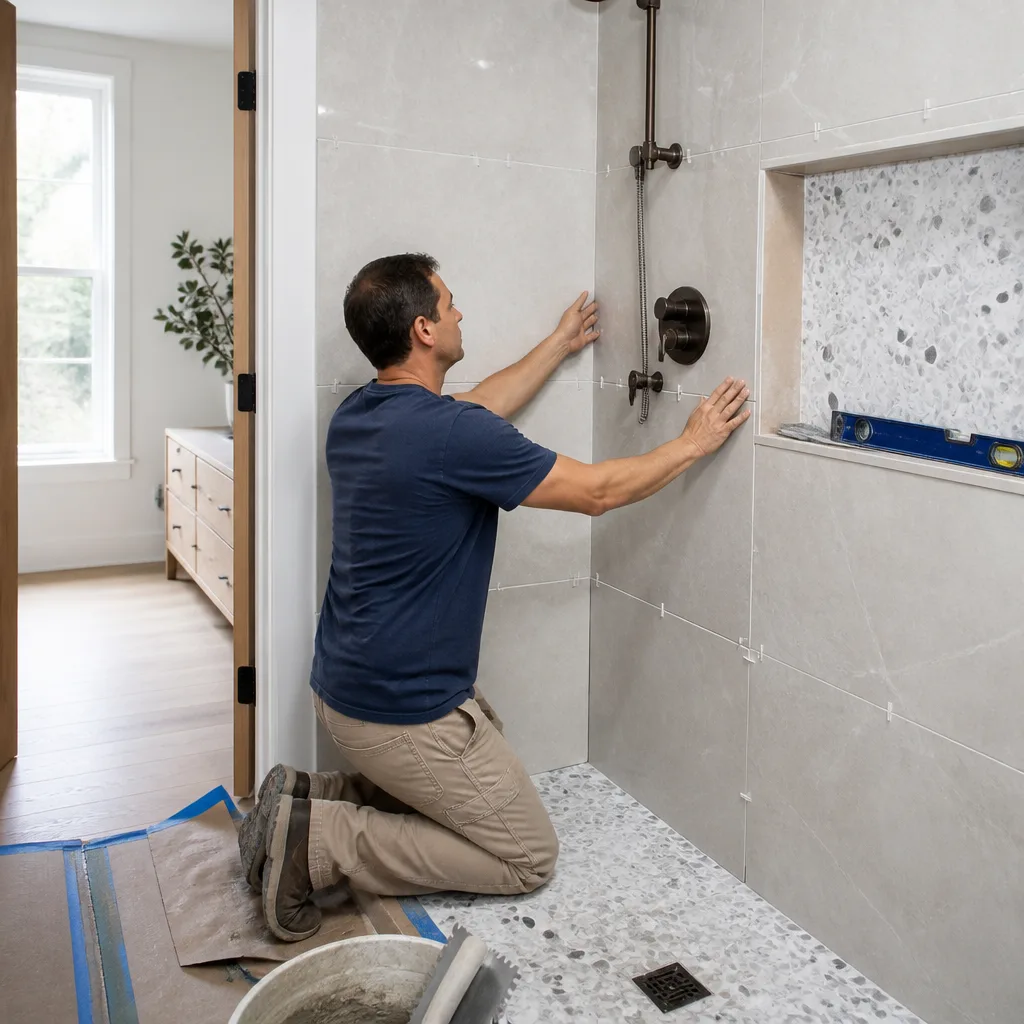
Lippage is the term for one tile edge sitting higher than its neighbor. Small lippage (1/32 inch or less) is normal in handmade or large-format tile. Noticeable lippage, where you can feel the step underfoot, usually means the tile was set over an uneven substrate, the mortar was mixed too stiff, or the installer used a spot-bonding technique (dollops of thinset at the corners) instead of full coverage. The fix during installation is to pull the affected tiles, re-flatten the substrate, and reset. After the mortar cures, you live with it or tear out the field.
Grout cracking in a straight line points to movement, often at a framing joint or at the boundary between the shower walls and the pan. Cracking that spreads out from a corner or travels across multiple tiles usually means the substrate itself is flexing. That’s a structural signal, not a cosmetic one. If you see cracks within the first year, insist on the corrections covered by your workmanship warranty rather than a cosmetic grout patch.
Hollow spots are found with a tap test: tap the handle of a screwdriver lightly against each tile. A dull thud means full mortar coverage. A hollow sound means the tile is bonded at the edges but not the middle, or not bonded at all. A few isolated hollow spots in the field are worth noting. A cluster, especially near the shower floor or bench, is a red flag and often precedes a tile or grout failure. Record the locations on a photo so the contractor can’t argue about it later.
The Las Vegas climate adds its own signal: because the air is dry, thinset cures faster than in humid regions, and installers who don’t adjust their mix or work time get weaker bonds. Ask whether the crew is familiar with desert-cure conditions.
When the remodel reveals electrical that isn’t code-ready
Bathrooms are wet locations, and the electrical code treats them that way. Every bathroom receptacle must be ground-fault circuit interrupter (GFCI) protected, and in most cases the GFCI device itself must be within easy reach. Older Las Vegas homes routinely fail this: a 1980s bath may have a receptacle directly adjacent to the sink with no GFCI, or a light fixture mounted inside the shower envelope without a wet-location rating. Remodels trigger a code upgrade requirement, so this is not a “leave it alone and hope nobody notices” situation.
The safe response when demo reveals electrical that isn’t up to code:
- Treat it as a scoped addition to the project, not a hidden contingency. Ask for a written line-item before work proceeds.
- Require a licensed electrician to perform the electrical work, and require that the work is inspected if your jurisdiction requires it.
- Do not let a general crew splice or reroute wiring themselves even “just to move the vanity light.” Wiring is a hazard and a liability.
- Confirm GFCI protection at every bathroom receptacle, and confirm the bathroom exhaust fan is wired to run for the size of the room.
If the exposed electrical has any sign of heat damage (scorched insulation, a melted outlet, a wire that sparks when tapped), stop work and call an electrician immediately. Bathroom circuits carry real current, and a compromised conductor behind a wall you’ve just opened is not something to “get to after tile.” Get price ranges for the correction in writing before you continue the remodel. If your project is broader than the bathroom, our General Contractor in Las Vegas page covers how we sequence electrical and plumbing corrections in renovation work.
Handling contractor disputes mid-project without stopping work
The most expensive thing you can do mid-remodel is stop work and argue. Paused jobs still cost money (storage, protection, mobilization), and a contractor whose cash flow is cut off has less incentive to walk back to the job. The approach that protects you legally and keeps the project moving is disciplined documentation while work continues.
Here are the steps that hold up:
- Get the contract requirement in writing. Anything you claim was promised should live in the original written contract or in a written change order. If it isn’t there, ask for the confirmation in email before the next stage begins.
- Photograph everything, dated. Take photos at every stage: demo, rough-in, waterproofing, tile-set, finish. A dated photo trail is worth more than a verbal argument.
- Send one clearly written summary of the issue. Not a text thread, not a phone message. A single email that lists the issue, the date it appeared, the remedy you’re requesting, and the response deadline.
- Pay only for work that’s actually done. Do not withhold payment for work that has been completed and passed your inspection. Withholding is the fastest way to lose the mediation ground you’ll need.
- Escalate in writing, not by phone. If the contractor doesn’t respond in the timeframe, write again. Two documented escalations often resolve more than a dozen calls.
If the problem is a safety or code violation, stop work immediately and call the local building department or a separate inspector. That’s a different case from a quality dispute, and it should be escalated without delay. For a sense of what a written scope should look like, our Mason Remodeling Co Las Vegas home page describes our standard, where a written price is delivered before any work begins on every project.
Las Vegas-specific problems: hard water, slab, and desert heat
Las Vegas tap water runs high in dissolved calcium and magnesium, and that is rough on bathroom plumbing and finishes. Showerheads and valves scale up faster here than in most of the country. If your new shower valve is a thermostatic mixing valve, mineral scale can stiffen the dial within a couple of years unless it’s flushed and descaled. We recommend asking your plumber about a whole-home water softener or at least a showerhead with replaceable cartridge. It costs less than a valve replacement later. For hardware, brass and PVD finishes hold up better to hard water than polished chrome or uncoated oil-rubbed bronze.
Slab construction is the second Las Vegas issue. Most homes here sit on post-tension slab, which means plumbing changes that cut into the slab have to account for tension cable locations. Any contractor who wants to relocate a shower drain through the slab must have the post-tension cable plan in hand. Cutting through a tension cable without knowing where it runs is a serious structural problem, and it’s the kind of thing that gets a remodel’s permits pulled fast. Ask for the cable layout plan before anyone touches a saw.
Desert heat is the third. Attic-plenum duct runs and the exhaust fan ducting above a bathroom can hit 140°F in a Las Vegas summer, and standard plastic flex duct and PVC exhaust connections degrade faster than in cooler climates. Specifying a rigid metal exhaust duct with a smooth interior keeps the fan working and stops the moisture from condensing on the run. Fiberglass-backed drywall near the shower is another weak point; a paper-faced gypsum board is not the right product for a wet wall in this climate.
Common Mistakes to Avoid
- Skipping the flood test to save a day. One day of flood test protects $4,000 – $8,000 of future repair. It is not optional. Insist on it in the written scope before tile is set.
- Accepting a verbal price change. Any change, from a $200 fixture to a $2,000 drain replacement, should live in a written change order that both of you sign. Verbal changes are the #1 source of end-of-project disputes.
- Spot-bonding tile to save mortar. This is a common shortcut on large-format tile, and it is why hollow spots and grout cracking show up 18 months later. Full coverage with a notched trowel is the standard.
- Ignoring out-of-plumb walls because “the tile hides it.” Tile does not hide deviation, it amplifies it. Correct the studs before cement board goes up.
- Letting a general crew do electrical or gas work. Bathroom wiring, GFCI, and any gas line changes must be done by a licensed electrician or plumber. No exceptions, even on a small job.
- Paying 100% up front. A sensible progress schedule pegs payments to completed and inspected stages: demo, rough-in, waterproofing, tile, finish. Final payment after punch list, not before.
- Skipping the post-tension cable plan before slab work. In Las Vegas, cutting into a slab without the cable layout is how a routine drain relocation turns into a structural repair.
When to Call a Professional
Some bathroom remodel problems are genuinely DIY-fixable: recaulking a shower, replacing a leaky showerhead, repainting a ceiling stain after the source is fixed. Others are not, and the line matters. Call a licensed professional when the problem involves any of the following: a leak that has reached the subfloor or a ceiling below, a suspected failed pan liner, out-of-plumb framing that affects tile, exposed wiring or a bathroom without GFCI protection, any gas line work, or a slab cut that might encounter post-tension cable. Each of these carries the risk of a $500 repair turning into a $5,000 one if done wrong, and the electrical and structural items carry real safety risk.
Mason Remodeling Co Las Vegas offers free estimates in Las Vegas. Our technicians have up to 22 years of experience, and a written price is delivered before any work begins, on every project, every time. Call (844) 797-1112 to schedule your free estimate.
See the difference
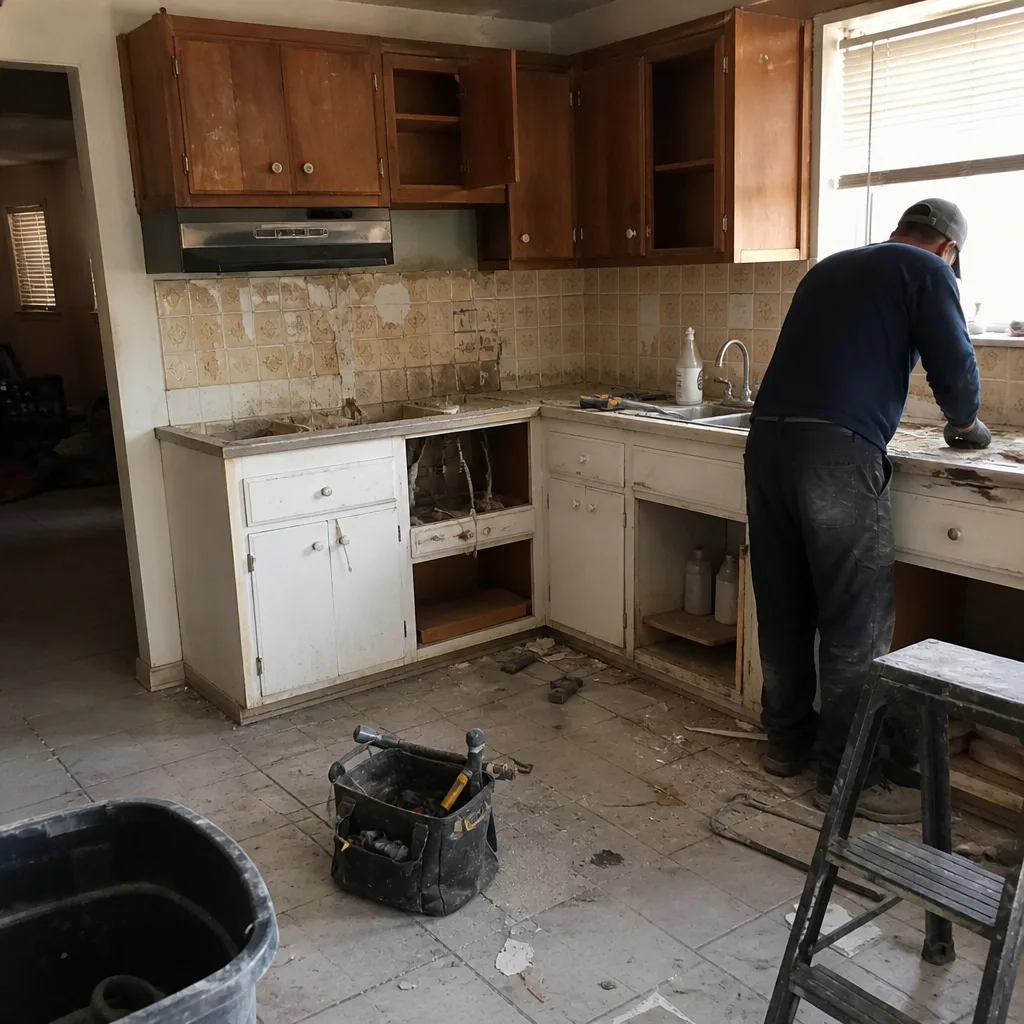 Before
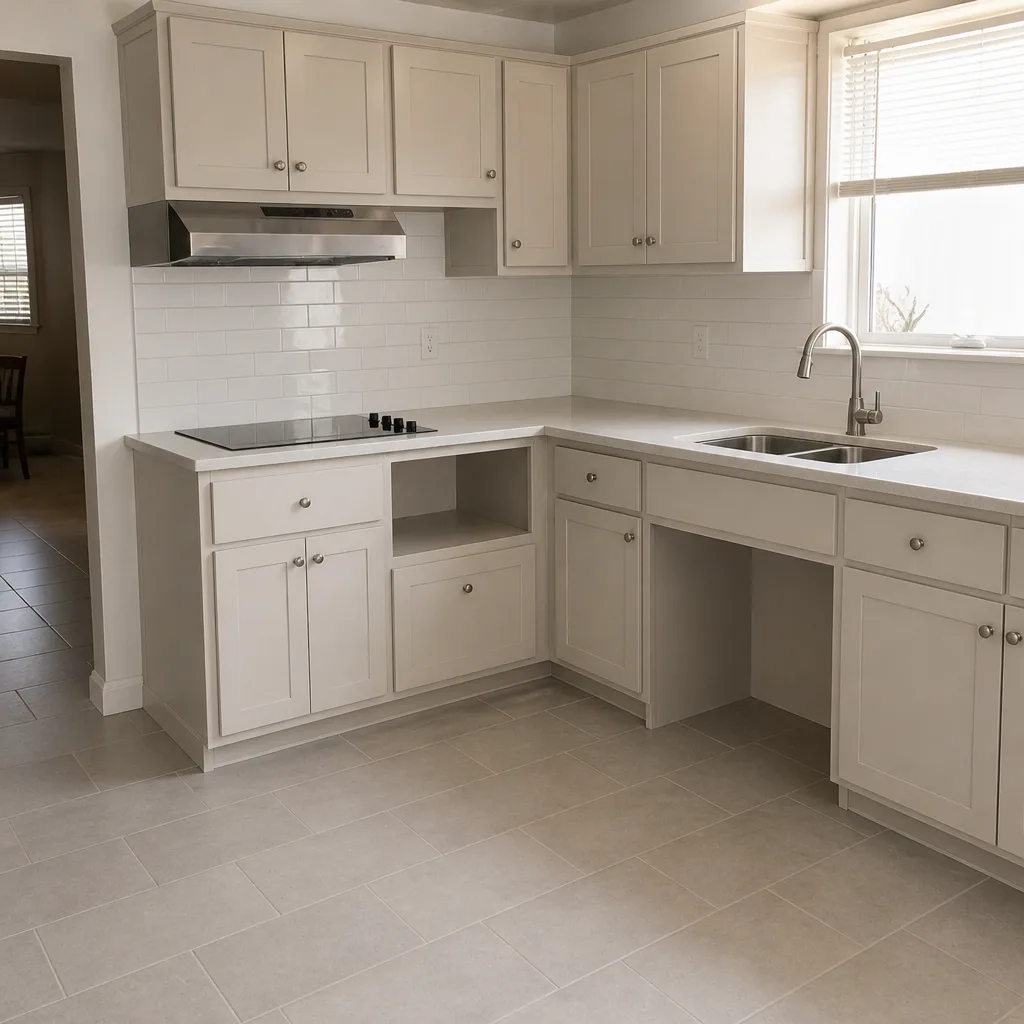 After
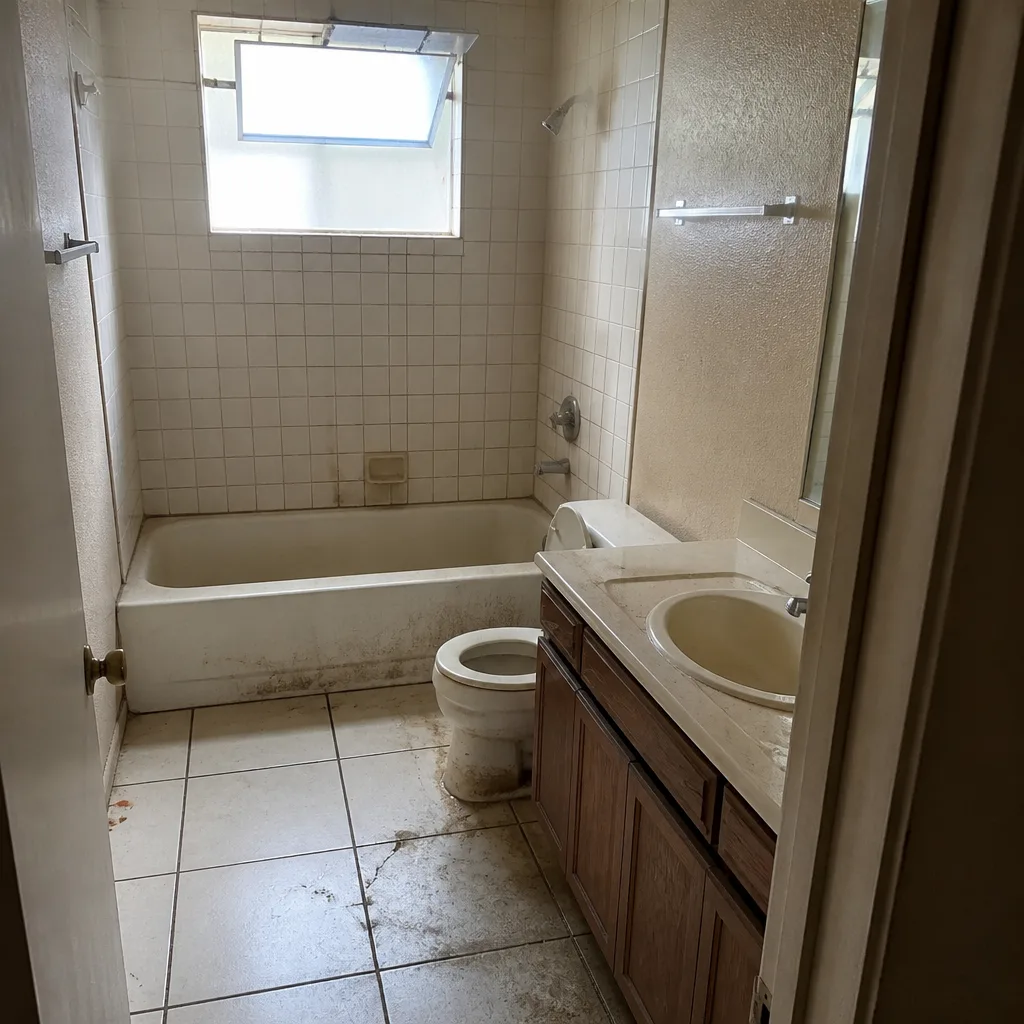 Before
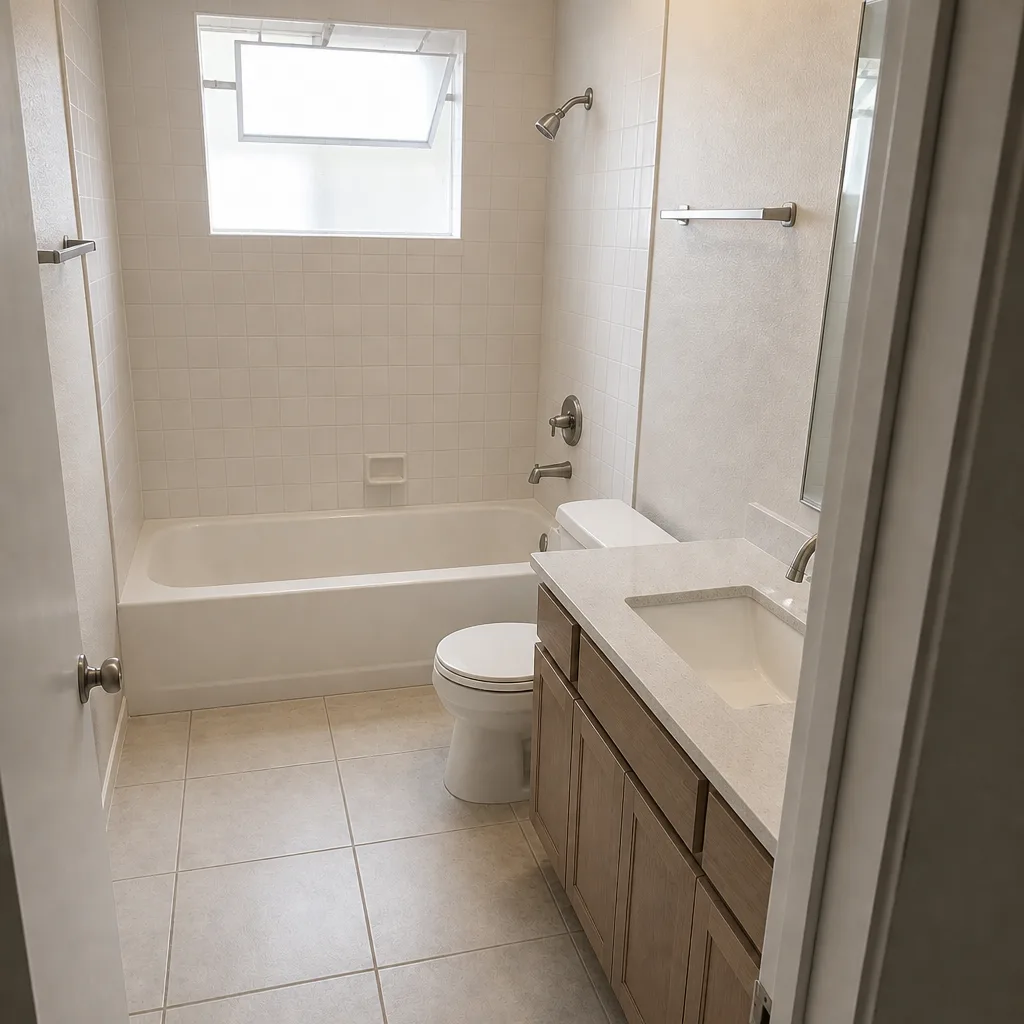 After
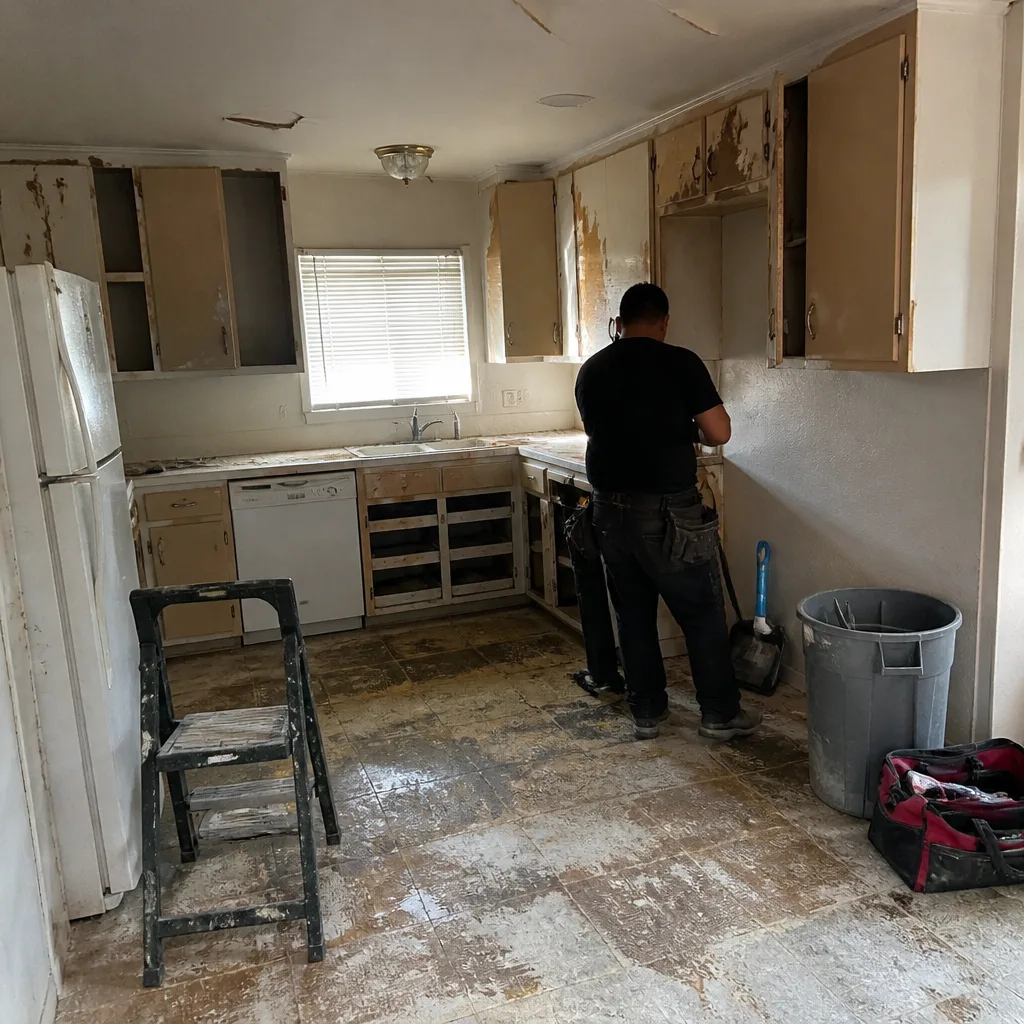 Before
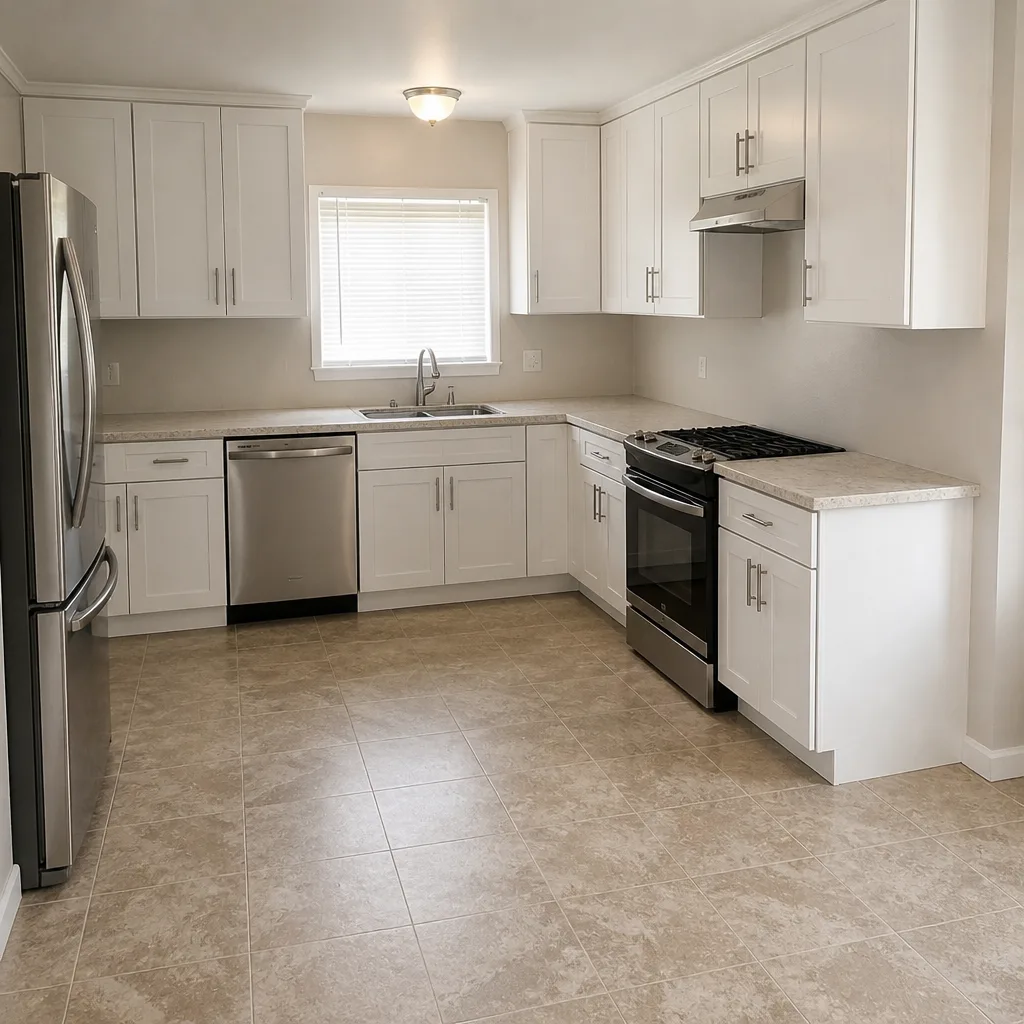 After
Frequently Asked Questions
Fixing a failed shower pan liner during construction typically costs $200 – $600 in materials and labor as part of the tile phase. Fixing the same failure after tile is set, drywall is up, and the shower is finished runs $4,000 – $8,000 depending on the extent of water damage. Prevention is the flood test. Call (844) 797-1112 for an exact quote on your project; estimates are free.
Not if the price is written correctly. A written scope with a documented inspection stage for demo findings is the standard we hold to: any hidden issue (failed drain, mold, out-of-code electrical) becomes a written change order before the corresponding work begins. Verbal “while we’re in there” price changes are the source of most end-of-project disputes. Call (844) 797-1112 and we’ll walk you through what a written scope for your bathroom looks like.
Yes. A bathroom remodel that touches plumbing supply or drain lines, electrical circuits, or structural framing requires permits in Las Vegas and Clark County, and those permits need to be pulled by the licensed trade doing the work. Skipping the permit costs less upfront but creates a documented gap at resale and at the point of insurance claim. Call (844) 797-1112 to talk through what your specific project needs.
A typical full bathroom remodel in Las Vegas runs 3 – 6 weeks once material is on site, longer if the scope changes mid-course. The schedule turns on how quickly the inspection stages clear: demo, rough-in, waterproofing, tile, and finish. Flood test alone adds a day, and it’s non-negotiable. For a detailed timeline on a specific project, call (844) 797-1112 for a free estimate.
Three tests: a tap test (hollow sound means poor mortar coverage), a visual check for lippage (one tile edge noticeably higher than its neighbor), and a check for hairline grout cracks running along a straight line. All three point to installation defects rather than normal wear, and all three are covered under a workmanship warranty if your contractor offered one. If the install is within the last 12 months, call the contractor and ask them to visit and assess before making a repair decision yourself. Call (844) 797-1112 for a second opinion estimate.
The top three we see are failed or missing shower pan liners in 1980s-era showers, out-of-code electrical in baths that haven’t been touched since the original build, and hard-water scale on shower valves and showerheads. Post-tension slab layout is a fourth, since any drain relocation needs the cable plan. Each of these can be caught at the demo or rough-in stage if you know what to ask for. Call (844) 797-1112 to schedule a free estimate and a walkthrough of the trouble spots in your bathroom.
The Bottom Line
Bathroom remodel problems are almost always cheaper to fix at the stage they’re caught. A $200 flood test prevents an $8,000 tear-out. Furring a wall straight before cement board prevents a tile complaint six months later. A written change order for a code gap prevents a dispute at final payment. The pattern is the same: inspect at the right stage, photograph everything, and put the fix in writing before the next stage starts. If you’re planning a bathroom project in Las Vegas and want a second set of eyes on a scope, a schedule, or a symptom you’re worried about, call (844) 797-1112 for a free estimate.
If your project extends into other rooms, our Kitchen Remodeling in Las Vegas page covers the sequencing that keeps kitchen and bath work on the same calendar.
Written by the team at Mason Remodeling Co Las Vegas.