Last updated November 18, 2026








Free written scope consultation - allowances, timeline, and change-order rules on paper before a single trade is scheduled
Home Remodeling Warning Signs Every Homeowner Should Know
The contractor who pushes for a large cash deposit before providing a written scope is not running low on operating capital. They are running a pattern that ends with an unfinished project, a lien on your house, and a phone number that stops working. The signs that matter most show up before anyone picks up a hammer: how the bid is written, how fast they want an answer, and whether they will put the price on paper. This guide walks through the pre-hire signals that should stop a project cold, the during-project red flags, and the exact contract language that protects you. We’ve watched these patterns play out in Las Vegas remodeling long enough to know what comes next.
Quick Answer
The biggest remodeling warning signs are a vague or verbal bid with no written scope, pressure to sign or pay a large cash deposit the same day, a license you can’t verify as active, and work that starts before permits are posted. Catching these during hiring, when walking away costs you nothing, is far cheaper than catching them after demolition has started.
Styles & brands we work with
- Kitchen remodeling
- Bathroom remodeling
- Home additions & ADU
- Roofing
- Windows & doors
- Driveway & pavers
- Fence
Table of Contents
- Pre-Hire Warning Signs: What to Catch Before You Sign
- The Large Cash Deposit Request: Why It’s a Pattern
- Work Starting Before Permits Are Posted
- How to Verify a Nevada Contractor’s License in Under Two Minutes
- Change Orders: The Legit Process vs. the Price Inflator
- Crew Members Arriving Unannounced
- Contract Language That Gives You Leverage
Pre-Hire Warning Signs: What to Catch Before You Sign
Almost every bad remodeling story starts with a bid that was never really a bid. A contractor hands you a single number on the back of a business card, shakes your hand, and says they can start Monday. That number has no line items, no material specifications, and no allowance for anything. When the final bill arrives higher, there is no document to point back to. In our experience, this single habit is the strongest predictor of trouble, because a contractor who won’t write a detailed scope usually isn’t organized enough to build one.
Here is what a real bid looks like next to a bad one:
- Real bid: line items for demolition, framing, plumbing rough-in, electrical, drywall, cabinetry, countertops, and finish materials, each with a dollar figure or a stated allowance.
- Bad bid: one total price, or a per-square-foot number with no list of what is included.
- Real bid: names the actual products, like a KraftMaid maple cabinet line or a Cambria quartz surface, with model or color.
- Bad bid: “standard cabinets and granite,” which means whatever is cheapest that month.
- Real bid: a written expiration date and a stated scope for what triggers a change order.
- Bad bid: a verbal promise to “work it out as we go.”
Pressure to decide the same day is the second pre-hire signal. A remodeler with a full calendar doesn’t need to corner you in your kitchen. If someone tells you the price is only good until tonight, that’s a sales tactic, not a construction schedule. Las Vegas has a deep pool of contractors competing for good projects, so nobody credible needs to manufacture scarcity. Take the bid home, read it twice, and compare it to a second written estimate.
The Large Cash Deposit Request: Why It’s a Pattern
A deposit is normal on a remodeling project. Materials for a kitchen or bath cost real money, and reputable contractors do collect a down payment before ordering cabinets. What matters is the size, the form, and the timing. A demand for a large cash payment upfront, before any written scope exists, is a warning sign in its own right. Cash leaves no paper trail, which means no proof of what you paid if the project falls apart.
Nevada protects homeowners here. The Nevada State Contractors Board limits how much a contractor can collect as a down payment, and a licensed contractor knows the exact threshold and will tell you what it is without being asked. If someone asks for half the project cost in cash and gets irritated when you mention a check, that reaction alone is worth ending the conversation.
Watch for these deposit behaviors:
- Asks for a large up-front sum before any written contract exists.
- Wants the deposit in cash only and won’t give a receipt tied to an invoice.
- Asks you to make the check out to a personal name instead of the business.
- Requests a second deposit partway through when the first job milestone hasn’t been reached.
- Becomes pushy or short-tempered when you ask to pay by check, card, or a documented transfer.
A written price delivered before work starts is the antidote to all of this. Once the scope and the price are on paper, the deposit is just a defined number on an agreed schedule. That’s how we structure every project at Mason Remodeling Co Las Vegas.
Work Starting Before Permits Are Posted
If a crew is swinging sledgehammers on day one and no permit has been pulled, that’s a serious red flag, and it’s one of the most common we see. Permits cost money and take time, and an unlicensed or overworked contractor will skip them to move faster and pocket the fees. The trouble lands on the homeowner: unpermitted work can complicate a future sale, fail a city inspection, and void aspects of your insurance if something goes wrong.
Here’s how to check the permit status on any project:
- Ask the contractor for the permit number before work begins.
- Look it up through Clark County’s or the City of Las Vegas building department’s online permit portal.
- Confirm the permit lists the correct scope, address, and contractor license number.
- Make sure the physical permit card is posted at the job site before demolition starts.
- Ask who is responsible for calling in inspections, and confirm it’s the contractor, not you.
Las Vegas summers push outdoor work into early morning, and interior projects run year-round, which means permits should never be a bottleneck. Structural changes, plumbing relocations, electrical work, and any addition all require permits in Southern Nevada. If a contractor tells you a permit “isn’t needed for this one,” ask them to put that in writing and then call the building department yourself. For bigger projects, working with a General Contractor in Las Vegas who pulls permits as standard removes the guesswork.
How to Verify a Nevada Contractor’s License in Under Two Minutes
Verifying a Nevada contractor’s license is free, fast, and it’s the step homeowners skip most. The Nevada State Contractors Board runs a public lookup tool that shows whether a license is active, what classifications it holds, whether there are complaints, and whether the contractor carries the required insurance and bond. It takes about ninety seconds.
Do this in order:
- Ask the contractor for their license number, in writing.
- Go to the Nevada State Contractors Board website and open the license search.
- Enter the number and confirm the status reads “active” and in good standing.
- Check the license classification covers the work, since a residential license and a general contractor classification aren’t interchangeable.
- Confirm the business name on the license matches the bid and the contract.
- Read any listed complaints or disciplinary actions before you sign anything.
What turns up matters just as much as what’s missing. A license that’s expired, suspended, or registered to a different business name than the one on your bid is a stop sign. So is a contractor who can’t produce a number on the spot. Every crew member on a Mason Remodeling job is background-checked and identity-verified under The Threshold Standard, and homeowners get the technician’s name and photo before the visit, so the person at the door is never a surprise.
Change Orders: The Legit Process vs. the Price Inflator
A change order is a normal part of remodeling. You decide mid-project that you want a different countertop edge or an added window, and the contractor documents the new cost and the schedule impact. That’s healthy. The warning sign is a contractor who uses change orders as a back-door way to raise a price they bid too low, or who does extra work without telling you and bills for it later.
A legitimate change order has three parts, every time:
- In writing, signed by both sides. A text message isn’t a change order.
- A stated price delta. It says exactly what the change adds to or subtracts from the contract total.
- A schedule note. It tells you whether the completion date moves and by how many days.
What an illegitimate change order looks like is different. You come home to find the electrician has relocated an outlet you didn’t ask to move, and a $900 line shows up on the next invoice. Or a contractor bids low on purpose, then finds “unforeseen” conditions on every job to claw back margin. If your contractor can’t explain why a change happened and who approved it, the original bid was never real. Ask for the signed paper trail on every dollar, and treat a pattern of unapproved charges as grounds to pause the project. If a bathroom project starts drifting this way, the fastest reset is a written scope through a proper Bathroom Remodeling in Las Vegas process that documents every change before it’s done.
Crew Members Arriving Unannounced
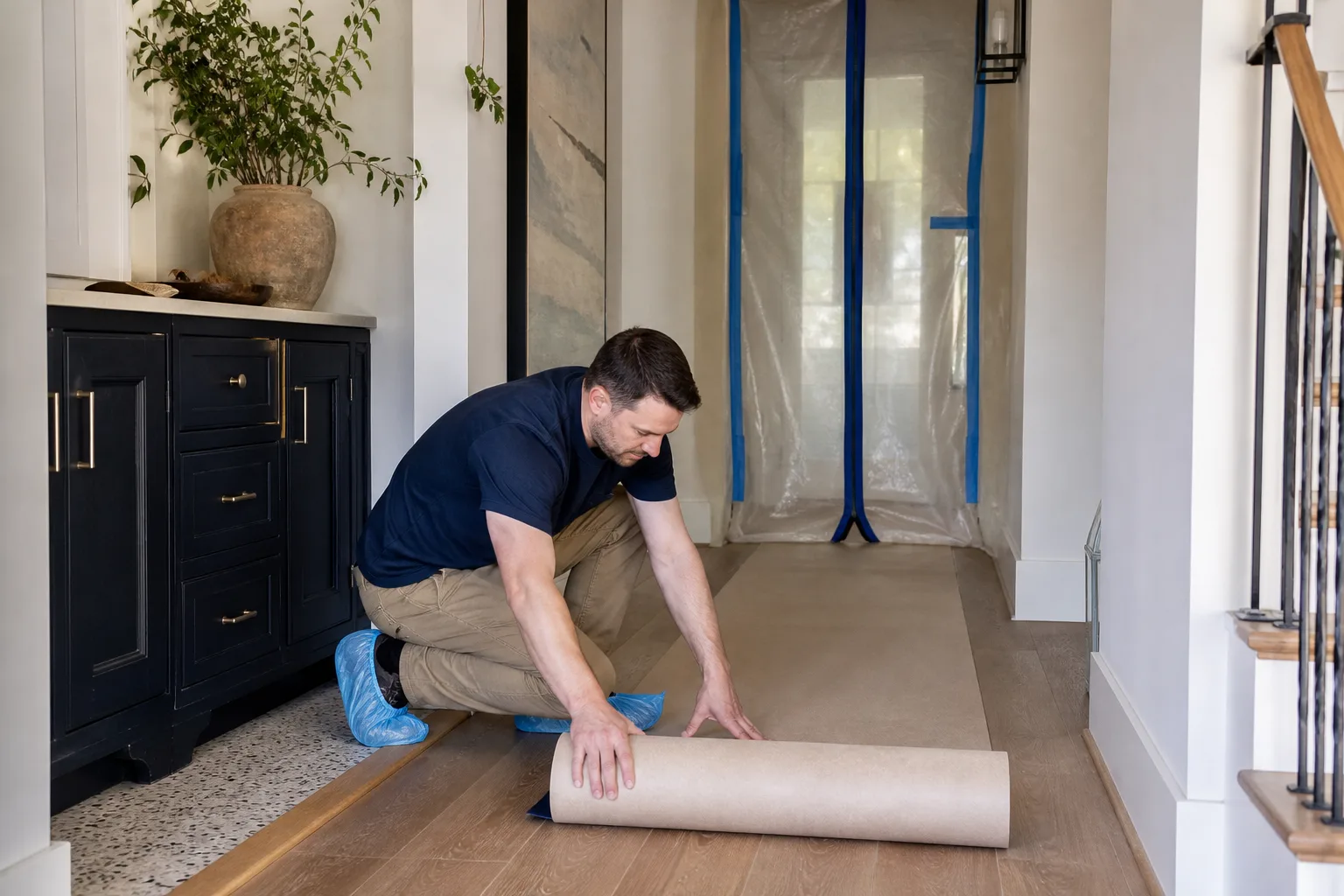
A crew member who shows up at your door with no warning, no uniform, and no introduction is a signal, even if the work itself turns out fine. More often, unvetted subcrews mean background checks were skipped and nobody knows exactly who is walking through your house. If you’re home alone during the day, that matters, and it matters more for parents with young children and older adults who treat opening the door as a genuine safety decision.
Here’s what the process should look like before anyone opens a toolbox:
- The contractor tells you the name and photo of each crew member in advance.
- Arrivals happen on a schedule, not whenever a sub happens to have a slot.
- Every worker carries a photo ID badge and shows it at the door on arrival.
- The crew lead introduces everyone at the start of the project and any time a new person joins.
- Subcontractors are held to the same screening standard as the primary crew.
Unexplained substitutions of materials are a related warning sign. You specify KraftMaid cabinets and a comparable Wellborn line shows up with no discussion, or your Cambria countertop suddenly becomes a lesser quartz. Material swaps save the contractor money and cost you value. Every product change should come to you as a written request with the price difference stated, never as a surprise on delivery day.
Contract Language That Gives You Leverage
The right contract terms won’t stop a bad contractor from being bad, but they give you a clear path out when warning signs turn into real problems. Before you sign, confirm the contract spells out these points in plain language.
Include all of the following:
- Full written scope and bid. Itemized materials, allowances, and labor, with brand and model numbers.
- Payment schedule tied to milestones, never to elapsed time. Money follows completion, not dates on a calendar.
- Completion date and a defined process for extensions, including who approves them and how.
- A written change-order process requiring a signed document for any scope or price change.
- Proof of license, insurance, and bond, with the policy and bond amounts named on the page.
- Permit responsibility stated explicitly, with the contractor named as the party who pulls them and calls the inspections.
- A written workmanship guarantee with clear terms. State what’s covered, what’s excluded, and for how long, such as “365 days from the completion date.”
- A lien release on final payment so no supplier or sub can come back to you for money already paid.
Read the guarantee twice. If the wording is vague, ask for it in writing with the coverage period stated as a number. That’s exactly what we do: a written guarantee on every project with terms spelled out plainly, and a free return visit if a repair or installation fails. Kitchen projects that start with a line-item scope tend to stay on track, which is why a documented Kitchen Remodeling in Las Vegas plan protects you as much as the cabinets do.
Common Mistakes to Avoid
- Signing a bid you can’t itemize. A single total price with no line items leaves you zero leverage if the scope grows. Ask for the breakdown before you sign.
- Paying a large cash deposit before a written contract exists. Once the cash is gone, there’s no paper trail tying it to a milestone.
- Skipping the license lookup. A ninety-second check on the Nevada State Contractors Board site could save you a five-figure repair bill.
- Letting crew members work through unpermitted changes. Adding a wall or moving a sink without a permit can complicate a Clark County inspection and a future home sale.
- Accepting material substitutions without a written change order. A cheaper cabinet line or a lesser quartz swaps value out of your project invisibly.
- Believing a verbal guarantee. Ask for the coverage terms and the period in writing, word for word.
- Ignoring the first odd request to move money around. A deposit into the wrong account, a sudden mid-project payment bump, or a request to pay a sub directly are all reasons to pause.
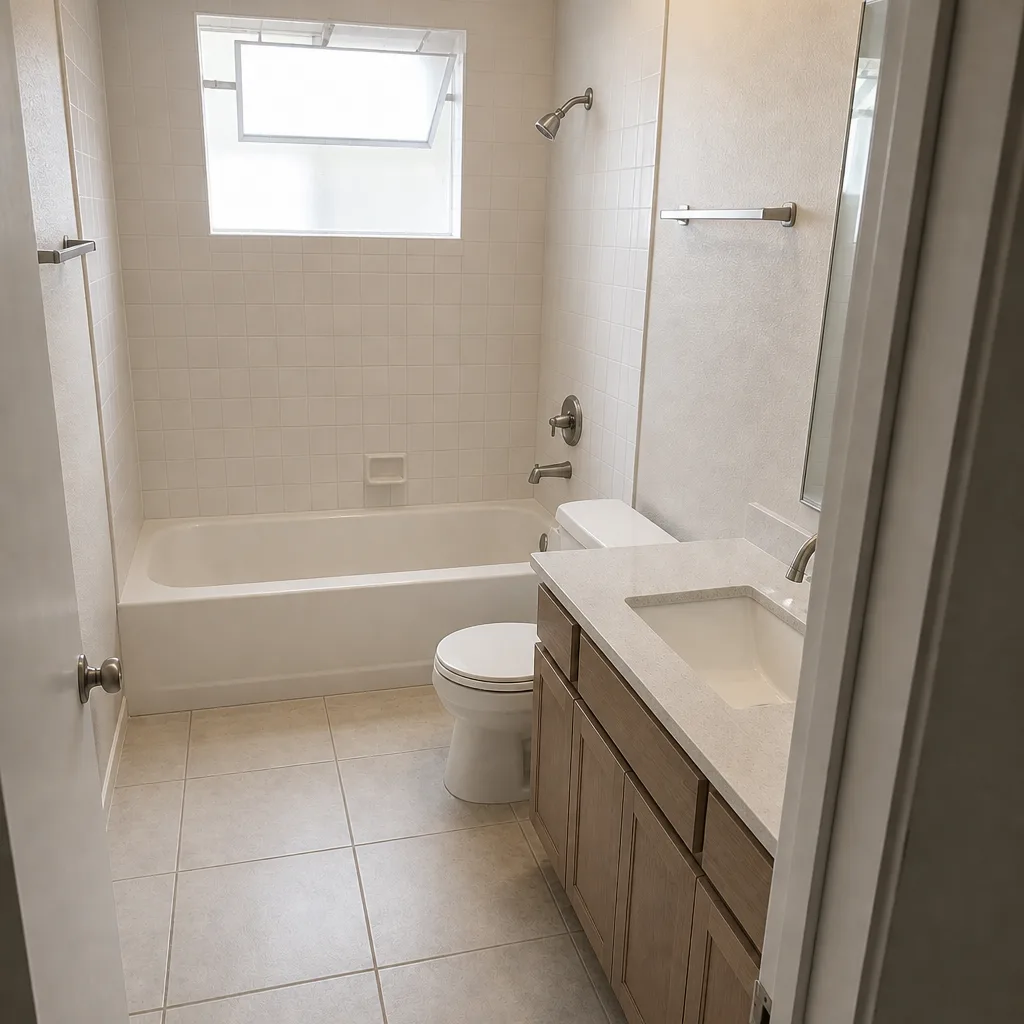
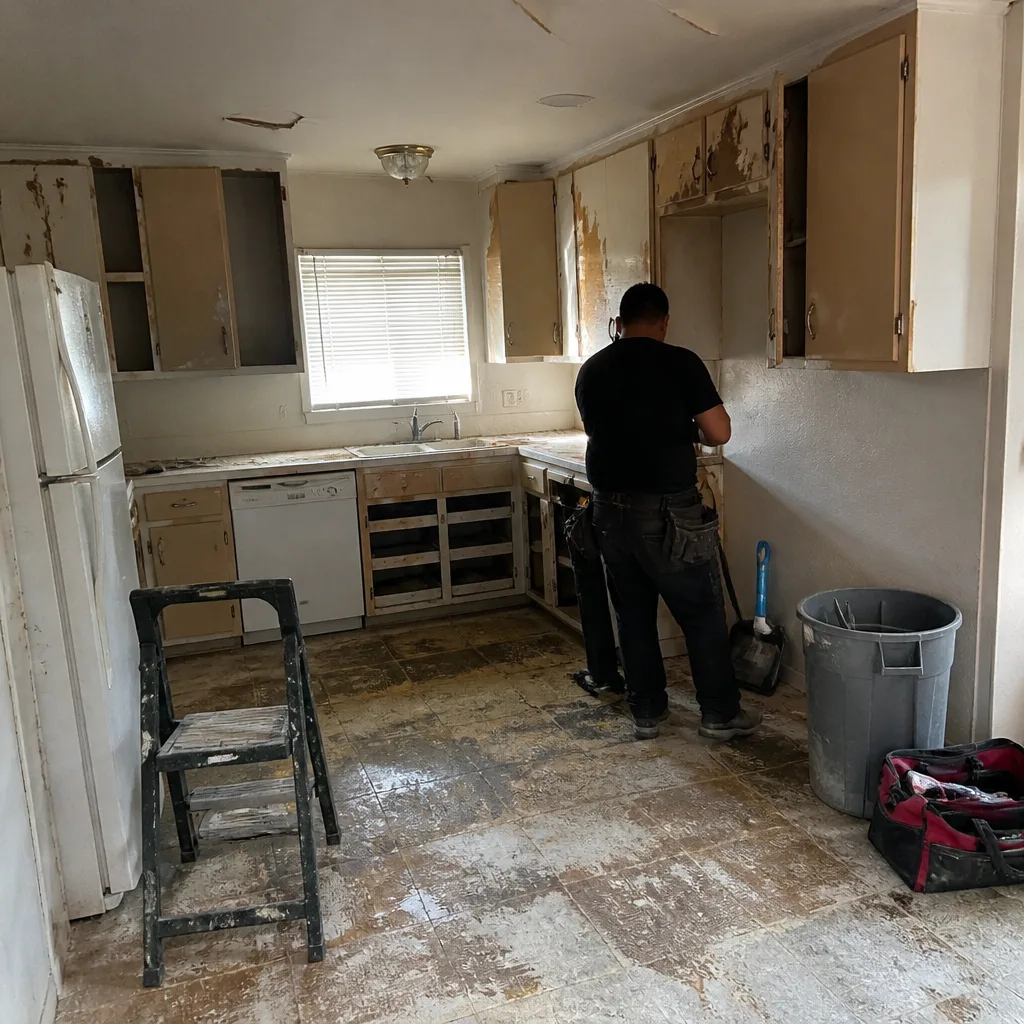
See the difference
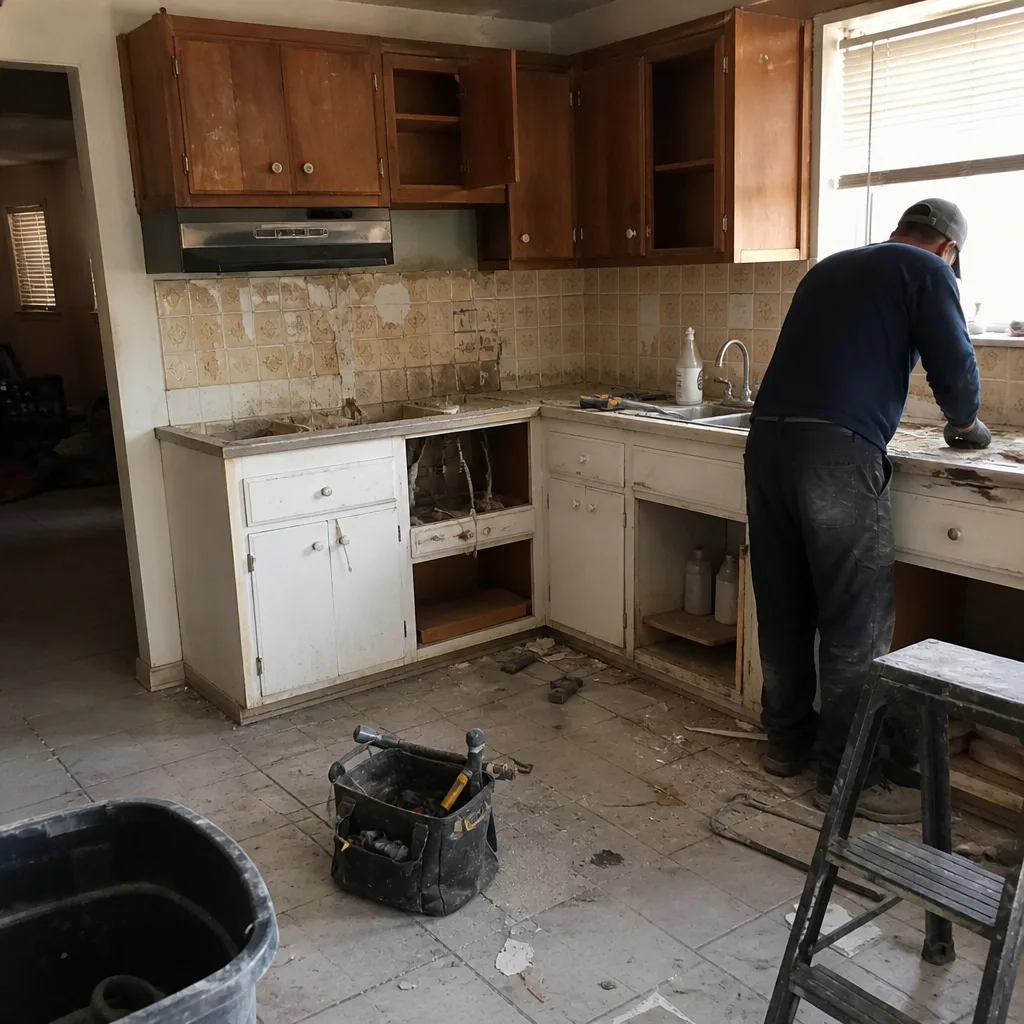 Before
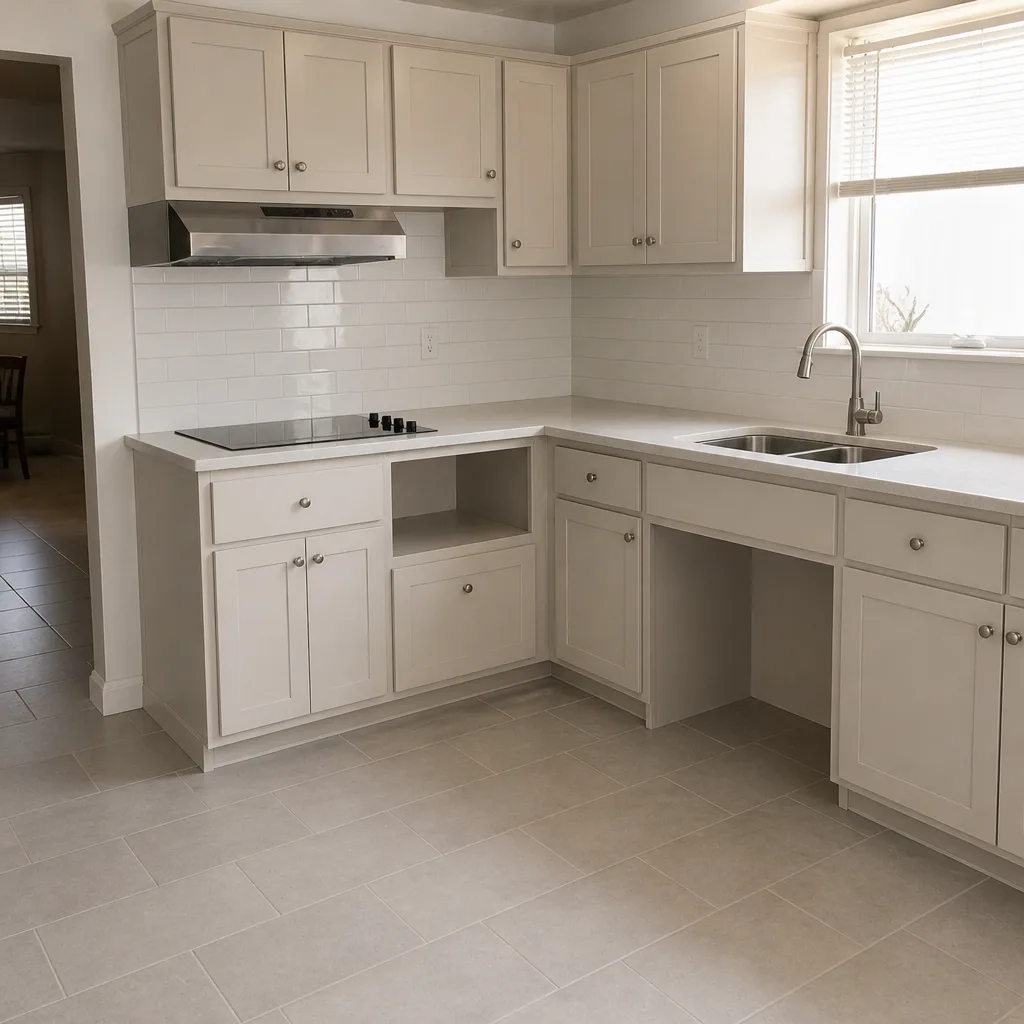 After
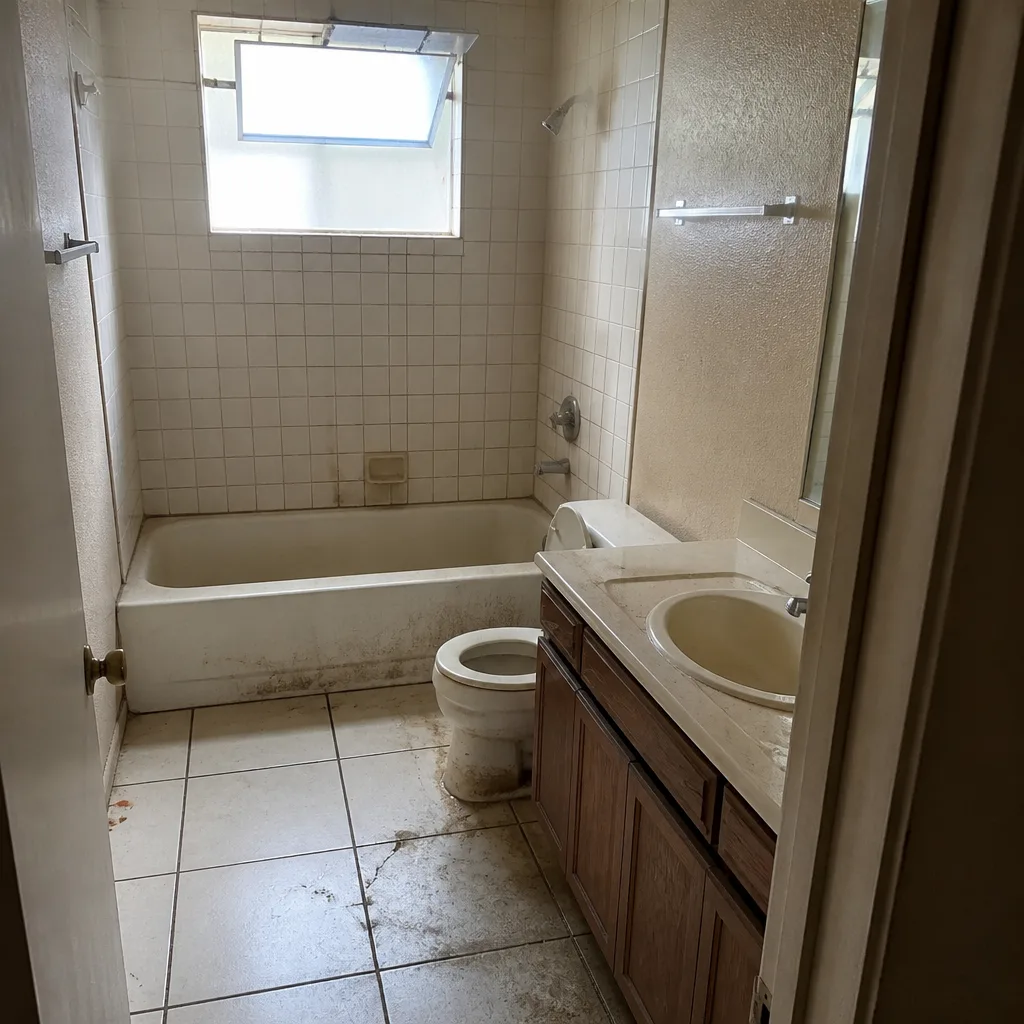 Before
 After
 Before
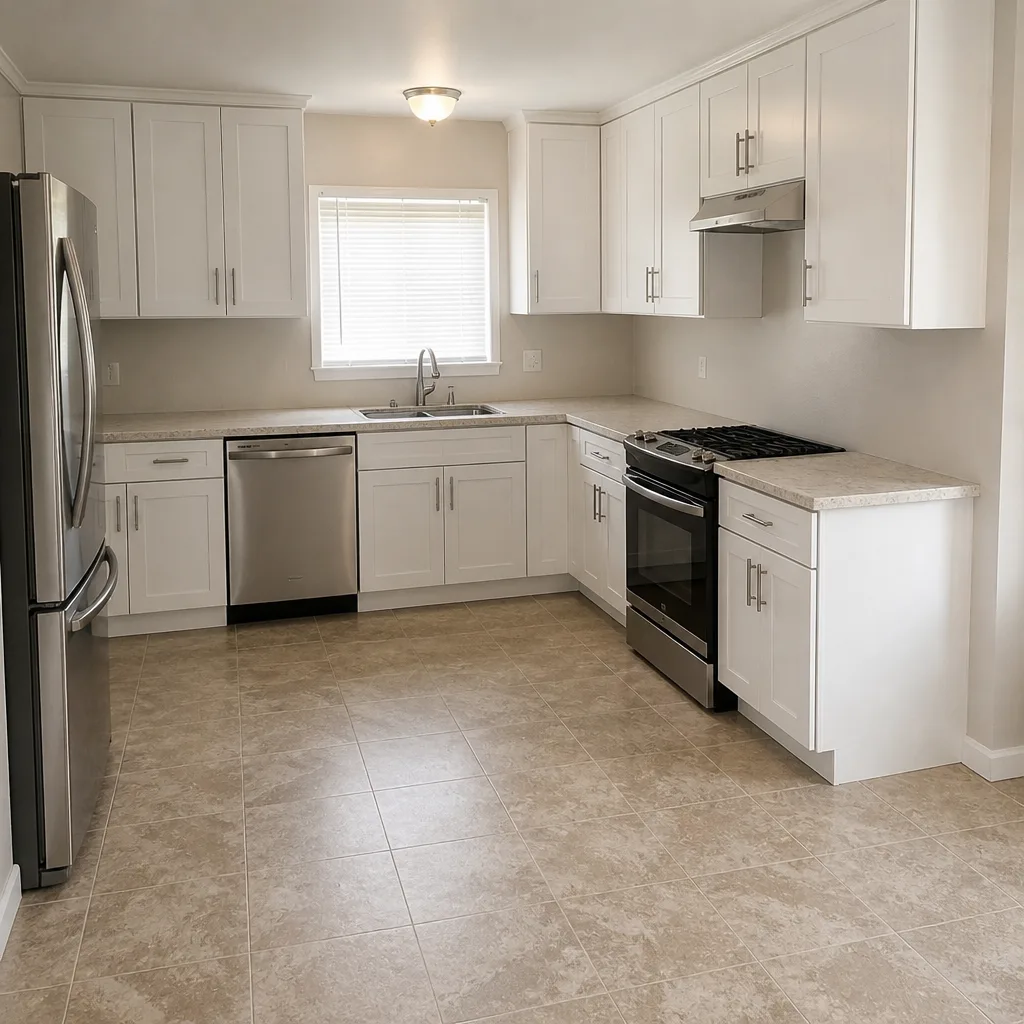 After
When to Call a Professional
Some jobs shouldn’t start without a licensed professional at the wheel. Anything that touches structural framing, electrical panels, gas lines, or plumbing rough-in needs permits and a trained crew, and those components can be genuinely dangerous to work on yourself. A high-value remodel, an addition, or a whole-home renovation is also the wrong place to test a stranger’s promises, because the deposit at risk is a large one. If you’ve caught a warning sign mid-project and want a written scope to reset the job, or if you’re just starting to price a remodel and want a real number to compare against, call (844) 797-1112. Mason Remodeling Co Las Vegas offers free estimates in Las Vegas, and every project starts with a written price before a single tool is unpacked.
Frequently Asked Questions

The biggest warning sign is a vague or verbal bid with pressure to sign and deposit the same day. A real bid is itemized, in writing, and gives you time to read it. If a contractor won’t put the price on paper before you pay a deposit, walk away. Call (844) 797-1112 for a written estimate you can compare.
Nevada law caps contractor down payments, so any licensed contractor should know the current limit and put it in writing. The specific number on your project depends on scope and materials. A written contract that ties payments to milestones is the safest arrangement. Call (844) 797-1112 to see how a written price and payment schedule look on your project.
Go to the Nevada State Contractors Board website, enter the license number, and confirm the status is active and in good standing. Check the classification matches the work, and read any listed complaints. It takes about ninety seconds and prevents the most common remodeling disaster. Call (844) 797-1112 if you’d like help reading a bid before you sign.
No. Any material substitution should come to you as a written change order with the price difference stated. If a lesser cabinet line or countertop shows up without your approval, ask for the change request in writing and hold payment until it’s resolved. Call (844) 797-1112 to talk through a scope that prevents surprise swaps.
A written guarantee should state exactly what’s covered, what’s excluded, and the coverage period as a number, such as “365 days from the completion date.” Vague assurances like “backed by our guarantee” give you nothing to point to. Ours states the terms plainly and includes a free return visit if a repair or installation fails. Call (844) 797-1112 to see the guarantee before you commit.
A legitimate change order is a signed document with a stated price change, a description of the work, and a schedule note, all approved by both sides before the work happens. Price inflation is a change done first and billed later, or “unforeseen” conditions that appear on every job. If you’re seeing the latter, pause and get a written scope. Call (844) 797-1112 for a written estimate that resets the project.
The Bottom Line
The warning signs that save you the most money show up before the first tool is unpacked. A vague bid, pressure to decide, a large cash deposit demand, an unverifiable license, and work that starts without permits are all catchable during hiring, when walking away is free. During the project, watch for unannounced crews, unapproved material swaps, and change orders that appear as invoices instead of signed documents. Put the scope, price, permit responsibility, and guarantee on paper, and most of these problems never start. If you’re ready for a written price on a Las Vegas project, call (844) 797-1112 for a free estimate.
Written by the team at Mason Remodeling Co Las Vegas.