Last updated November 18, 2026







Free written scope consultation - allowances, timeline, and change-order rules on paper before a single trade is scheduled
How to Hire a Construction Contractor in Las Vegas: A Step-by-Step Guide
Nevada’s contractor licensing board received more than 1,400 complaints in a recent year, and the majority involved unlicensed work or contracts with no written scope. Those are not exotic scams. They are ordinary homeowners who hired someone friendly, got a verbal number, and watched it dissolve. Las Vegas makes this easy: crews rotate constantly, out-of-state operators drift in for a season, and a business card proves nothing. This guide walks you through the steps that actually protect you, including the five verification checks most homeowners skip until it’s too late.
Quick Answer
To hire a construction contractor in Las Vegas, verify the license number directly on the Nevada State Contractors Board portal, insist on a written itemized price and a signed scope before any work starts, confirm in writing exactly who will be on-site, and structure payments so a meaningful portion stays unpaid until final inspection passes. A contractor who resists any of those four is telling you something important.
Styles & brands we work with
- Kitchen remodeling
- Bathroom remodeling
- Home additions & ADU
- Roofing
- Windows & doors
- Driveway & pavers
- Fence
Table of Contents
- Step 1: How Do You Verify a Nevada Contractor License?
- Step 2: Why a Written, Itemized Price Is Non-Negotiable
- Step 3: The Crew Identification Question Every Homeowner Should Ask
- Step 4: Red Flags in Las Vegas Contractor Contracts
- Step 5: How to Structure Payments to Keep Your Leverage
- Getting and Comparing Three Bids the Right Way
- Permits, Inspections, and Las Vegas Valley Code
- Why Las Vegas Climate Changes What You Should Ask
Step 1: How Do You Verify a Nevada Contractor License?
You verify a Nevada contractor license by looking up the license number yourself on the Nevada State Contractors Board (NSCB) website, not by trusting a number printed on a business card or a screenshot texted to you. The lookup takes about two minutes and tells you the license classification, the status, whether there are complaints or disciplinary actions on file, and the monetary limit attached to the license.
The distinction that trips people up is “active” versus “in good standing.” An active license simply means the record exists and hasn’t been suspended. In good standing means no unresolved complaints, no discipline, and the bond and insurance are current. Ask for both, and check both.
Pay attention to the classification code too. In Nevada, a Class B license covers general building and remodeling. A Class C specialty license covers a single trade, like plumbing or tile. A contractor licensed for painting shouldn’t be pulling permits for a structural wall removal in Summerlin, and the portal will show you the difference.
- License number: on the NSCB portal, not just on the invoice.
- Status: active AND in good standing, with no open complaints.
- Classification: matches the actual scope of your project.
- Monetary limit: high enough to cover your contract value.
- Insurance and bond: current, and request certificates directly.
One more thing worth knowing: Nevada requires a license for projects above a relatively low dollar threshold, so “it’s a small job” is not a reason to skip the check. If you want a contractor who has already been vetted on the front end, our general contractor in Las Vegas page explains how we handle that verification before a project ever starts.
Step 2: Why a Written, Itemized Price Is Non-Negotiable
A written, itemized price before work starts is the single strongest protection you have, because it converts every vague promise into a number attached to a line of work. Verbal estimates are the most common source of mid-project disputes we see. Not because contractors are all dishonest, but because memory is convenient and materials prices move.
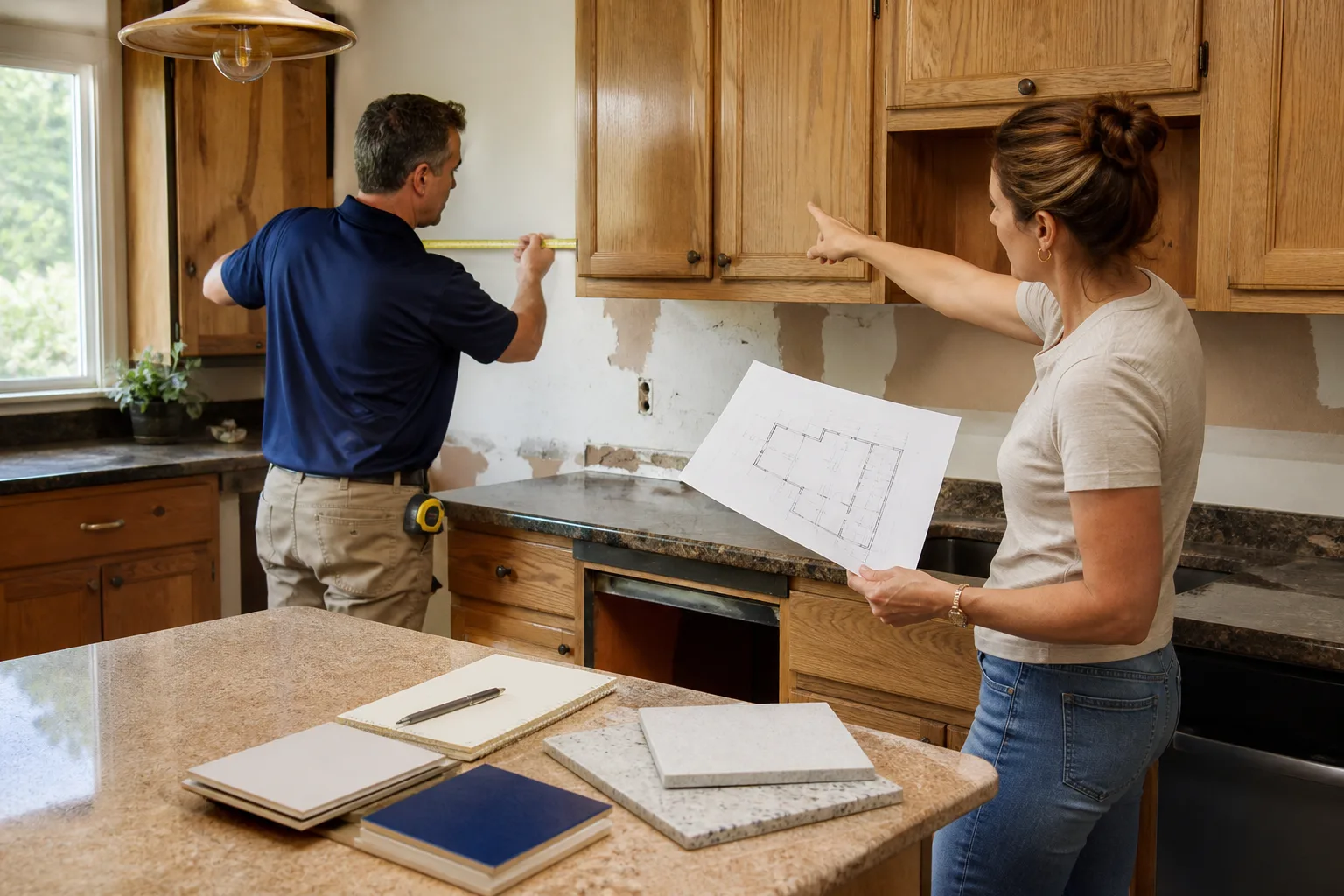
Itemized means you can see what each phase costs: demolition, framing, drywall, tile labor, fixture allowance, cabinetry, countertop fabrication, cleanup. A single lump sum for “bathroom remodel, $28,000” tells you nothing about what happens when the tile you chose costs more than the allowance.
If a contractor refuses to put a price in writing before starting, that is your answer. Thank them and move on. The refusal is the red flag, not the fee.
- Ask for the written price before scheduling. Not “we’ll get you something after we measure.”
- Check that allowances have real dollar figures. “$1,200 tile allowance” is verifiable; “standard tile” is not.
- Confirm what triggers a change order. Legitimate ones cover hidden damage or owner-requested changes, nothing else.
- Get the scope in the same document. Price without scope is half a contract.
- Verify there’s a signed change-order process. No work proceeds on a verbal “we found rot” phone call.
This is a standard we hold ourselves to. Every Mason Remodeling project gets a written price before a tool is unpacked, on every job, with no exceptions and no upgrade tier. It’s not a favor we do for nice customers.
Step 3: The Crew Identification Question Every Homeowner Should Ask
Ask this exact question: “Who specifically will be on-site, and can you verify them before they arrive?” Most homeowners never ask. It’s the question that separates a contractor who tracks their people from one who subcontracts to whoever answers the phone that morning.
In Las Vegas, crew turnover is high and subcontractor networks are loose. It is entirely common for the person who sold you the job to never set foot on the property again. That’s not automatically a problem, but you should know who is arriving, whether they’ve been vetted, and how you’ll recognize them at the door.
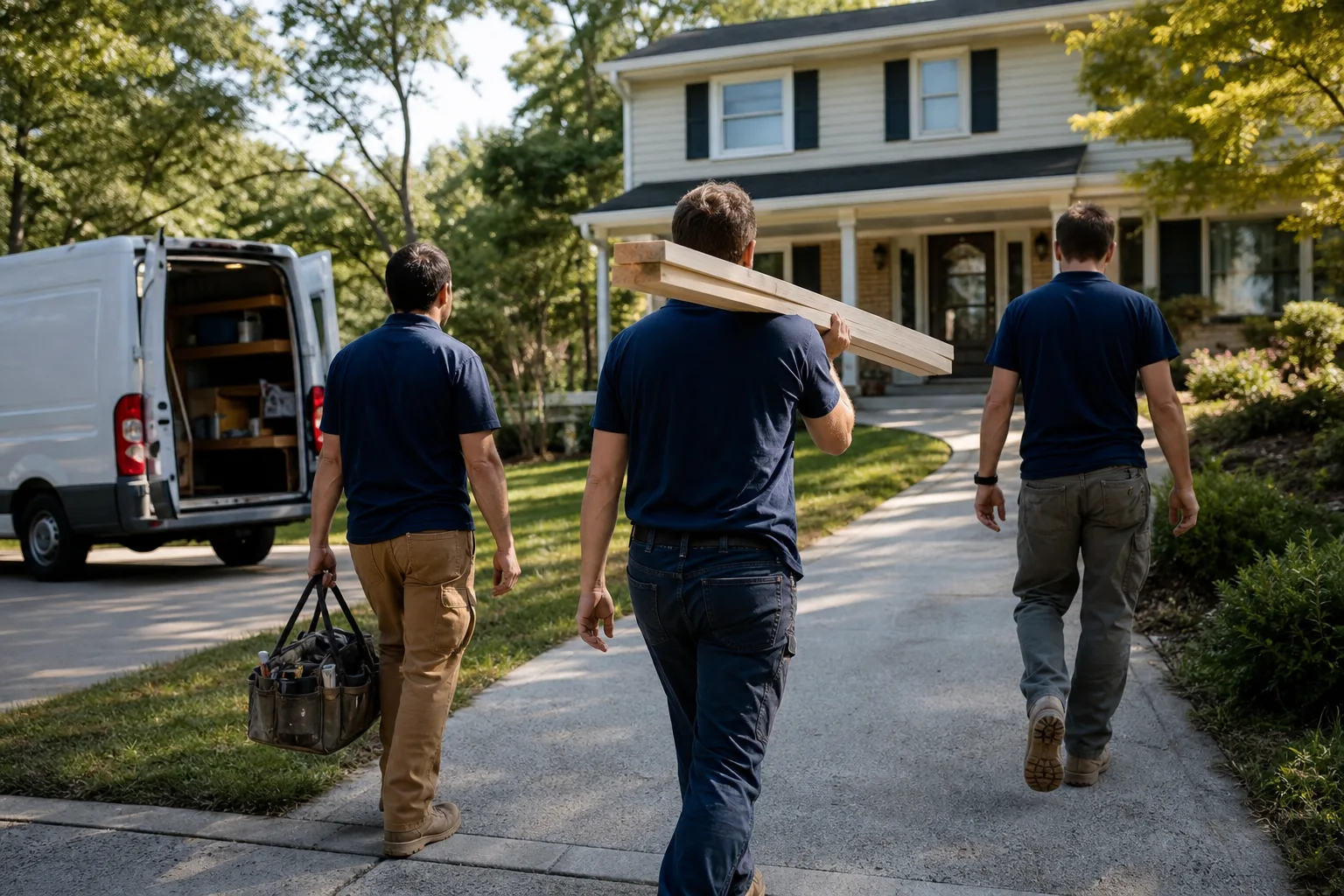
The Threshold Standard, the verification process Mason Remodeling follows, works like this: every technician is background-checked and identity-verified, arrives in a clean marked uniform, shows a photo ID badge at the door, and is introduced to you by name and photo before the visit. You know who’s coming before they knock. For anyone home alone during the day, that’s not a formality, it’s the whole decision.
- Will the same crew be here for the duration, or does it rotate?
- Are subs background-checked, or is that only the lead?
- Will I get names and photos before each visit?
- What’s the process if someone shows up unannounced?
- Who is my point of contact, and how do I reach them?
If the answers come back vague, treat that as data. A contractor who can’t name their crew usually can’t control them either.
Step 4: Red Flags in Las Vegas Contractor Contracts
Las Vegas contractor contracts go wrong in predictable ways, and most of them are visible before you sign. Read the scope language closely, because that’s where ambiguity hides.
Watch for scope described in adjectives instead of quantities. “Install quality tile throughout” is not a scope. “Install 180 square feet of 12×24 porcelain tile in the primary bath, Schluter strip at the floor transition” is a scope. The second one can be inspected and disputed; the first cannot.
The lien waiver clause is the other one people miss. In Nevada, unpaid subcontractors and material suppliers can place a lien on your home even if you paid the general contractor in full. A contract should specify that lien waivers are collected from subs and suppliers as payments are made, and that final payment is contingent on a clean title. If there’s no lien waiver language at all, you’re carrying that risk personally.
Front-loaded payment schedules are the third. A contractor asking for 50% down before any material is ordered is not protecting you, they’re protecting themselves. We walked through the payment structure question in more detail on our bathroom remodeling in Las Vegas page, because bath projects are where deposit requests get the most aggressive.
Step 5: How to Structure Payments to Keep Your Leverage
Structure your payment schedule so a meaningful portion, typically 10% or more, stays unpaid until final inspection passes and you’ve signed off on a punch list. That single move does more to protect you than any contract clause, because it keeps the incentive aligned through the part of the job where contractors are most tempted to move on.
A workable structure for most Las Vegas remodels looks like this:
- 10-15% at contract signing: covers permits and initial material ordering.
- Progress payments tied to milestones: demolition complete, rough-in inspected, drywall hung, cabinets set. Each payment released only after the milestone is verified.
- Final 10% (or more) held to final inspection: released after you’ve walked the job and the punch list is closed.
Never pay for a milestone that hasn’t happened. Never pay in cash without a receipt. And never release the final payment before the city inspector has signed off, because once that money is gone, your leverage is gone with it.
When you’re comparing quotes on a kitchen remodeling in Las Vegas project, ask each contractor to show you their proposed payment schedule in writing. The one who wants 40% up front has told you how they run their business.
Getting and Comparing Three Bids the Right Way
Getting three bids is standard advice and it’s still good advice, but only if the bids are truly comparable. Most aren’t, because each contractor interpreted your project differently. Here’s how to fix that.
- Write a one-page scope yourself. List what you want done, in rooms and quantities, before anyone visits.
- Give every bidder the same document. Same scope, same allowances, same timeline questions.
- Ask for itemized pricing, not lump sums. You can’t compare lump sums.
- Compare line by line, not bottom line. The lowest total often carries the smallest scope.
- Ask each contractor what’s excluded. Exclusions are where the surprises live.
- Check NSCB status on every bidder before you call back.
In our experience, the cheapest bid on a Las Vegas kitchen is usually the one with the shortest scope and the most assumptions. Trim allowances and unstated exclusions are how a $32,000 quote becomes a $44,000 job.
Permits, Inspections, and Las Vegas Valley Code
Permits matter more in Las Vegas than in many markets, because several valley jurisdictions have specific requirements that out-of-area contractors routinely miss. Clark County, the City of Henderson, and the City of North Las Vegas each run their own building departments with their own review timelines and inspection scheduling.
Any structural work, electrical panel change, gas line relocation, or addition requires a permit. So does most bathroom and kitchen work that moves plumbing or adds outlets. Cosmetic work like paint and flooring typically doesn’t. The contractor should be the one pulling the permit, in their name, not yours, because the license holder is who the inspections attach to.
Two Las Vegas-specific things worth checking in the contract:
- Who pulls the permit, and is the fee included in the price? It should be a line item, not an afterthought.
- Who manages inspection scheduling and corrections? If corrections come back, that’s on the contractor’s time, not yours.
If your project includes hardscape or exterior flatwork, materials matter too. Cambridge Pavers and Oldcastle systems are common in Las Vegas patios and driveways, and Quikrete or Sakrete mixes are everywhere. Ask what base preparation the contractor specifies, because our caliche-heavy soil punishes a shallow base within a couple of summers.
Why Las Vegas Climate Changes What You Should Ask
Las Vegas climate is hard on construction in ways that don’t show up in a contractor’s sales pitch. Summer temperatures routinely push past 110°F, which affects cure times, adhesive performance, and exteriors. Winter mornings drop near freezing in the outlying areas, which affects stucco and concrete pours. Wind and dust storms sand-blast exterior finishes.
Ask specific questions. What adhesive are you using for tile in an unshaded west-facing room? What’s your cure schedule for exterior stucco in July? How do you handle expansion joints on a slab that sees 40-degree swings across the year? The answers tell you whether the contractor has actually built here or is running a playbook from Southern California.
Roughly a third of housing in the valley was built during the 1990s and 2000s building boom, so plenty of remodels involve original plumbing, original electrical, and original windows. Hidden conditions are common. A written change-order process isn’t paranoia in Las Vegas, it’s realistic.
Common Mistakes to Avoid
- Trusting a license number without checking it. Unlicensed operators print convincing cards. The NSCB portal takes two minutes; use it before any money changes hands.
- Accepting a verbal estimate. If the price isn’t in writing with a scope attached, it doesn’t exist. The bill at the end will be the real price.
- Skipping the crew identification question. Knowing who’s arriving, verified by name and photo, should be a baseline expectation on any Las Vegas job.
- Paying more than 15% up front. Large deposits shift all the risk onto you. Tie payments to milestones instead.
- Ignoring the lien waiver clause. Without one, unpaid subs can file a lien against your home even after you’ve paid the general contractor in full.
- Assuming a stucco patch will match. Las Vegas sun ages existing stucco. Ask how the contractor handles blend on visible exterior walls before work starts, not after.
- Letting inspection corrections become your problem. Make sure the contract puts correction costs on the contractor, not on your change-order budget.
See the difference
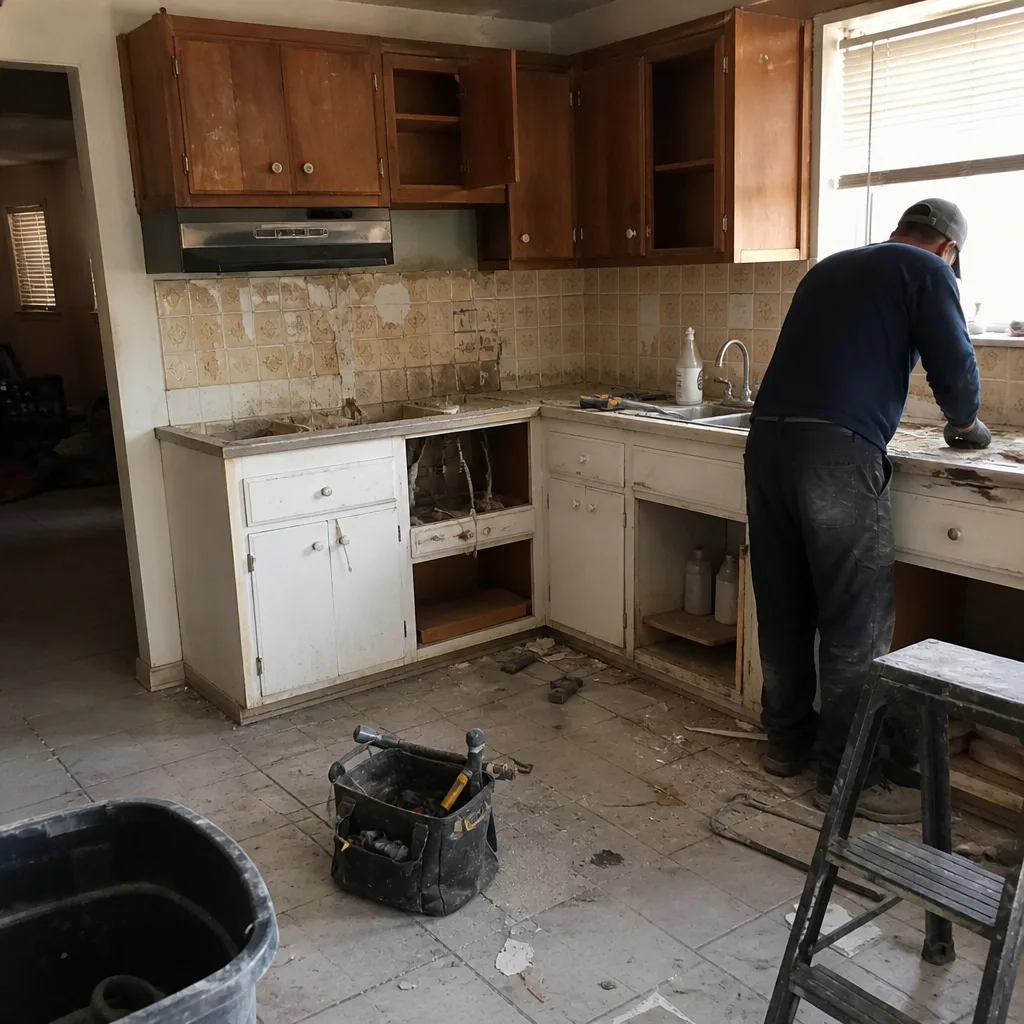 Before
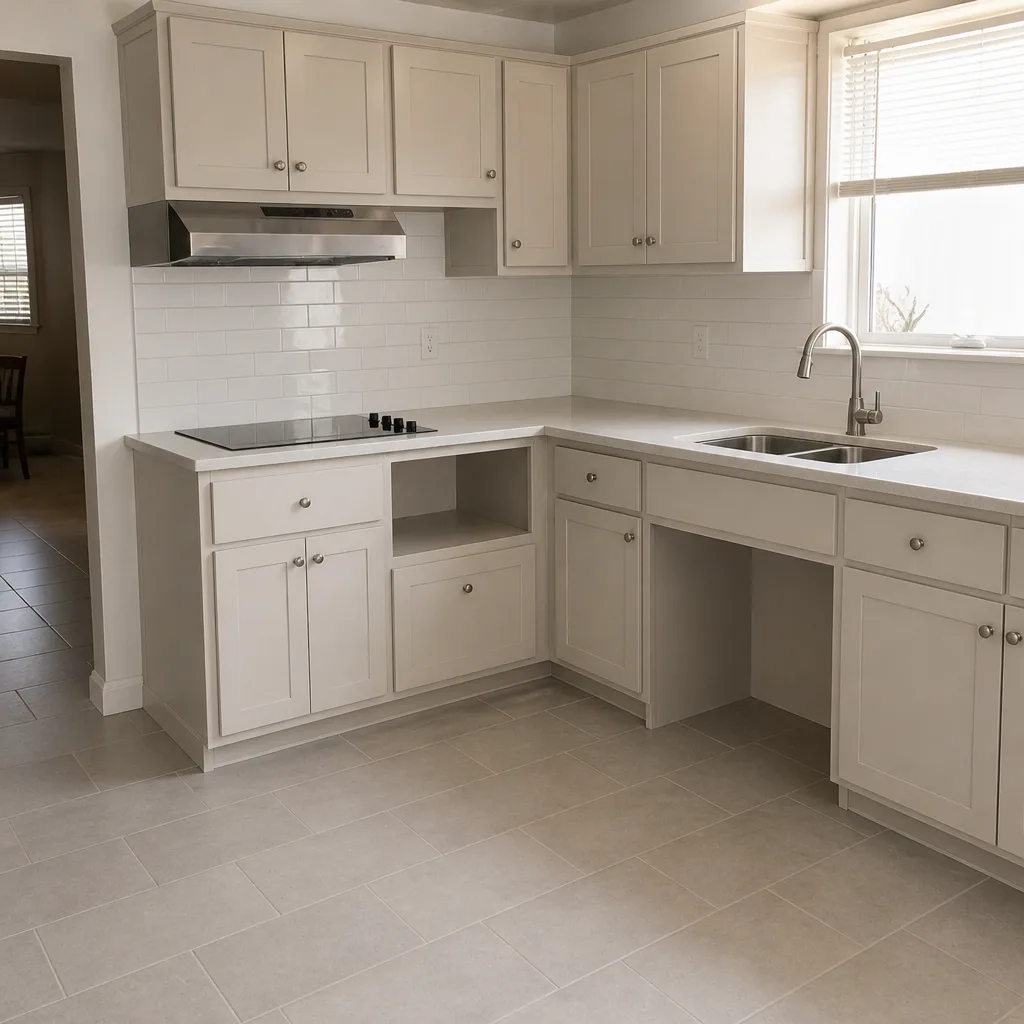 After
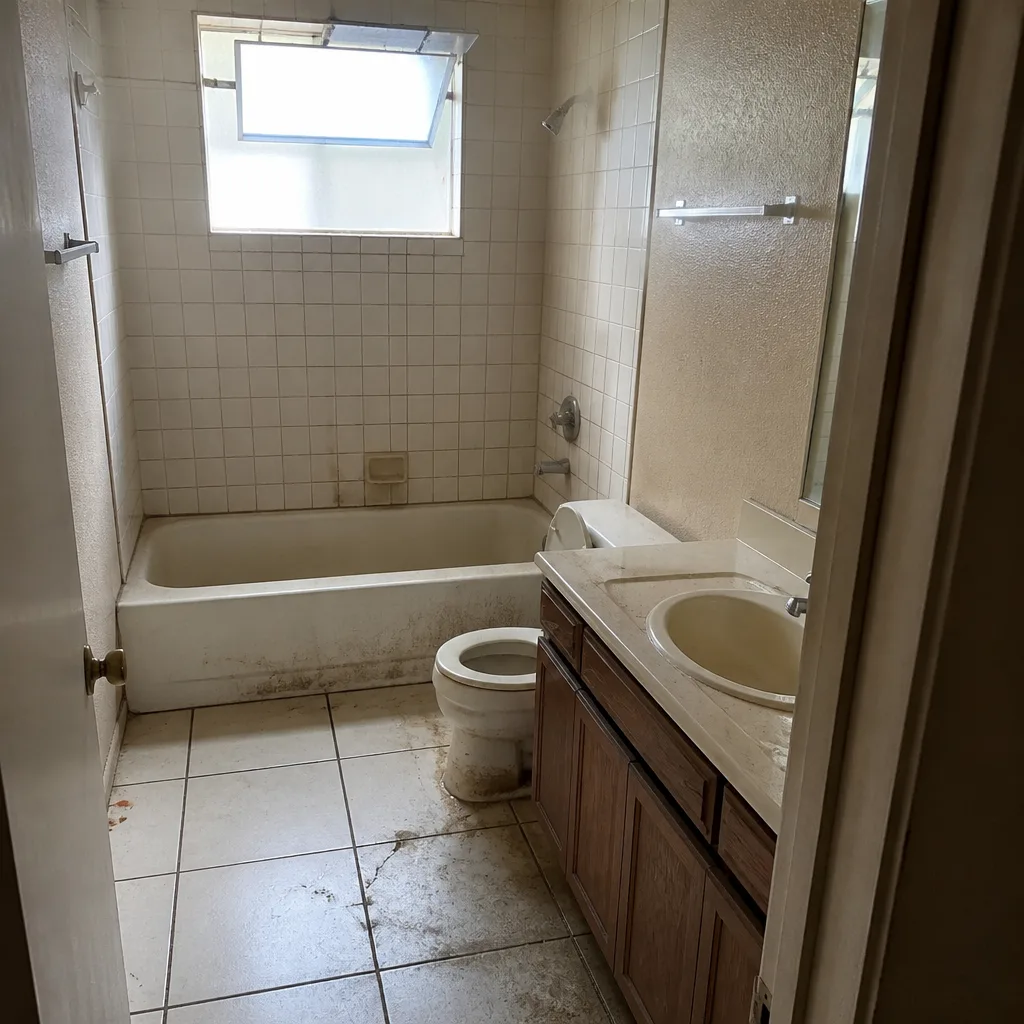 Before
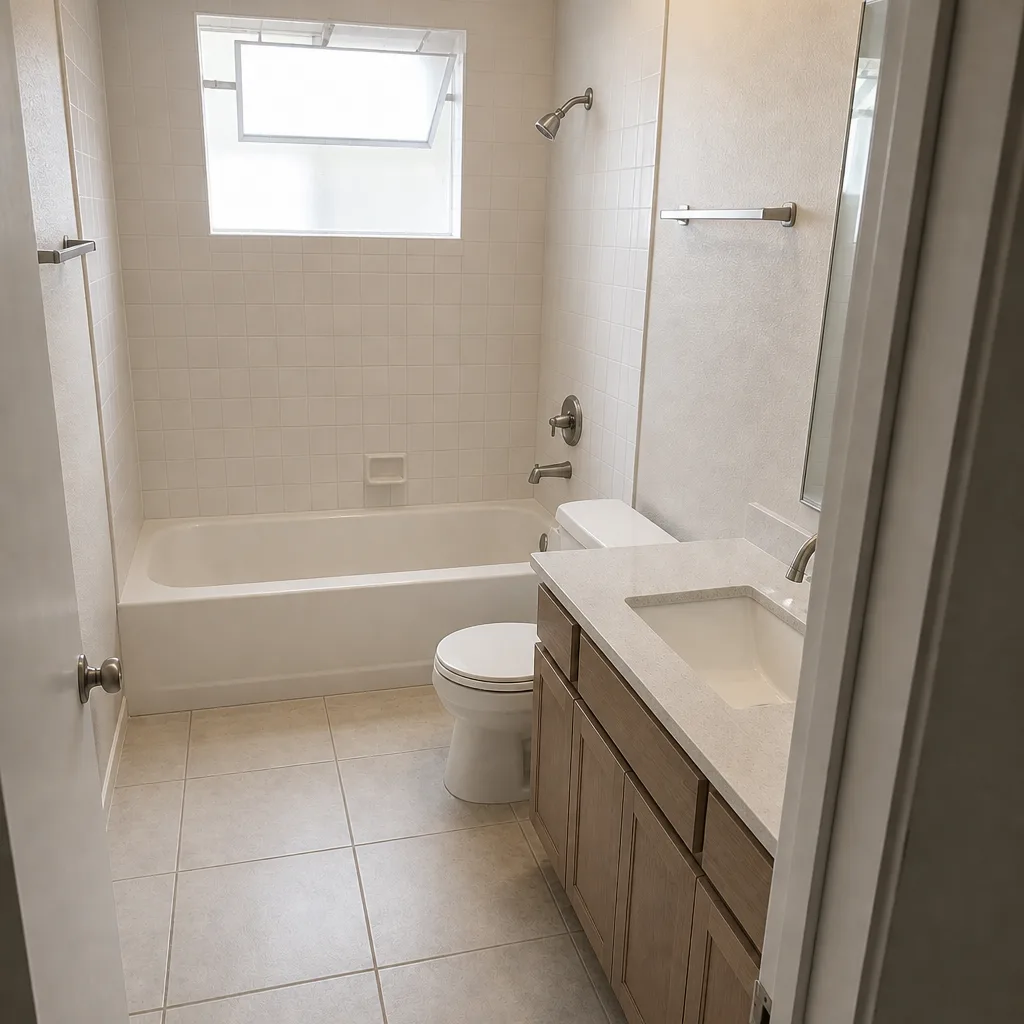 After
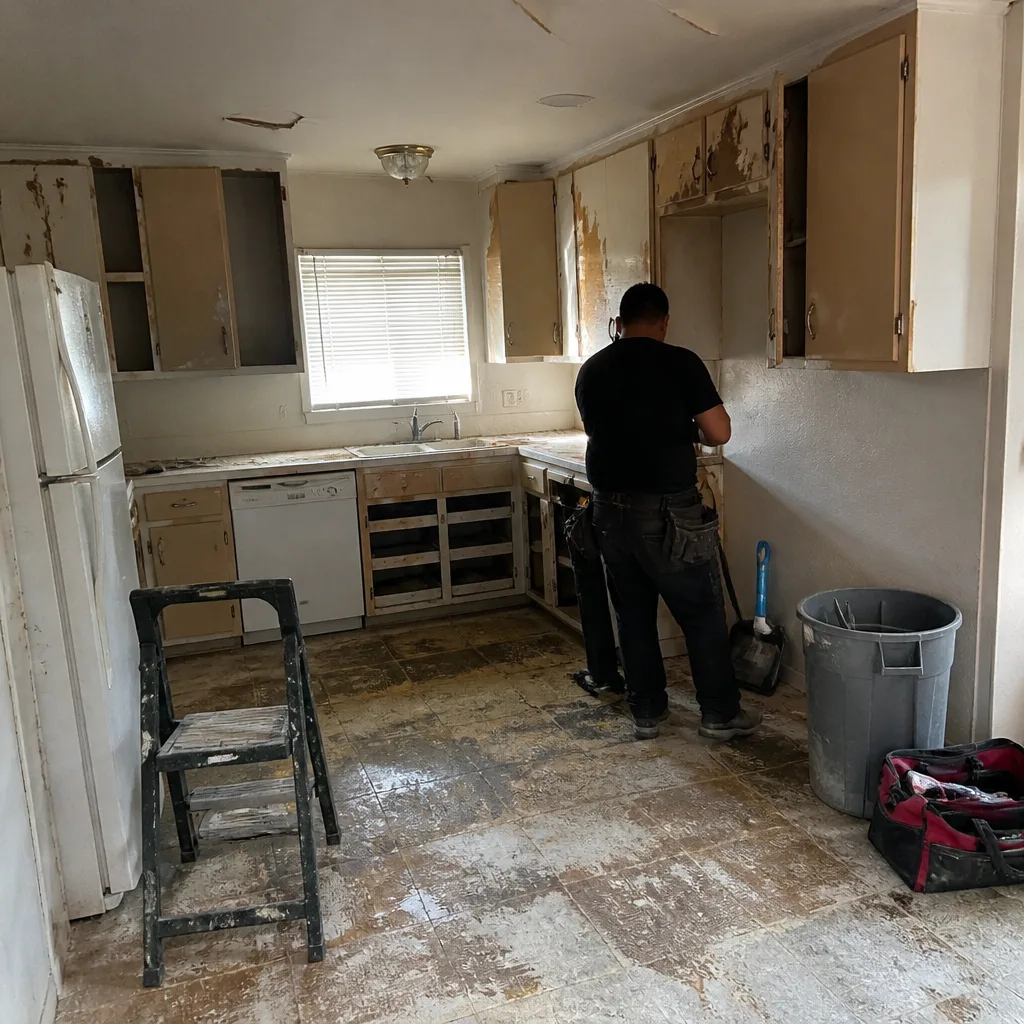 Before
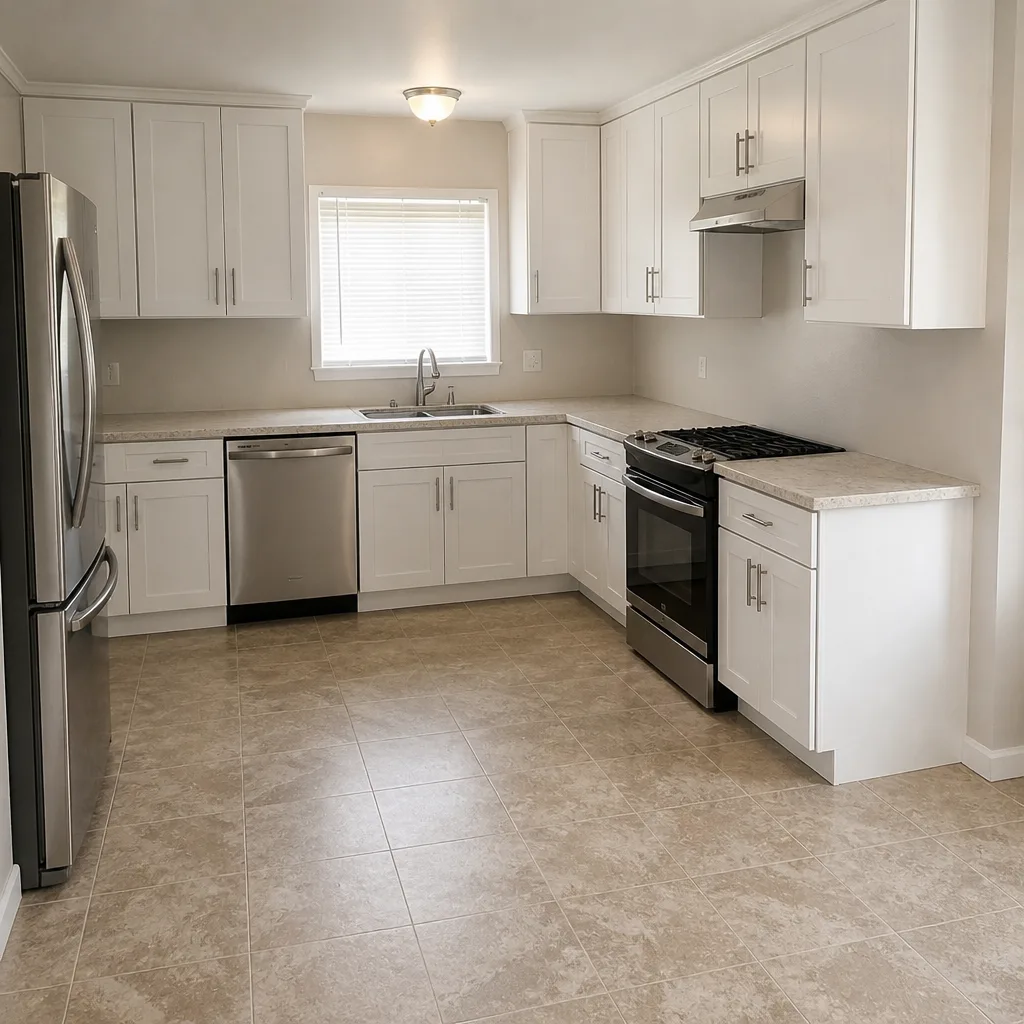 After
When to Call a Professional
Call a professional before any of the following: removing a load-bearing wall, altering electrical service, relocating a gas line, or repairing structural damage from a slab leak or monsoon-driven water intrusion. In Las Vegas, older valley neighborhoods regularly turn up original plumbing that’s reached end of life, and DIY fixes there tend to create a second, more expensive problem. If a project moves plumbing, wiring, or structure, the permit and license are not optional. Cosmetic work is where DIY pays off; structural work is where it costs.
Mason Remodeling Co Las Vegas offers free estimates in Las Vegas, and a written price on every project before any work starts. Call (844) 797-1112. Our technicians have up to 22 years of experience, back every project with a written guarantee, and return free of charge if a repair or installation fails within the coverage period.
Frequently Asked Questions
Look up the license number yourself on the Nevada State Contractors Board website and confirm the status is active and in good standing, with the classification code matching your project. A business card or screenshot proves nothing on its own. If you want a starting point that skips the initial shuffle, our Mason Remodeling Co Las Vegas home page explains how we vet contractors before they’re ever assigned. Call (844) 797-1112 for a free estimate.
A deposit of 10-15% at signing is standard in Las Vegas, and it typically covers permits and initial material ordering. Anything above that, especially a 50% request before materials are ordered, puts all the risk on you. Ask each bidder to show their proposed payment schedule in writing before you commit. Call (844) 797-1112 for an itemized written quote with a payment schedule attached.
Nothing should happen until you sign a written change order with the added cost and scope spelled out. That’s the entire protection of a change-order process: no work proceeds and no money moves on a verbal “we found rot” phone call. Any contractor who can’t produce a change-order document on request is a contractor to avoid. Call (844) 797-1112 to see our change-order process upfront.
You need a permit whenever the work moves plumbing, adds or relocates electrical, touches gas lines, or alters structure. Cosmetic work like paint, tile over existing substrate, and cabinet swaps typically don’t require one. The contractor should pull the permit in their name, because the license holder is who inspections attach to. Call (844) 797-1112 and we’ll walk through what your specific project requires.
In good standing means no unresolved complaints, no disciplinary actions, no suspended status, and current bond and insurance on file with the board. Active status alone only confirms the record exists; good standing confirms it’s clean. Check both before signing anything.
A bathroom remodel typically runs 3-5 weeks, a kitchen 6-10 weeks, and a whole-home remodel 3-6 months depending on scope and inspection scheduling. Las Vegas valley building departments each run their own review timelines, so permit turnaround adds time to the front end. The contractor should give you a written schedule with milestones before work starts. Call (844) 797-1112 for a written timeline on your project.
The Bottom Line
The standard three-bid advice is fine as far as it goes, but it doesn’t protect you from the five failures that actually cost Las Vegas homeowners money: an unverified license, a missing written price, unidentified crew, a contract with no lien waiver, and a front-loaded payment schedule. Verify every license on the NSCB portal. Insist on an itemized written price with real allowances. Ask who’s coming and how you’ll recognize them. Read the lien waiver clause. Hold the final 10% to a passed inspection. Do those five things and the rest of the process takes care of itself.
Ready for a written price on your Las Vegas project? Call Mason Remodeling Co Las Vegas at (844) 797-1112 for a free estimate. You’ll get a written, itemized price before any work begins, a crew introduced by name and photo, a live person on the phone whenever you call, and coverage under our 365-Day Done Right Promise.
Written by the team at Mason Remodeling Co Las Vegas.