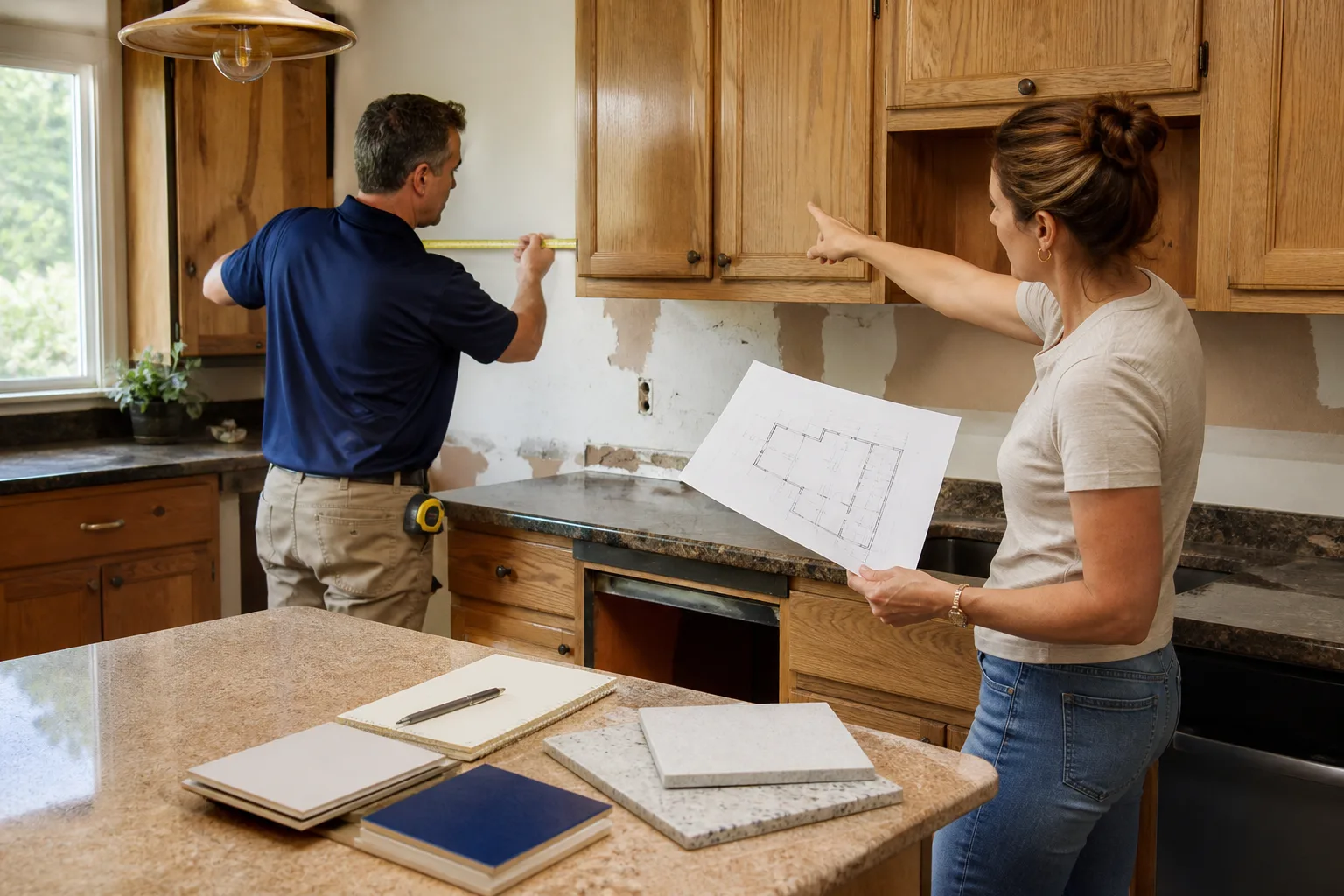
Free written scope consultation - allowances, timeline, and change-order rules on paper before a single trade is scheduled
Styles & brands we work with
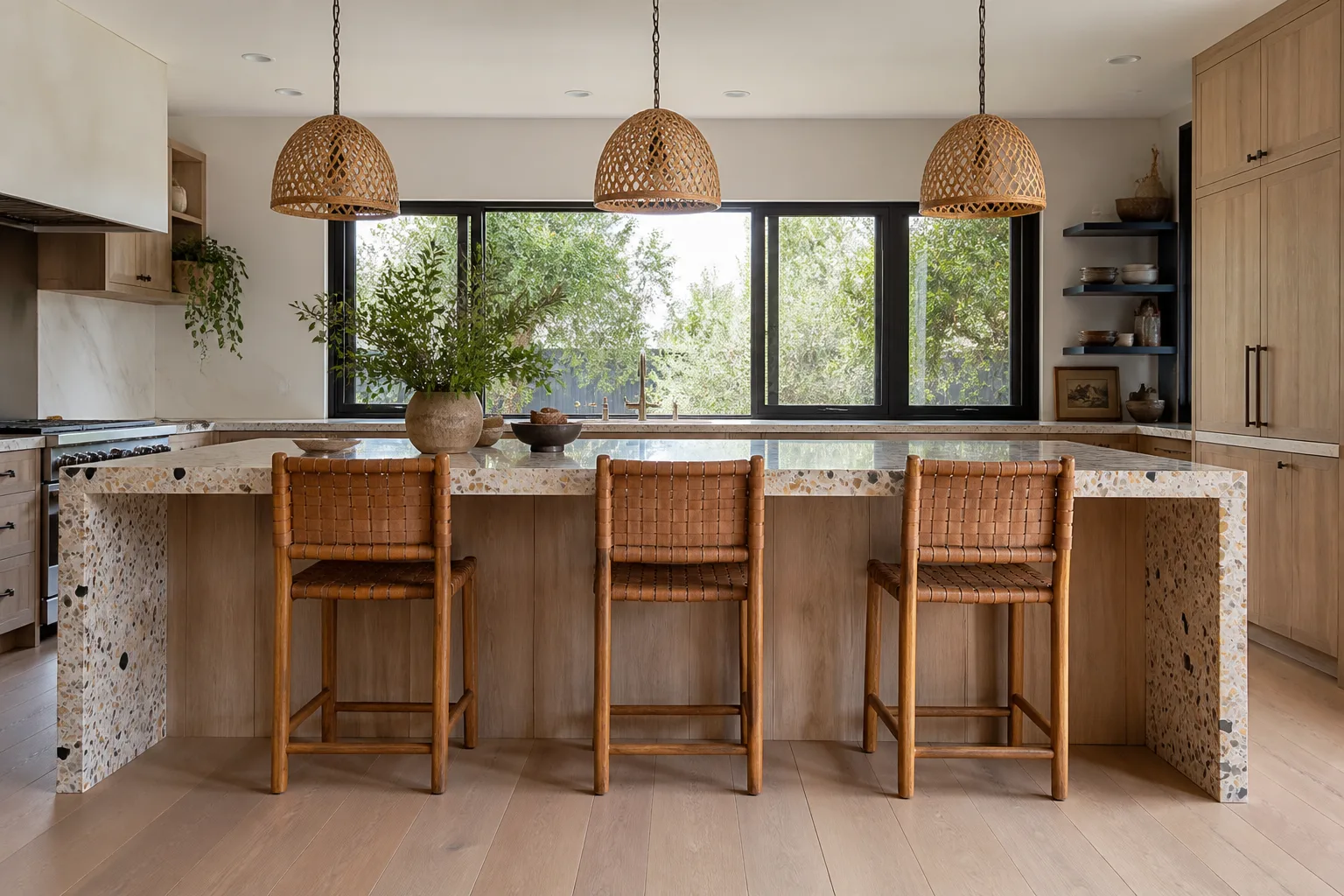
- Kitchen remodeling
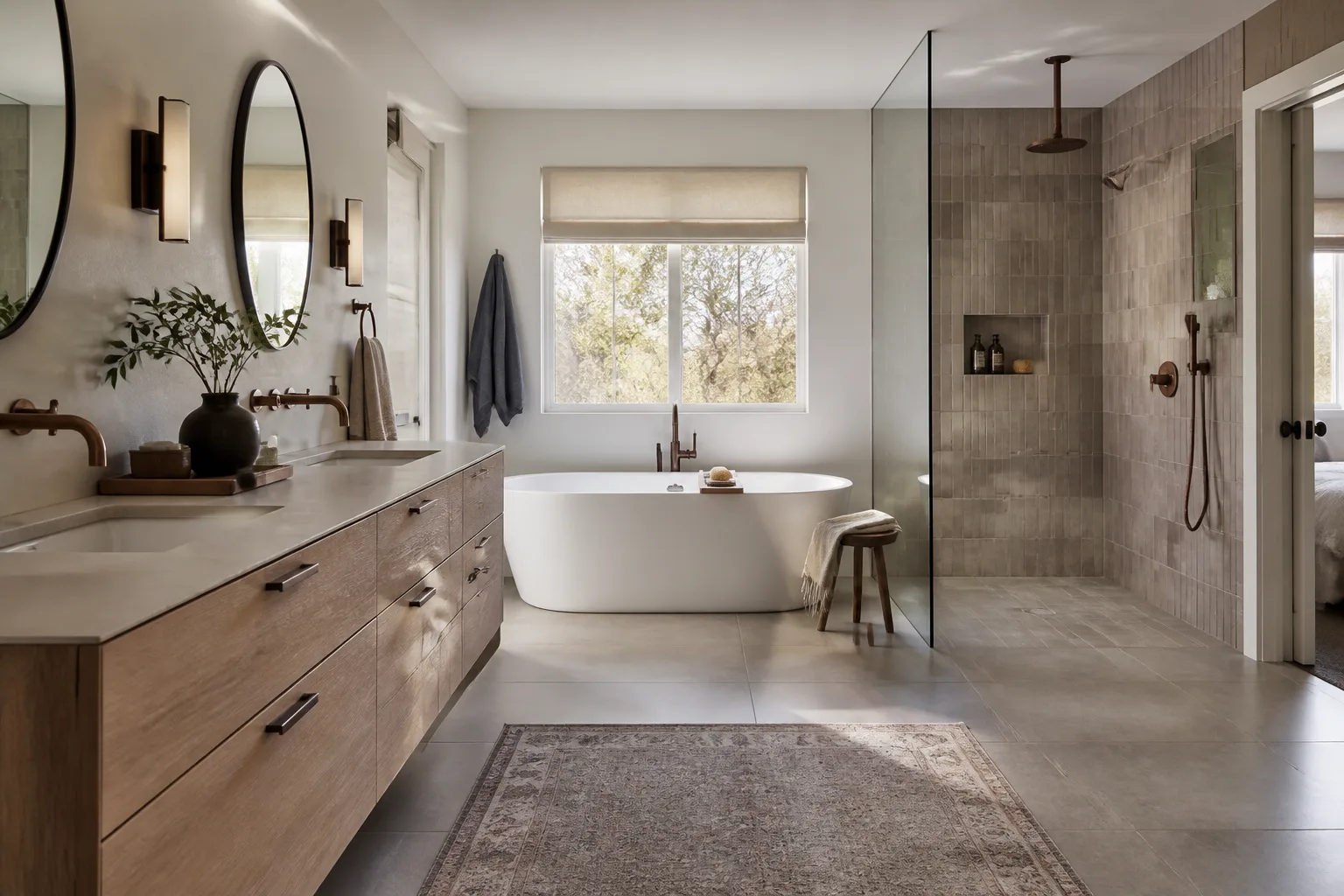
- Bathroom remodeling
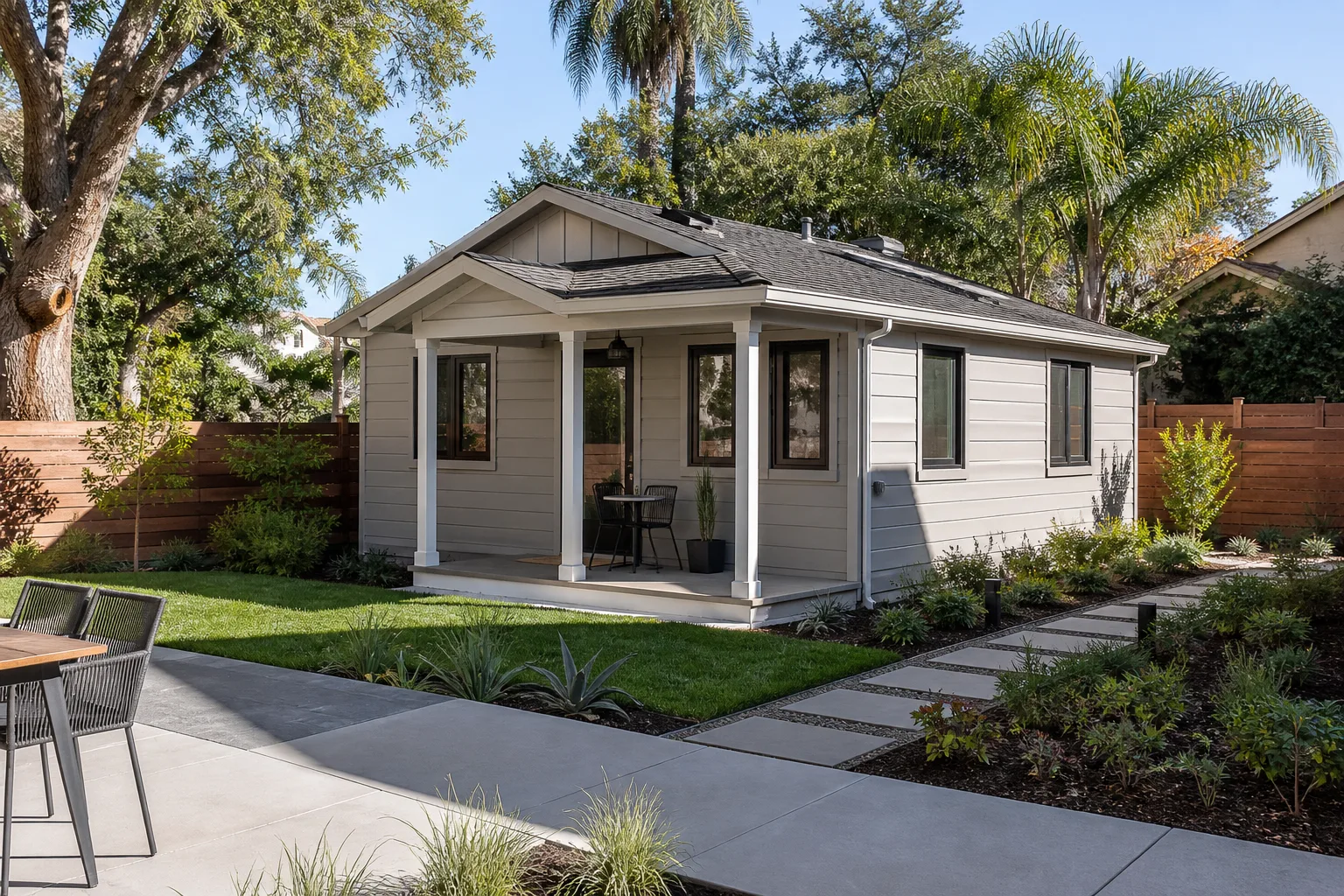
- Home additions & ADU
- Roofing
- Windows & doors
- Driveway & pavers
- Fence
See the difference
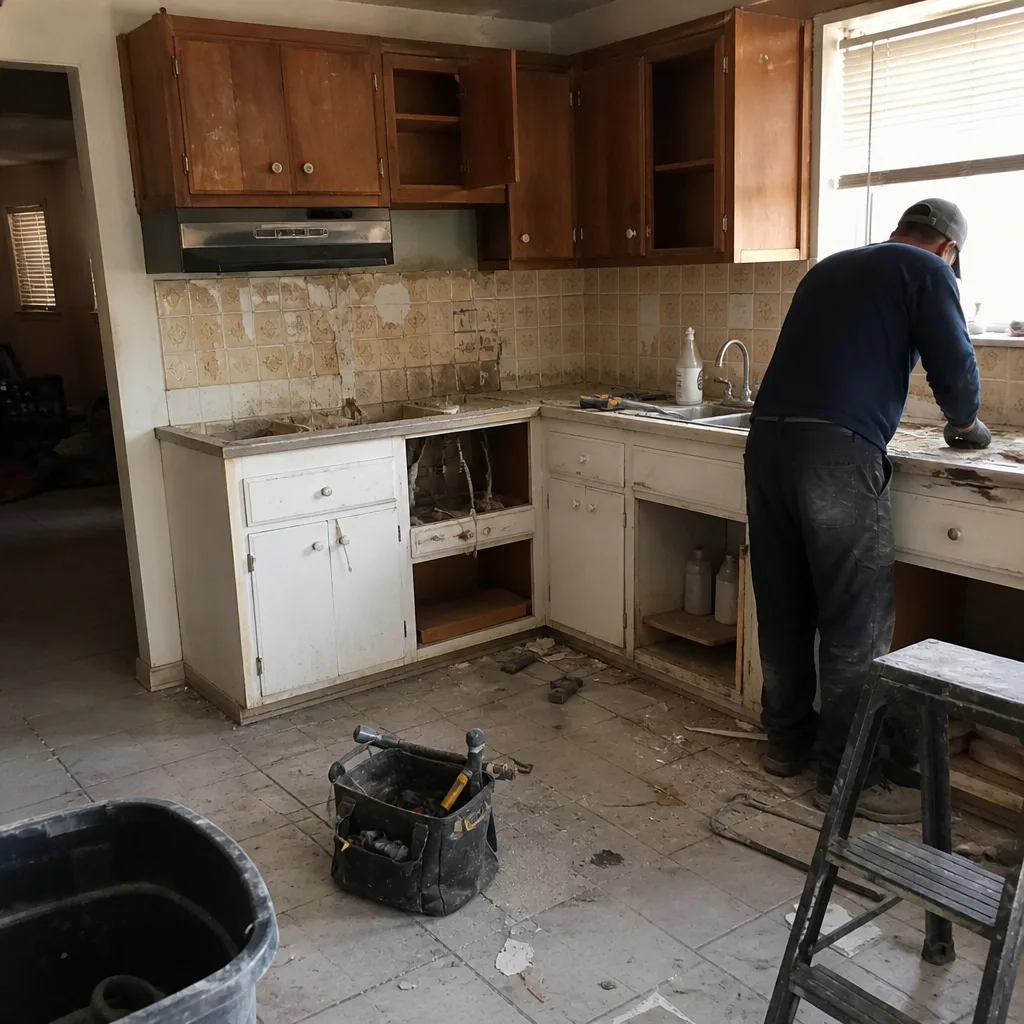 Before
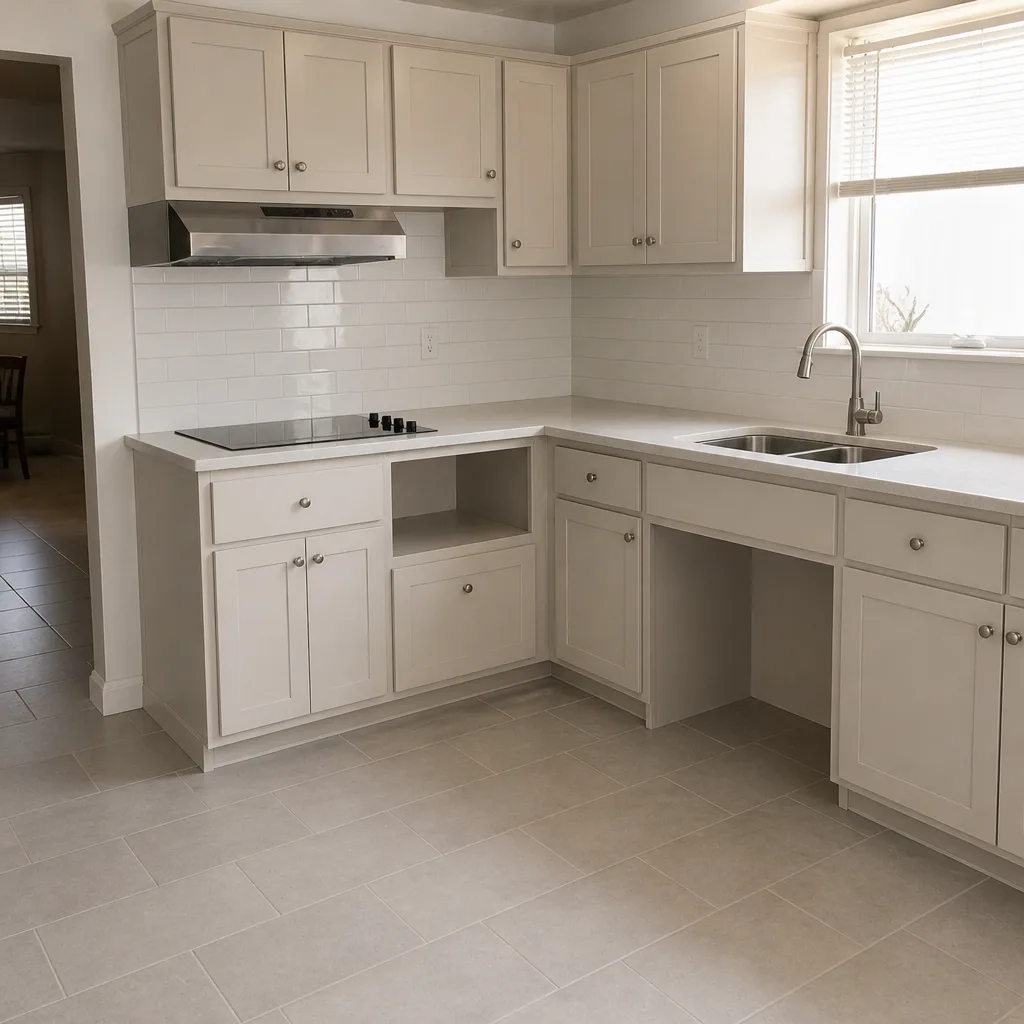 After
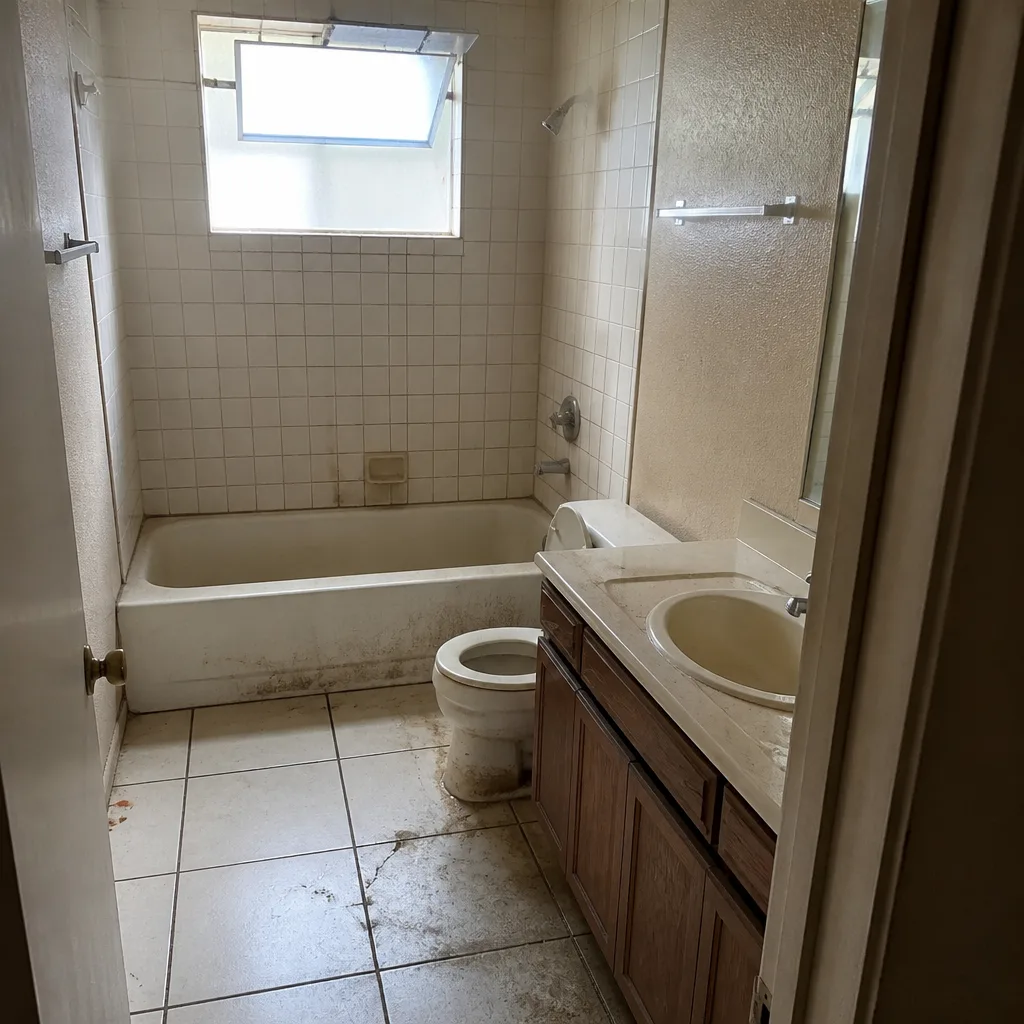 Before
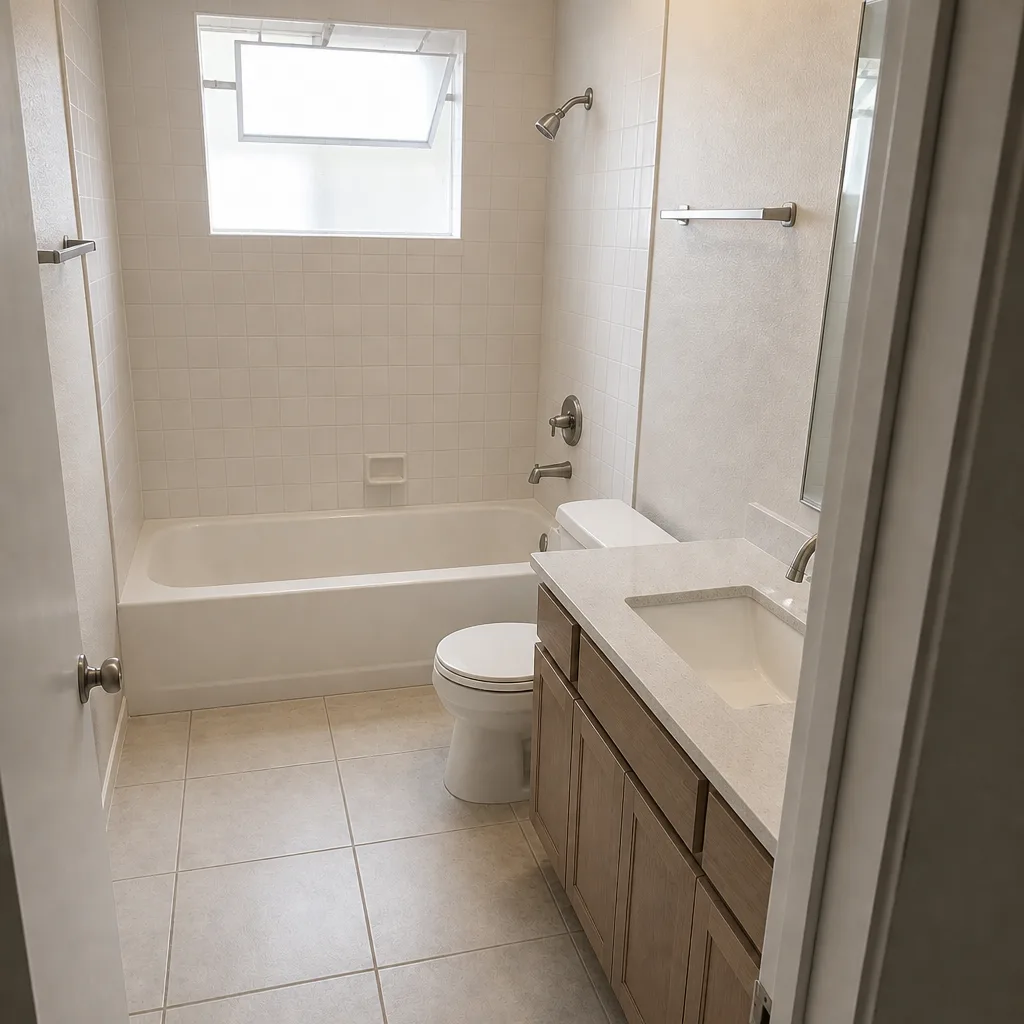 After
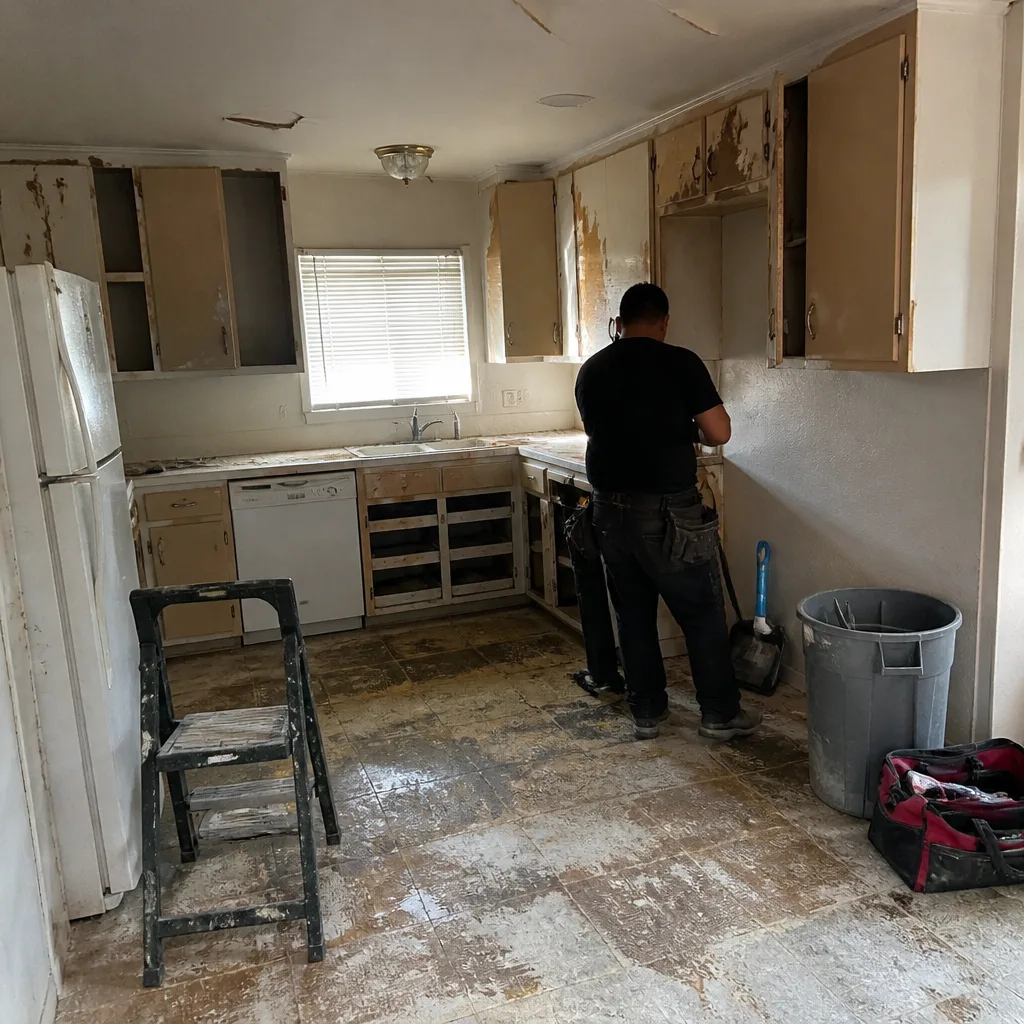 Before
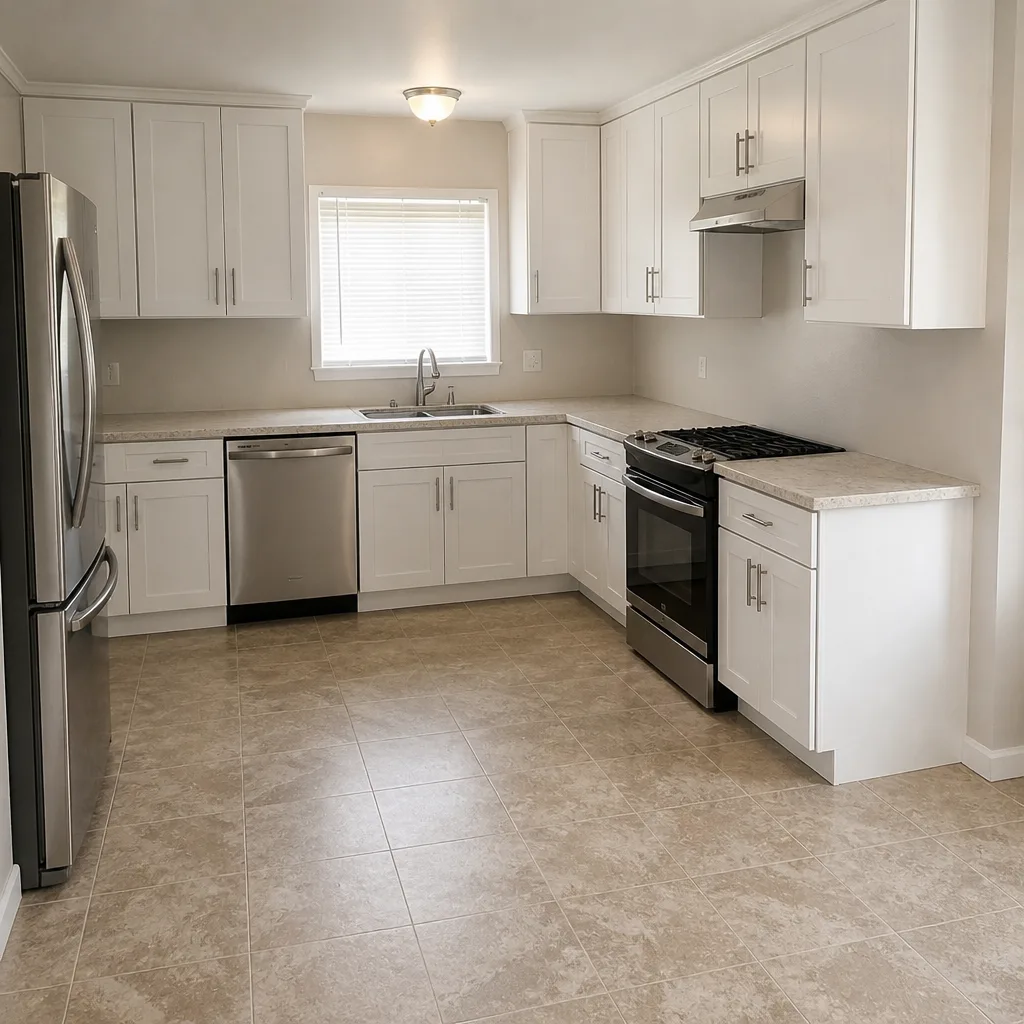 After
Tile vs Vinyl Plank Kitchen Flooring in Las Vegas: Which One Survives Your Slab?
Choose luxury vinyl plank (LVP) with a floating installation unless you’re committed to a full crack-isolation membrane system under tile. That’s the honest bottom line for most Las Vegas kitchens, and it has almost nothing to do with looks. The valley’s expansive desert soils swell when the rare monsoon dumps rain and shrink back during 110°F stretches, and that cycle puts a slow flex into slabs across the city. LVP rides that movement. Rigidly bonded tile transmits it straight into your grout lines. Call (844) 797-1112 and we’ll walk you through what your specific floor is doing.
Key Takeaways
- Expansive Las Vegas soils move slabs slightly, and tile has no give when that happens.
- Homes built before 2005 on 4-inch slabs on grade need a vapor barrier under LVP, not as an upsell but as a requirement.
- Sun-facing kitchen tile in Las Vegas can hit surface temps above 130°F, which stresses adhesive year after year.
- You should see the subfloor prep cost in writing before anyone pulls a plank or a tile.
Why the Las Vegas Soil Question Decides More Than the Price Tag
Most comparison guides hand you a pros-and-cons table and move on. That table won’t tell you what happens to your kitchen floor when the slab underneath it shifts a few millimeters over a monsoon season. In Las Vegas, that shift is the whole story.
The clay-heavy soils under much of the valley are expansive. They take on water and push up, then dry out and settle back. A single monsoon downpour can overwhelm undersized yard drainage and send water toward the slab; contractors are out rerouting that water within days, before the next 110°F stretch bakes the ground dry again. Every wet-dry cycle nudges the concrete.
A floating LVP floor sits on top of that movement with a small expansion gap hidden under the baseboard. It can flex and return. A fully bonded tile floor can’t. When the slab moves, the tile doesn’t, and the stress lands in the grout joints. That’s why a ceramic kitchen floor in Las Vegas can show popped grout lines within two years even when the install itself was clean. It’s not the tile’s fault. It’s the substrate.
This is the part we see up close. Our technicians have up to 22 years of experience, and in valley kitchens the conversation usually starts with what the slab is doing, not which color you like.
The Sun Is a Second Stress Test
Heat cycling matters as much as soil movement. A kitchen with a big south-facing window can push tile surface temperatures above 130°F on an August afternoon. Porcelain handles the heat itself fine; it’s the adhesive bond underneath that takes the beating over a decade. Each hot day expands the tile and the setting material at slightly different rates, then the cool desert night contracts them again.
LVP moves with temperature too, but a floating floor is designed for that movement. The planks shift within their expansion gaps instead of pulling against a rigid bond. For a Las Vegas kitchen that gets hammered by afternoon sun, that flexibility is a real advantage, not a marketing line.
One tradeoff worth naming: dark LVP in direct sun can get hot enough to feel uncomfortable underfoot, and some planks can fade or warp over years of unbroken exposure. We’ll talk through window coverings and product selection rather than pretend it doesn’t happen.
Subfloor Prep: The Cost Nobody Wants to Quote You
The 1990s and 2000s stucco-on-frame tract homes that make up so much of the valley were built on 4-inch concrete slabs on grade, thinner than ideal for the climate here. That’s why a moisture vapor barrier under LVP isn’t optional in Las Vegas. Without it, moisture wicking up through the slab can trap under the planks and cause cupping, adhesive failure, and that musty smell you can’t track down.
For tile, the equivalent line item is a crack isolation membrane. It’s a thin sheet or liquid layer that decouples the tile from the slab so movement doesn’t telegraph through. Skipping it saves money up front and costs you more in grout repair later.
This is why we put a written, line-item price in front of you before any flooring is pulled. You’ll see the prep spelled out, so the decision between tile and LVP is made on real numbers, not a verbal ballpark that grows on the final bill. A kitchen remodel in Las Vegas runs $14,000-$45,000, and flooring is often the line homeowners underestimate.
| Line item | Typical Las Vegas range |
|---|---|
| Moisture vapor barrier under LVP | Bundled into flooring install; ask for it itemized |
| Crack isolation membrane under tile | $1.50-$3.00 per sq ft |
| Self-leveling compound (uneven slab) | $1.00-$2.50 per sq ft |
| Full kitchen remodel (flooring included) | $14,000-$45,000 |
Tile vs Vinyl Plank: The Honest Side-by-Side
- Movement tolerance. Floating LVP absorbs slab flex. Bonded tile needs a crack isolation membrane to survive it.
- Thermal behavior. Tile expands rigidly against its adhesive in sun-baked kitchens. LVP floats and moves within its gaps.
- Water behavior. LVP over a proper barrier handles incidental spills well. Tile is water-tolerant, but the grout and substrate underneath are what fail first.
- Repair cost. A single damaged LVP plank can often be swapped. A cracked tile in a field of discontinued tile is a bigger problem.
- Feel and resale. Tile reads as a premium, permanent finish and many Las Vegas buyers expect it in kitchens. That’s a real consideration even if it’s not the deciding one.
Where does tile win? If you’re committed to the full system: crack isolation membrane, a properly leveled slab, and flexible grout, installed by a crew that treats prep as the job rather than an obstacle. In a historic block or masonry home downtown or in the Historic Westside, the substrate story is different from a 2003 tract build, and that install can hold beautifully.
If that’s the kitchen you want, we’re glad to build it, and it fits naturally into a broader Kitchen Remodeling plan where the floor, cabinets, and lighting are sequenced together.
How We Handle Your Kitchen, and Who Shows Up
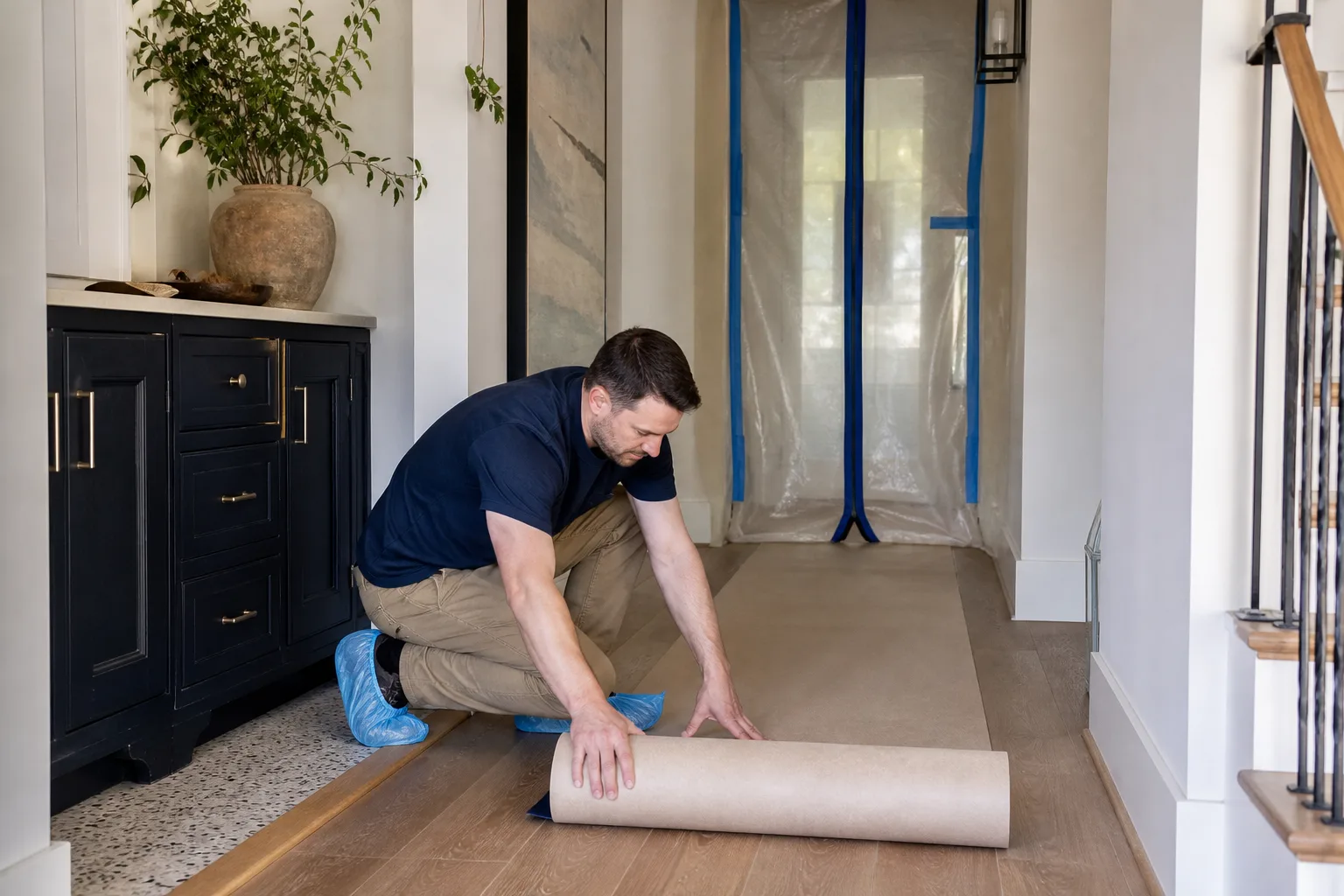
Opening the door to a stranger is a real decision, especially when you’re home alone or managing young kids. Every crew member we send is background-checked and identity-verified under The Threshold Standard, and you get the technician’s name and photo before the visit, plus a photo ID badge at the door. A live person answers the phone every hour of every day. A written price comes before any work starts, and every project carries our 365-Day Done Right Promise: if something isn’t right within a year of completion, we make it right at no cost. If a repair or installation fails, the return visit is free.
We work with specification-grade materials from names like Oldcastle and Quikrete for the substrate and prep work, so what goes under your finished floor is held to the same standard as what you see. Mason Remodeling Co Las Vegas handles full kitchen work, and if the floor is one piece of a larger plan, start with Kitchen Remodeling in Las Vegas to see how the pieces fit.
Common Las Vegas Scenarios (and What We’d Recommend)
A 2002 tract home in the northwest valley. 4-inch slab, sun-facing kitchen, original tile starting to show hairline grout cracks. LVP over a vapor barrier is the lower-risk long-term choice. Save the tile budget for the full membrane system if you want tile back.
A mid-century block home near downtown. Different soil exposure, often a different slab profile. We’d inspect before recommending either with confidence. Same materials, different answer.
A new master-planned build on the valley edge. The slab is newer, but expansive soils don’t care about the build date. Vapor barrier and proper leveling still apply.
A kitchen where you’re already doing cabinets and counters. Sequence the floor job with the rest so you’re not paying for demo twice. That’s where a full home improvement plan earns its keep.
FAQs
For most Las Vegas kitchens, LVP with a floating installation is the lower-risk choice because it absorbs the slab movement that expansive soils create, while bonded tile can crack or pop grout without a crack isolation membrane. Tile is the better pick if you’re willing to pay for the full decoupling system and a properly prepped slab. Call (844) 797-1112 for an exact quote - estimates are free.
Flooring is one line inside a broader kitchen remodel that typically runs $14,000-$45,000 in Las Vegas, with prep costs like a vapor barrier, leveling compound, or crack isolation membrane adding to the total. That’s why we itemize prep separately in the written price before any flooring is pulled. Call (844) 797-1112 for a line-item quote.
Tile cracks in Las Vegas because the expansive clay soils under the valley swell and shrink with wet-dry cycles, flexing the slab beneath a rigidly bonded floor and sending stress into the grout joints and tile edges. Thermal cycling from sun-facing windows adds to it. A crack isolation membrane is the fix, installed before the tile goes down. Call (844) 797-1112 to have your slab assessed.
Yes. The 4-inch slabs on grade common in valley homes built during the 1990s and 2000s allow moisture to wick up, and a vapor barrier under LVP keeps that moisture from trapping under the planks and causing cupping or adhesive failure. It’s a requirement here, not an upsell. Call (844) 797-1112 to get it priced into your project up front.
If you’d rather have it looked at, Mason Remodeling Co Las Vegas offers a no-pressure assessment in Las Vegas - call (844) 797-1112. We’ll look at your slab, explain what we see, and hand you a written price before anything gets pulled.
Written by the team at Mason Remodeling Co Las Vegas, serving Las Vegas, NV.